A notebook built for seeing patterns
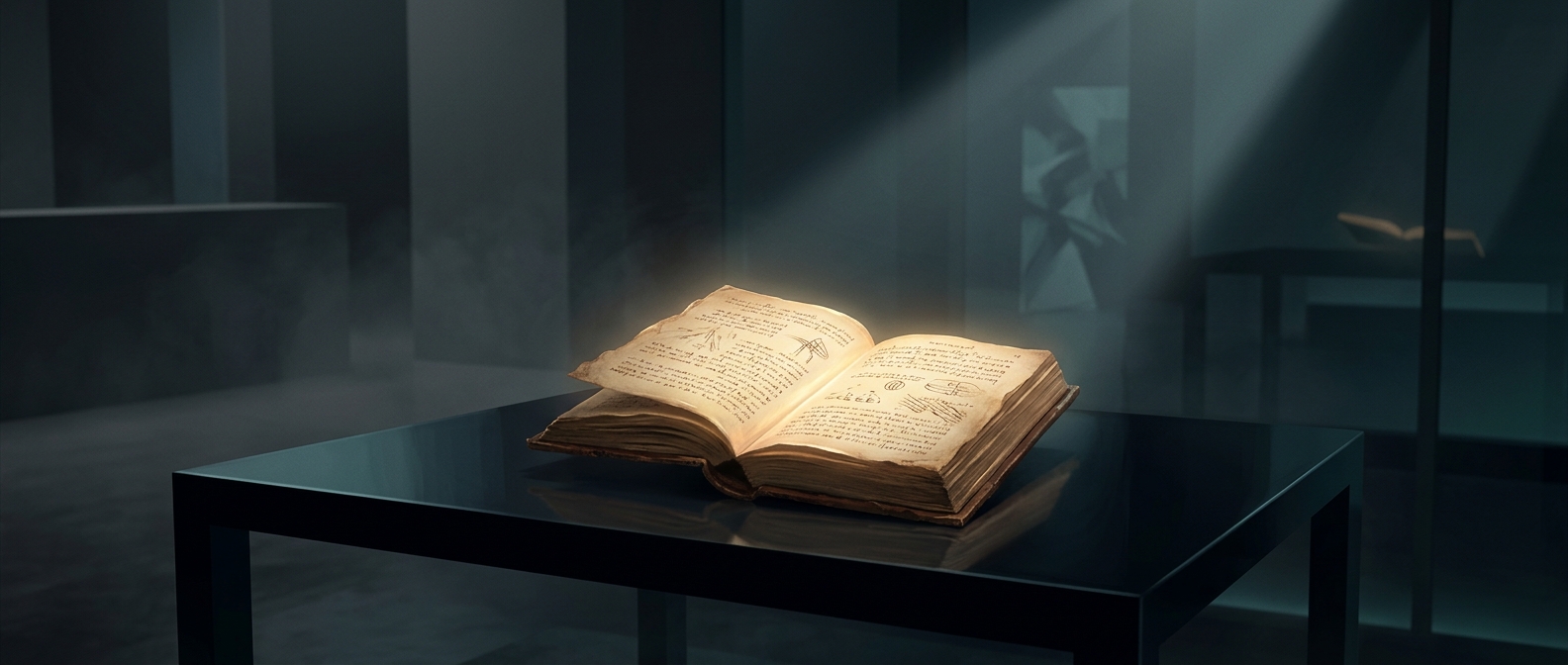
The Codex Leicester is not a polished book of finished theories. It is a working notebook: Leonardo da Vinci filled its pages with observations, questions, diagrams, and attempts to explain how nature behaves. Its subjects include water, the movement of the moon, and the formation of fossils. The pages show a mind testing ideas by moving between what it could observe and what it could draw or reason out.
That makes the notebook valuable not only for its conclusions, but for the traces of thought left behind. A sketch beside a passage can show how Leonardo tried to make an invisible process—such as the motion of water—understandable through visible forms.
What digitizing changes
Da Vinci wrote much of the notebook in mirror writing, with letters reversed across the page. A reader can decipher it by looking at the writing in a mirror or by digitally reversing an image. High-quality digital images also let viewers enlarge details without repeatedly handling the fragile original.
Digitization does not replace the manuscript: the texture, scale, and physical condition of the paper remain part of the object. But it changes who can examine its contents. Instead of requiring access to the original, readers can inspect page images on a screen, compare drawings with text, and return to details that might be difficult to see at a glance.
From private object to inspectable record
The notebook’s later life therefore involves two kinds of preservation. The physical codex remains a historical artifact; its digital images make its marks easier to study and share. The distinction matters: a scan can bring a page closer to many readers, while the original still carries evidence that no image fully captures—how the paper itself has survived centuries of use and time.