A spinning reference steadied the airplane
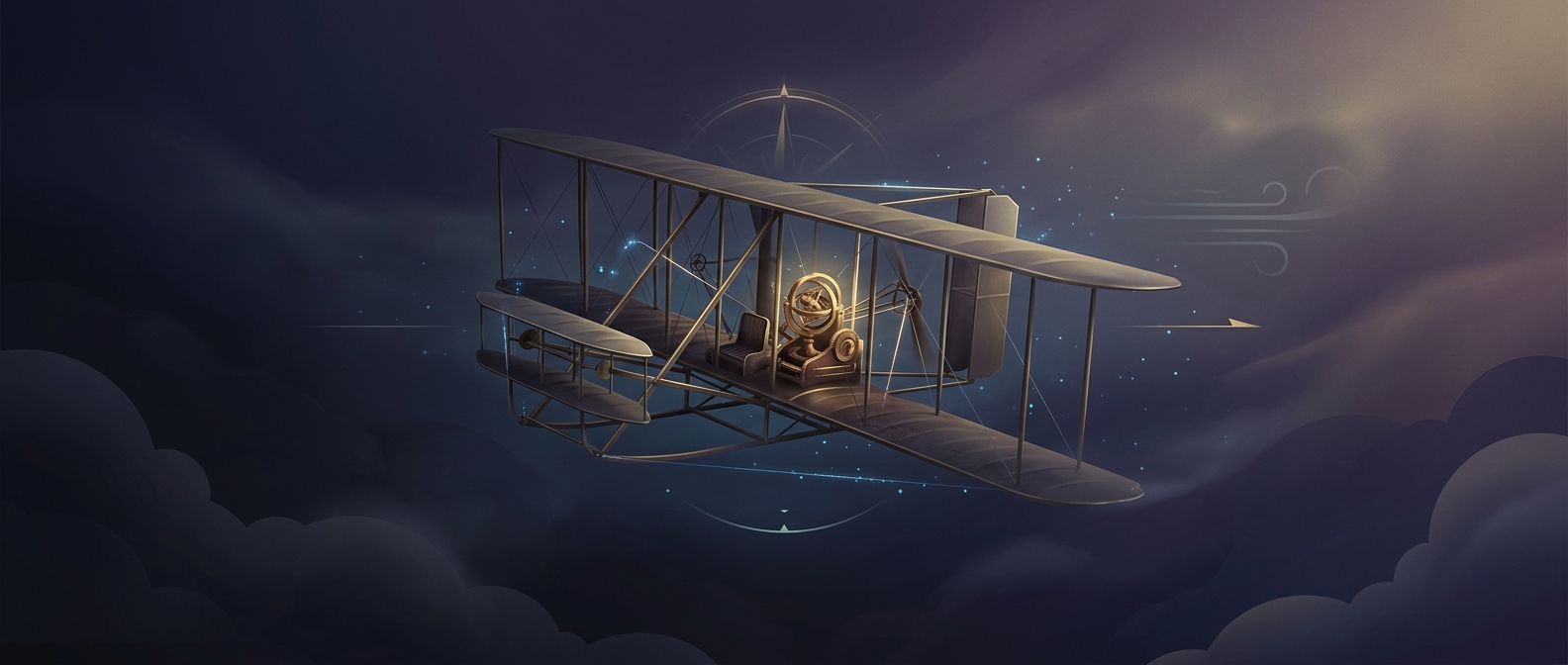
The airplane was barely a decade old when inventors began trying to make it hold its course on its own. The key was the gyroscope: a spinning wheel that tends to keep pointing in the same direction even as its surrounding frame moves. In an aircraft, that stable reference could reveal when the plane had begun to bank or pitch away from its intended attitude.
A gyroscope alone could not steer. The system had to turn its readings into movement: when the airplane drifted, mechanisms linked to the controls nudged it back. That made the early autopilot less like a machine choosing where to fly and more like a tireless hand making small corrections.
The hard part was closing the loop
An aircraft can roll, pitch, and yaw—tilt from side to side, tip its nose up or down, or swing its nose left or right. A workable system had to sense unwanted motion and move the controls in response, without overcorrecting and setting off another wobble. The gyroscopic reference helped solve the sensing problem; connecting it reliably to the airplane’s controls made the idea practical.
That was a striking development so early in aviation. Pilots had been flying for only a few years, yet engineers were already trying to reduce the constant effort of keeping a plane steady. Early autopilots did not replace the pilot or decide on a destination. They could help maintain a stable flight attitude, while the pilot remained responsible for the larger task of flying.
Less strain, not no responsibility
Holding an airplane steady requires repeated attention, especially when the air or the aircraft nudges it off course. By making those corrections automatically, a gyro-based system could ease that workload and let a pilot attend to other duties. Its basic bargain still defines autopilots: the machine handles a bounded control task, while a human must understand what it is doing and remain ready to intervene.