A small barrier against carriage light
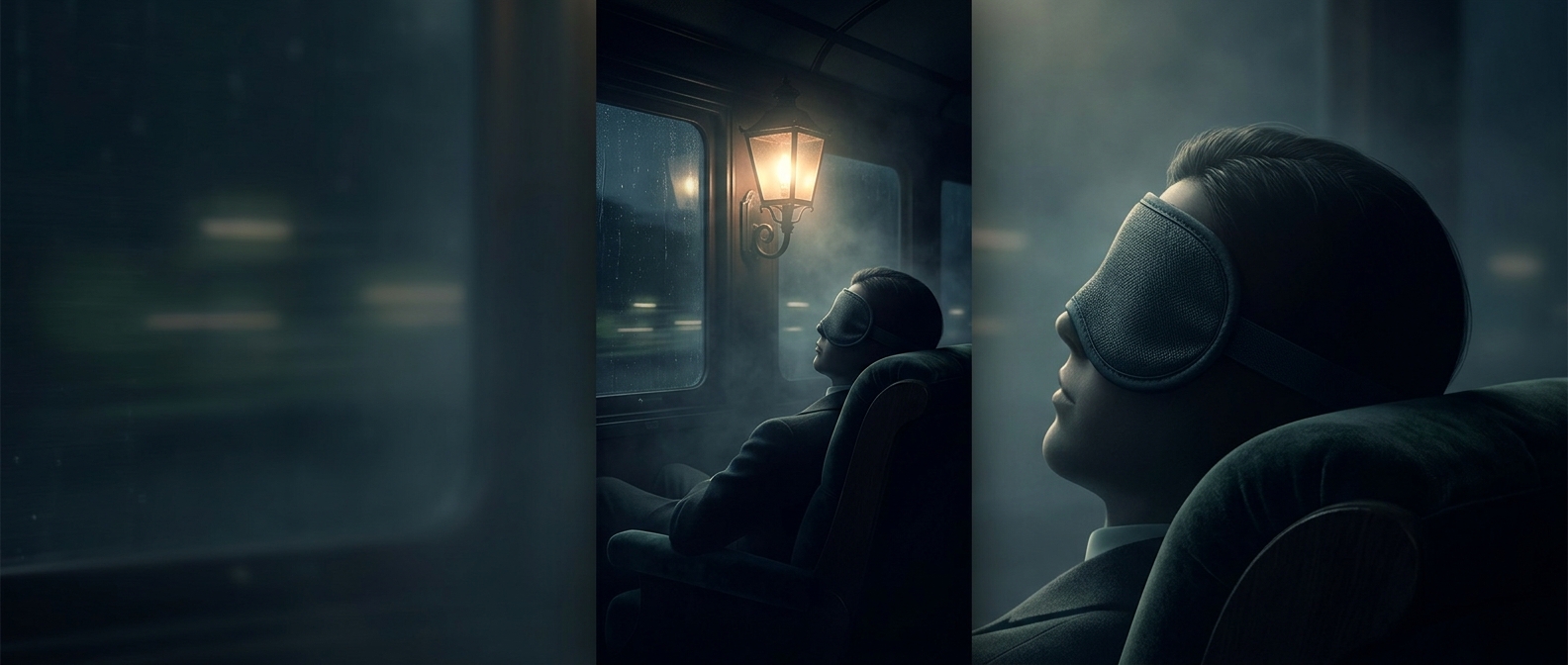
Before electric lighting became common, gas lamps illuminated some late-night passenger carriages. Their exposed flames could cast a bright, steady glow across a shared interior, where a traveler had little control over when the lights were used or where other passengers sat.
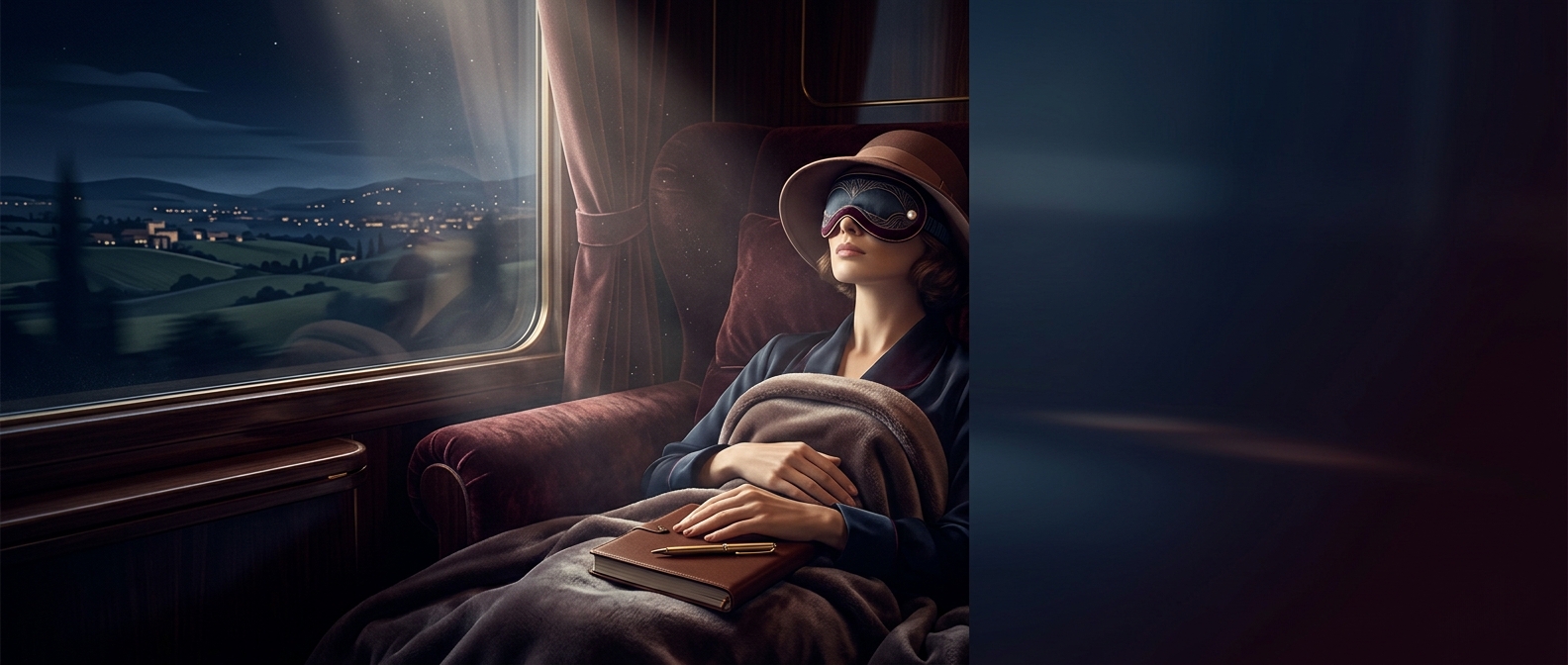
A sleeping mask offered a simple fix: cover the eyes, and much of the light stopped reaching them. That mattered in a crowded carriage, where finding a dark corner or shutting off a lamp was not necessarily an option.
What the mask could—and could not—do
The word “noxious” points to another discomfort associated with gas lighting: the lamp’s combustion could make the air unpleasant. But an eye mask was not a respirator. It could block glare; it could not filter fumes or improve ventilation. Its purpose was to help a passenger rest despite the conditions, not to make the carriage air safer.
That distinction makes the object a small record of travel’s practical compromises: when the shared space stayed lit, a traveler could at least bring darkness to their own eyes.