The baker who stepped into the sea
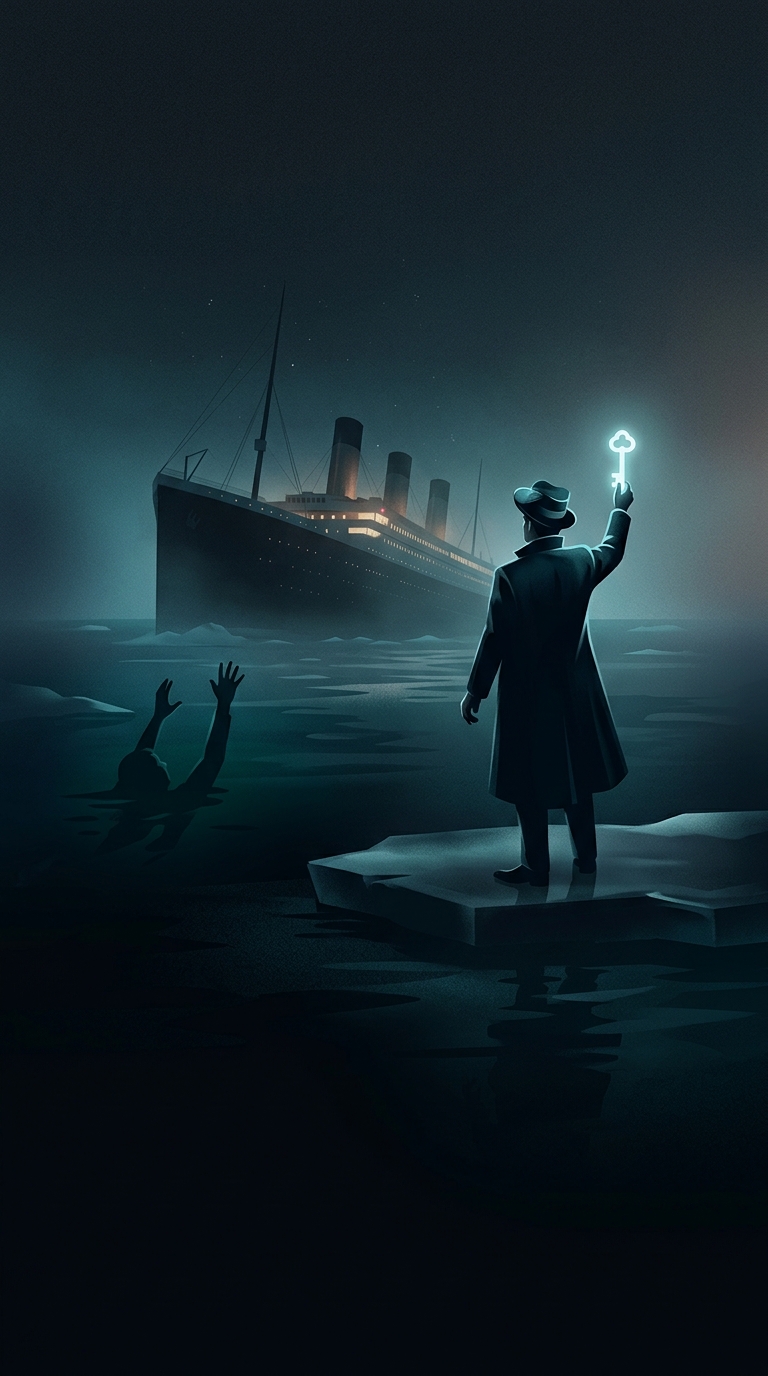
Titanic’s chief baker, Charles Joughin, drank whiskey as the ship was sinking. Then, rather than fighting to stay aboard as the stern rose, he waited until the ship went under and stepped down into the sea. He survived—an outcome that helped turn his drinking into the story’s most memorable detail.
What mattered after he entered the water
Joughin later described being in the water and reaching the overturned collapsible lifeboat known as Collapsible B, where survivors gathered. In the freezing North Atlantic, staying afloat and getting out of the water were crucial: cold rapidly drains strength and coordination, making it harder to swim or hold on. Joughin’s survival depended on reaching something that kept him above the surface, not on whiskey making the water safe.
Alcohol can impair judgment and coordination, and it does not protect the body from cold. The striking part of Joughin’s story is therefore not that drinking was a survival technique, but that he made it through the sinking and reached a lifeboat despite entering the water at the end. The overturned boat gave him—and other survivors—a place to cling while they waited for rescue.