How a Towline Turns Boat Speed Into Lift
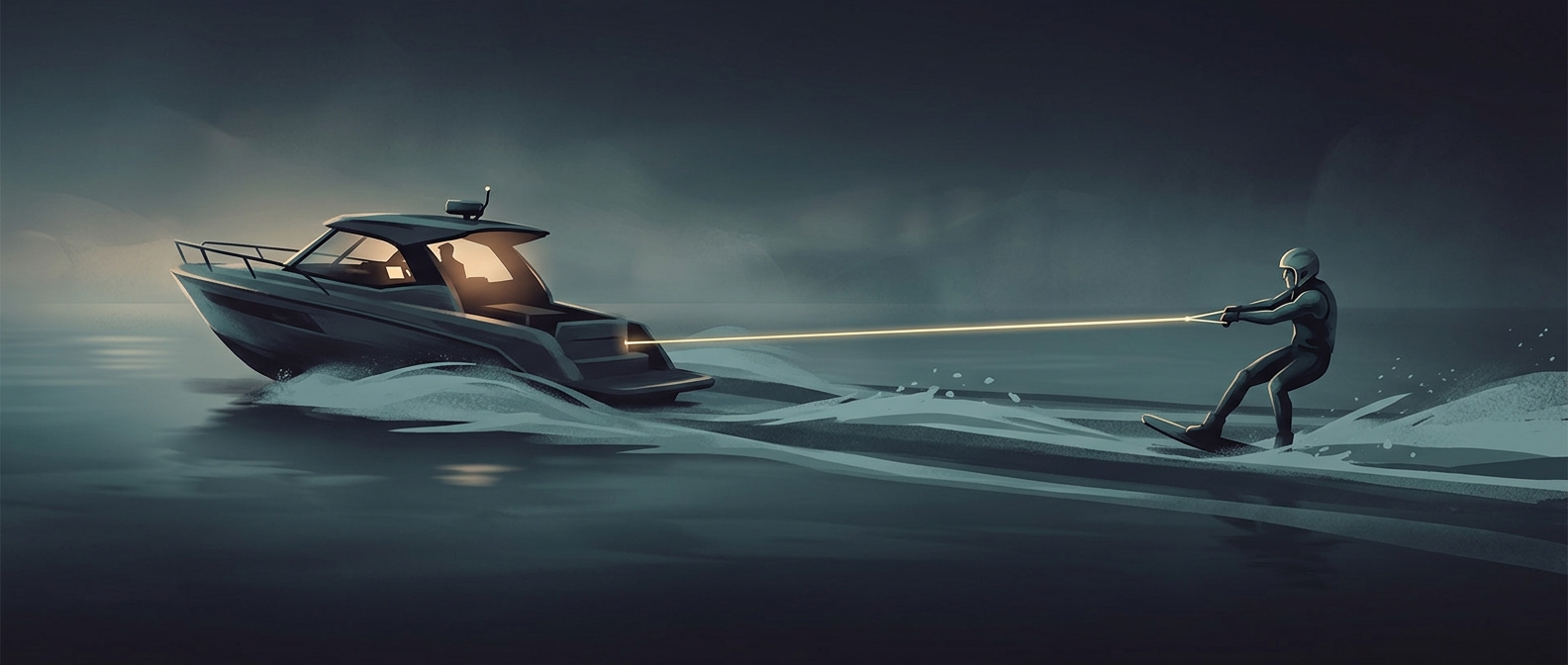
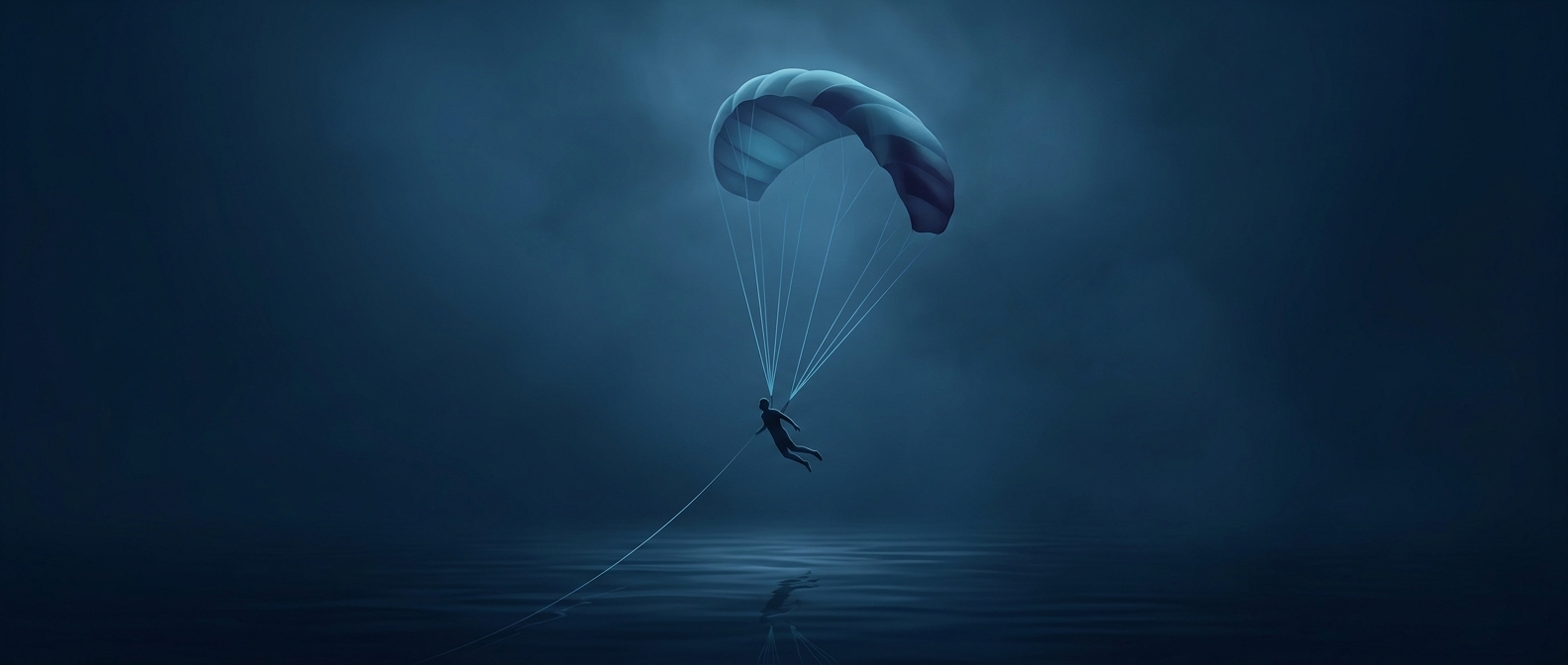
A parasail canopy is shaped to catch moving air. As the boat tows it forward, air flows across and into the canopy, creating an upward force. The canopy also produces drag—the backward pull of air resistance—so the towline must stay under tension. Together, the airflow and the line’s pull keep the rider rising and moving behind the boat.
The boat supplies the motion, but the canopy’s shape converts some of that motion into lift. If the towline slackened, the canopy would lose the steady airflow that helps hold it aloft. That is why parasailing depends on a coordinated system: canopy, rider, line, and boat, all moving together.
Why the Ride Can Rise and Fall
The boat’s speed and the amount of towline paid out affect the ride. More line lets the canopy travel farther from the boat, while the towline’s angle and tension help determine how high it flies. The rider is suspended in a harness attached to the canopy’s lines, so the forces acting on the canopy are transmitted through the rigging rather than by the rider steering it like an aircraft.
A parasail is therefore not simply a parachute drifting wherever the wind takes it. Its flight is sustained by forward motion supplied by the boat. When the tow ends, that source of airflow disappears, and the canopy must descend under control—making the towline not just a tether, but the link that shapes the whole flight.