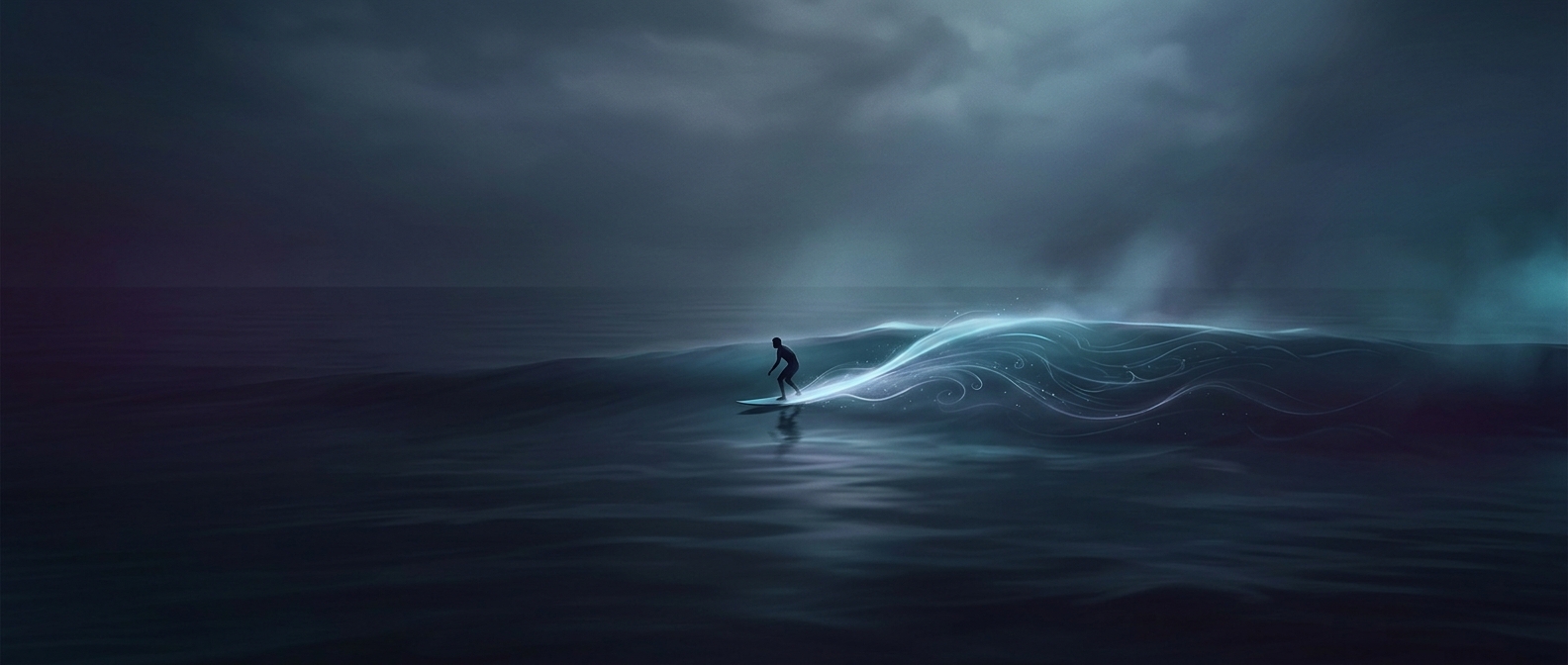
How a Board Can Make a Rideable Wake
A wake is the disturbance left in water by something moving through it. As a fast board advances, its hull pushes water aside and downward. That displaced water rises and spreads outward, forming ridges that trail behind. The shape depends on the board’s speed, hull, and how it sits in the water.
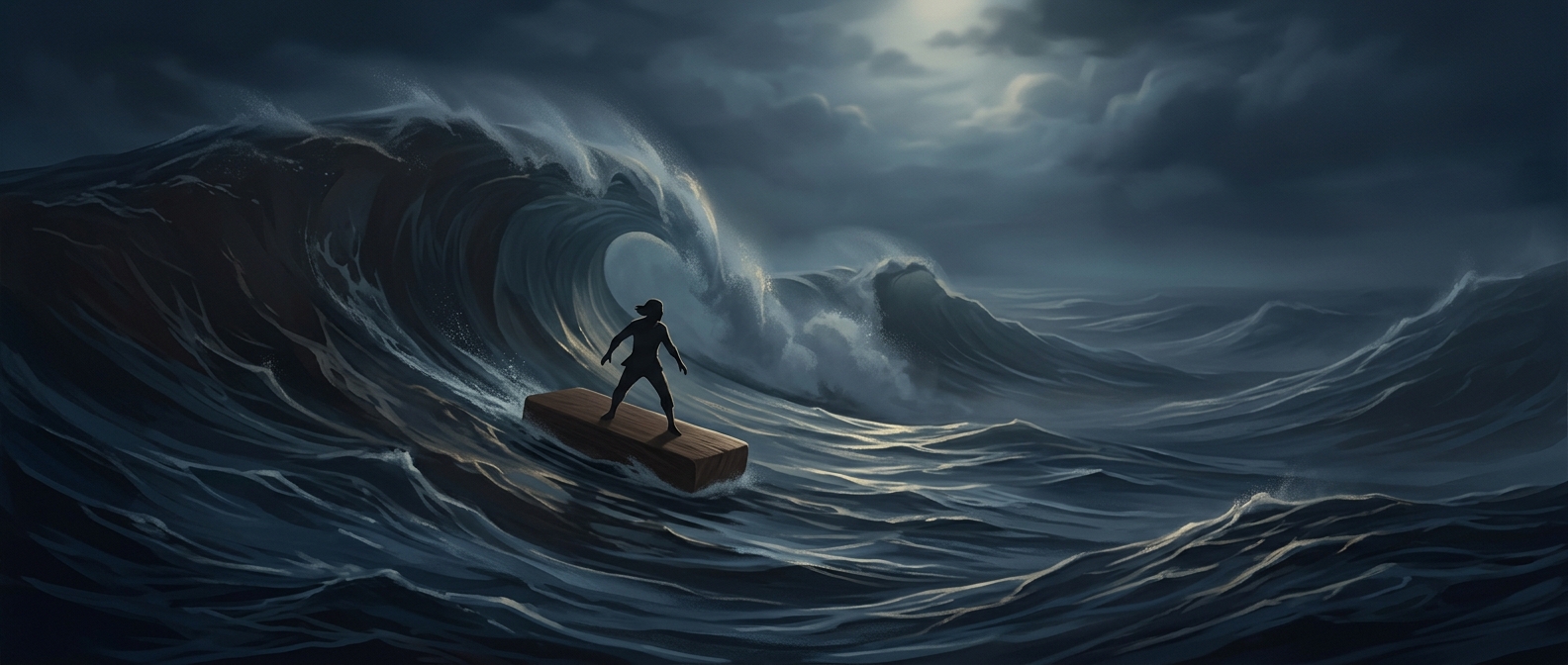
The useful part is not simply the ridge itself, but the sloping face of the wave. A rider can angle onto that face and let gravity pull the board down its slope. The wave’s moving water helps carry the rider forward, offsetting the drag that would otherwise slow the board.
Staying in the Wave’s Sweet Spot
The rider has to keep the right position relative to the wake. Too far behind, and the wave’s push fades; too far forward, and the board can run into the wake’s steeper, less stable section. Small shifts in weight and direction help the rider stay on the face while the wake moves underneath.
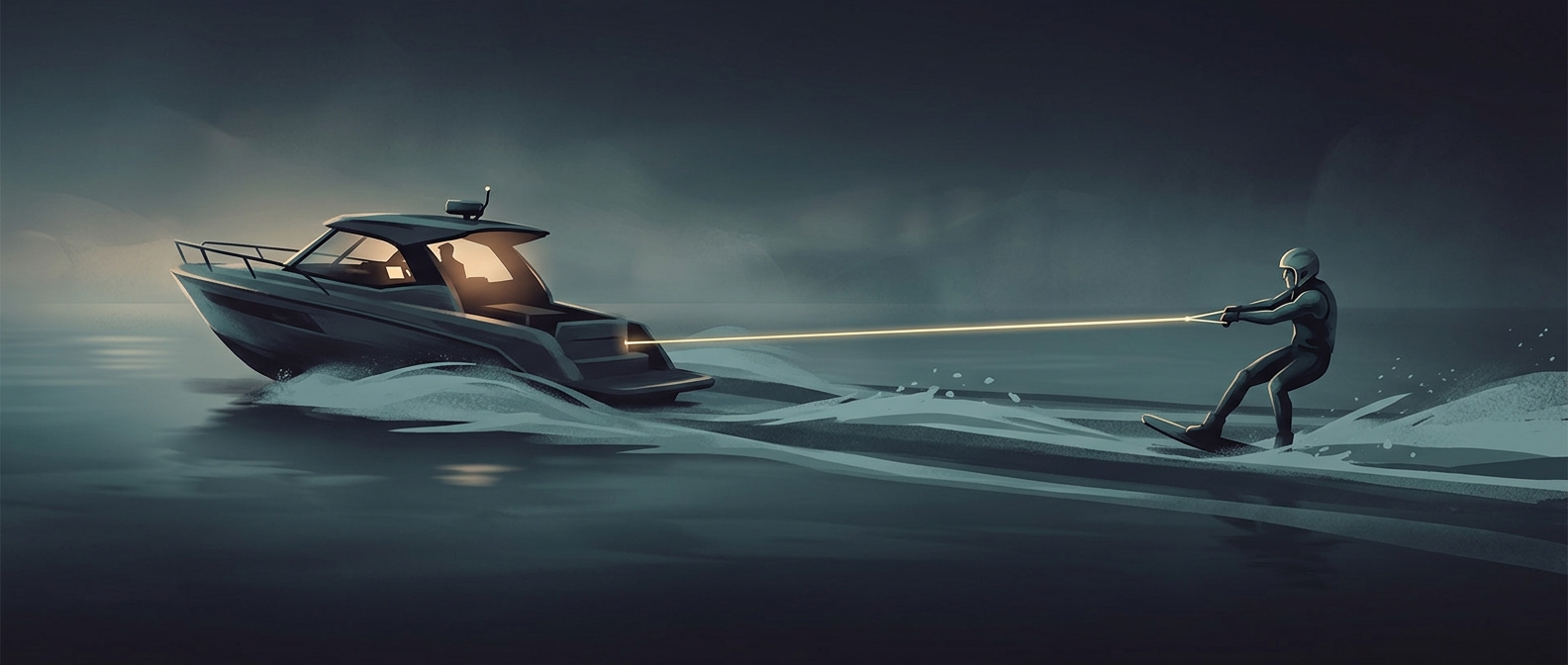
This is a moving-water version of a familiar surfing tradeoff: the wave supplies energy, but balance and positioning determine whether the board can use it. Here, the wave-maker is a board moving through the water rather than a boat towing the surfer. The striking consequence is that a ride can come from the wake’s own momentum, with no boat needed to pull the rider along.