How a Bodyboard Catches a Wave
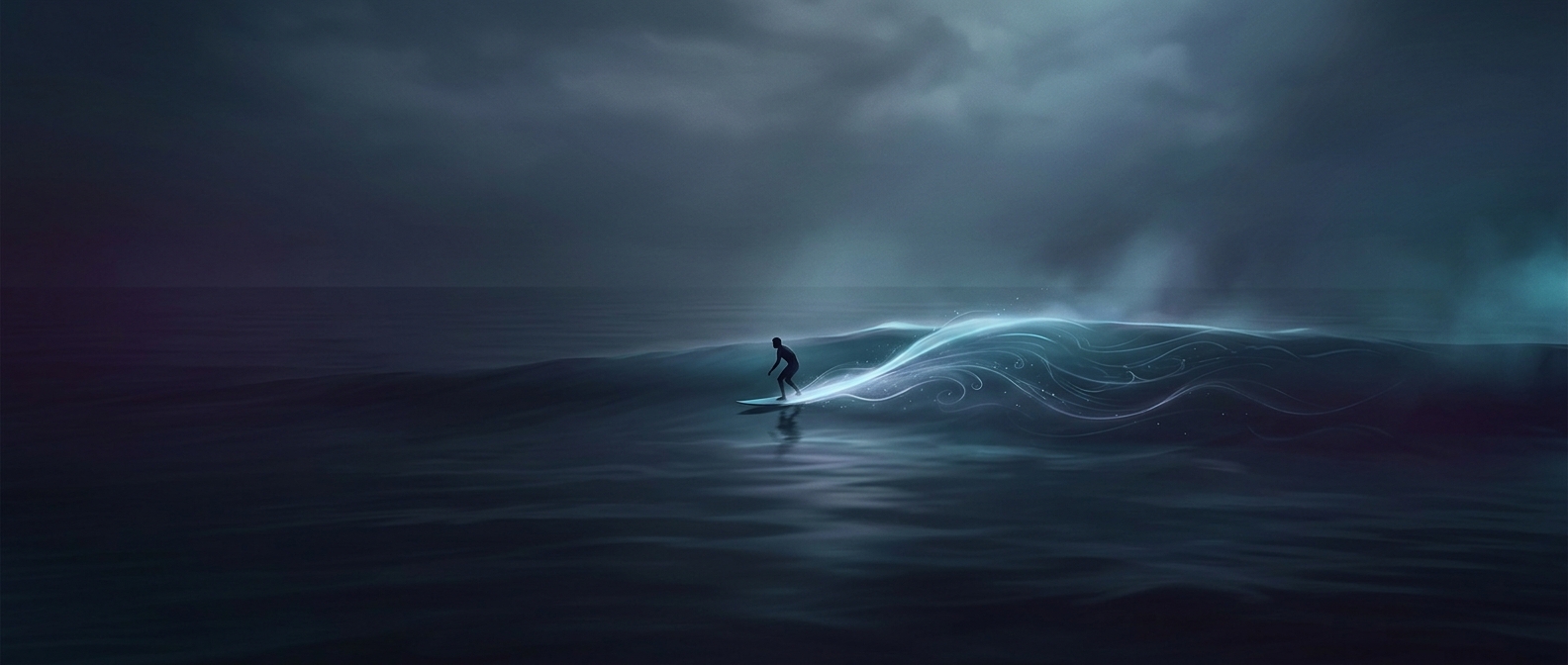
A bodyboard is short enough to fit beneath a rider’s chest and arms, but its job is more than simply keeping someone afloat. Its buoyant core supports the rider, while its smooth underside lets the board move over the water with relatively little drag. As a wave steepens and begins to break, water near the surface moves forward and downhill. A rider who paddles into the wave at the right moment can let that moving water accelerate the board.
Once the board gathers speed, water flowing beneath it helps support it as it skims along the wave’s face. This is called planing: instead of being carried only by buoyancy, the moving board gets additional lift from water pressure underneath. The wave supplies the energy; the board gives the rider a manageable surface on which to use it.
Why Ride Lying Down?
The prone position—lying on the stomach—keeps the rider’s weight low and spread across the board. That makes a small board easier to balance than it would be under a standing rider, and it allows the rider to steer by shifting weight, gripping the rails, and changing the board’s angle. The tradeoff is less room to move: small adjustments matter, and the rider is close to the water as the wave pitches or changes direction.
That closeness is part of bodyboarding’s distinctive feel, not just a different way to stand on a board. The rider travels along the wave’s sloping surface with little between their face and the moving water. A compact craft can therefore turn a breaking wave into a fast ride while keeping the rider’s balance and control within inches of the ocean.