Why a One-Car Train Needed Its Own Engine
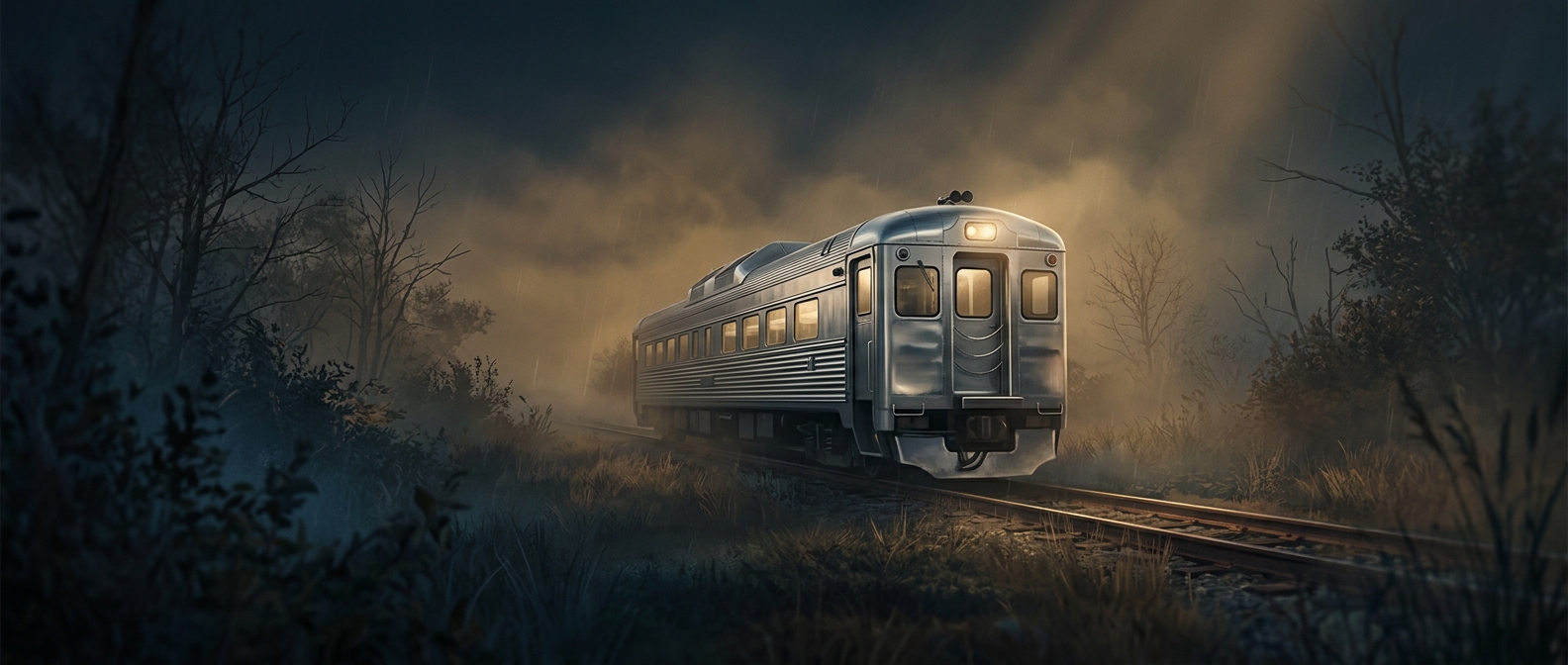
On a lightly used branch line, the cost of running a train was not just the fuel for the trip. A conventional train needed a locomotive, a crew, and enough cars to justify moving all that weight—even when only a handful of people were waiting at the stations. A self-propelled railcar put the engine and passenger space in the same vehicle, trimming the load to what the route actually needed.
Less Weight, Fewer Moving Parts
A railcar’s engine drove the car’s wheels directly or through a compact transmission. It did not have to haul a separate locomotive and a string of empty coaches. That reduced the energy and effort required for each trip, while also simplifying the operation: the railway could run one vehicle rather than assemble a full train for a small passenger service.
The savings mattered most on rural lines, where traffic could be sparse and distances between towns long. A branch line still had to offer a useful timetable, but sending a locomotive-powered train out for very few passengers could make every departure costly. A smaller vehicle made it more practical to keep those trips on the schedule.
Keeping the Connection Open
A railcar could not make an unprofitable route profitable by itself, and it still needed track, maintenance, and staff. Its value was that it lowered the threshold for providing service. Where a full train was too expensive for the number of riders, a single powered car could preserve a link to the wider rail network—and keep a one-car job from requiring a locomotive.