A Jubilee race built around a fragile prize
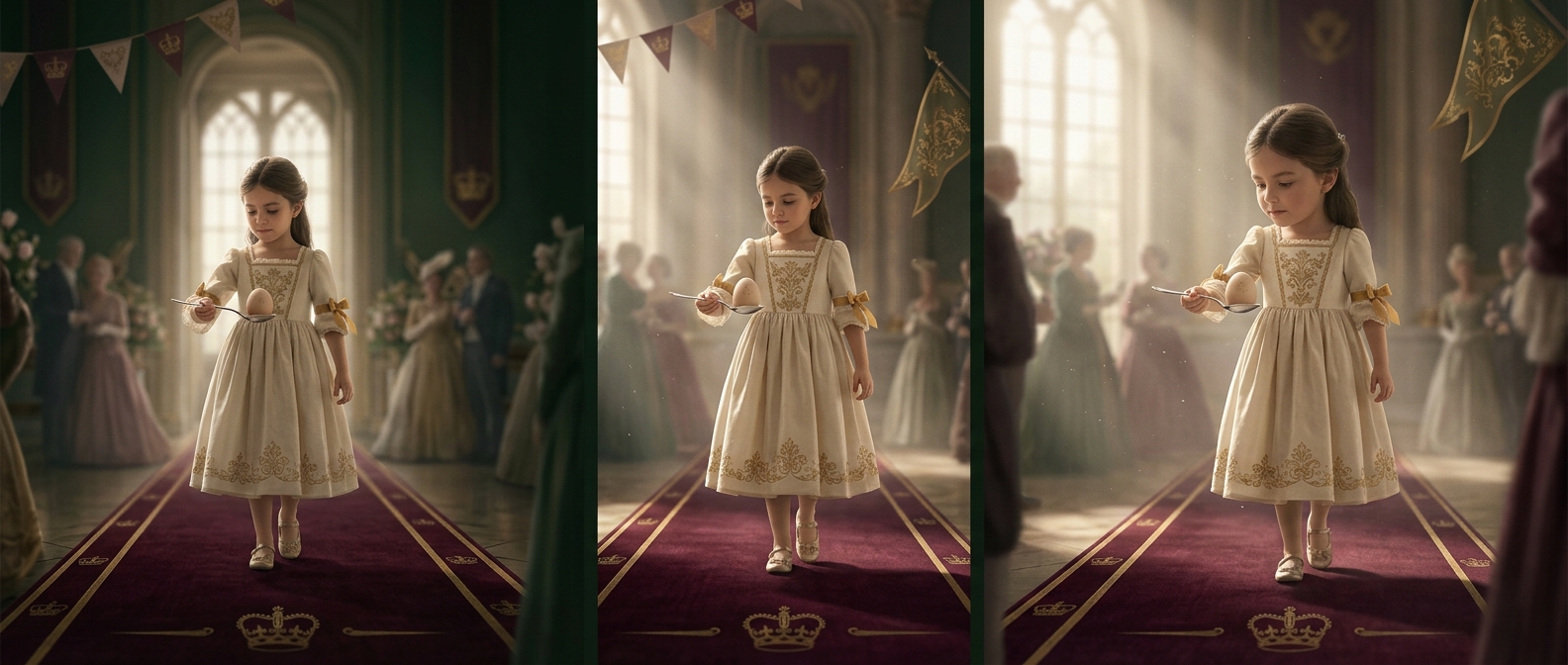
In 1897, village sports days held to honor Queen Victoria included contestants carrying real eggs on spoons. The year marked Victoria’s Diamond Jubilee, celebrating 60 years on the throne. The race turned a public occasion into a simple contest: each participant had to move quickly while keeping a small, unstable object from falling.
Why the egg made the game
An egg makes the challenge visible. A runner cannot simply sprint; every step risks a crack, so speed must be balanced against careful control. That tension lets spectators follow the contest without complicated rules, and makes even a short race suspenseful: the finish line matters, but so does arriving with the egg intact.
Using real eggs also gave the game a tangible consequence. A dropped egg meant a mess and a spoiled prize, not just a lost point. Plastic eggs change that tradeoff. They preserve the balancing challenge while reducing the chance of a broken egg—or a stained outfit—at a modern sports day.
The lasting appeal is in that small design choice: one spoon, one wobbly object, and a race where the fastest runner is not always the one who wins.