One coin toss, two ways to locate yourself
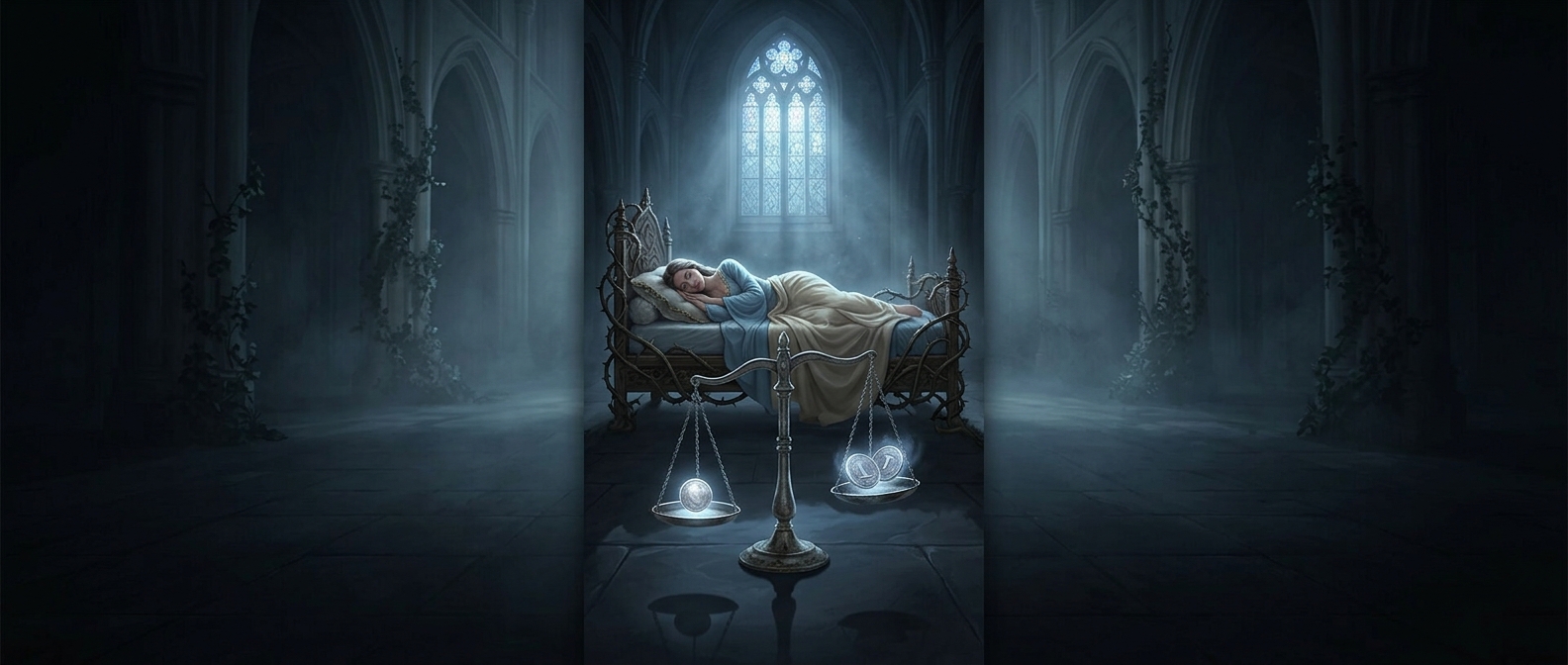
In the standard Sleeping Beauty setup, a fair coin is tossed while Beauty is asleep. If it lands heads, she is awakened once, on Monday. If it lands tails, she is awakened on Monday and again on Tuesday, with her memory of the first awakening erased between them. Each time she wakes, she is asked how likely she thinks heads is.
The coin’s physical chance of landing heads remains one-half. The puzzle is about a different uncertainty: on waking, Beauty does not know which day it is, or which possible awakening she is experiencing. That is self-locating uncertainty—uncertainty about where you are within a known set of events.
Count experiments or count awakenings?
A “halfer” answer keeps the coin toss as the relevant trial. Heads and tails were equally likely, and being awake does not distinguish them: Beauty is certain to wake either way. So, on this view, her credence in heads stays at one-half.
A “thirder” answer treats each possible awakening as a case she might occupy. Imagine many repetitions of the experiment. Every heads result contributes one awakening; every tails result contributes two. Among all those awakening occasions, heads-linked awakenings make up one-third. On this view, learning that she is currently awake favors tails because tails produces more opportunities for that observation.
What the disagreement is really about
The arithmetic is not the hard part. The issue is which set of cases should represent Beauty’s uncertainty. Counting tosses gives equal weight to each experiment; counting awakenings gives more weight to outcomes that generate more awakenings. Both approaches preserve the fair coin’s one-half chance of heads, but they answer different questions about what Beauty should believe when she wakes.
That distinction matters beyond this puzzle: whenever outcomes create different numbers of observers, observations, or chances to notice something, “How likely is it?” may depend on whether we count the underlying trials or the experiences available to the person asking.