The signal makes a round trip before the picture appears
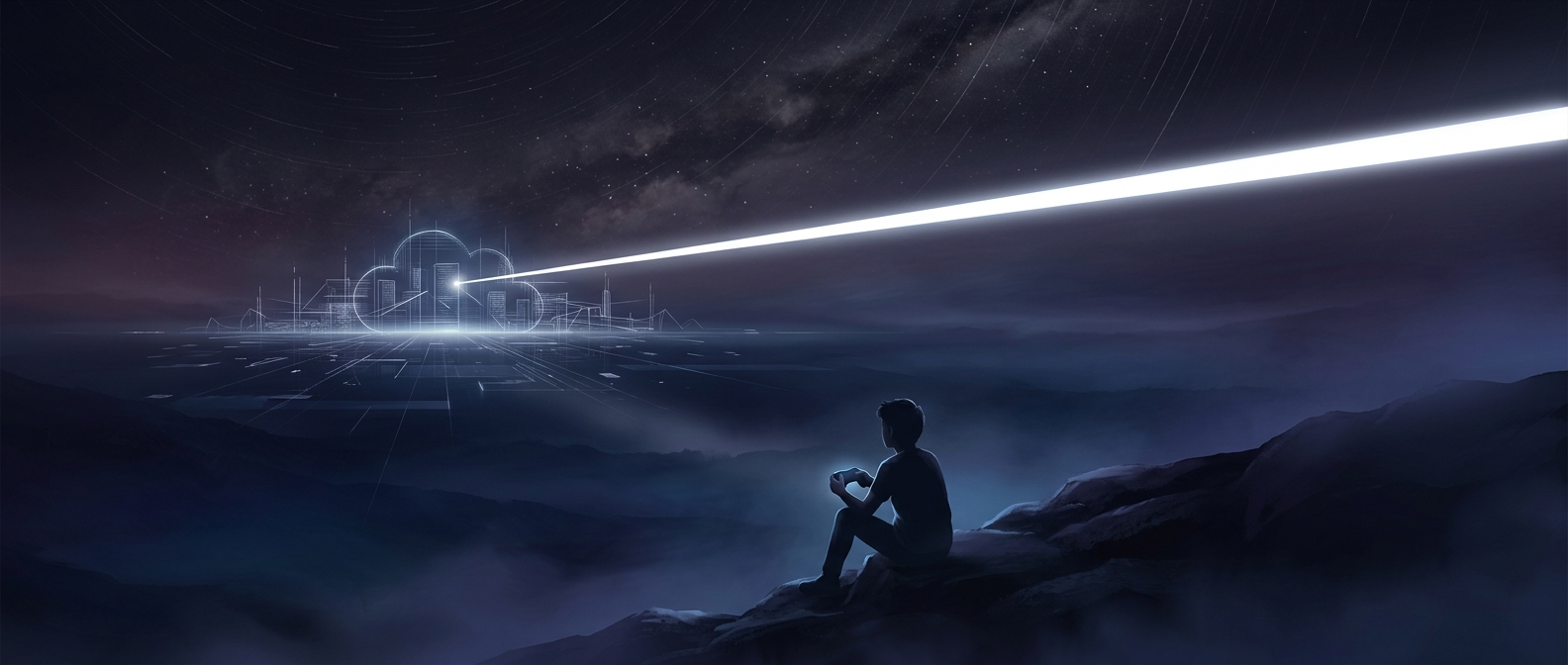
In cloud gaming, the console-like work happens in a data center: the server receives your input, updates the game, renders a frame, and sends that frame back as video. Your device displays the result, but it does not create the next image locally. Each action therefore depends on a message going out and a response coming back.
Even a perfect network could not make that exchange instantaneous. Signals in fiber-optic cables travel slower than light in empty space, and the route between a player and a server is rarely a straight line. Routers, network congestion, video encoding, and display processing add more delay on top of the journey itself.
Why a fast connection can still feel sluggish
Internet speed is often measured by bandwidth: how much data can arrive at once. That matters for receiving a clear, steady stream, but it is different from latency—the time a message takes to make a round trip. A connection can have plenty of bandwidth and still feel slow if the server is far away or the path is delayed.
The difference is especially noticeable in games that demand precise timing. In a slow-paced strategy game, a slight wait may barely matter. In a fast action game, the character may still be moving according to an earlier input by the time the updated frame reaches the screen.
What providers can—and can’t—change
Cloud services can place servers closer to players, choose efficient routes, and reduce the time spent rendering or processing video. Those improvements trim avoidable delay. But they cannot remove the physical travel time between the player and the machine doing the work.
That is why distance remains part of the experience even when the connection is fast: every remote action must cross the network before the game can show its response.