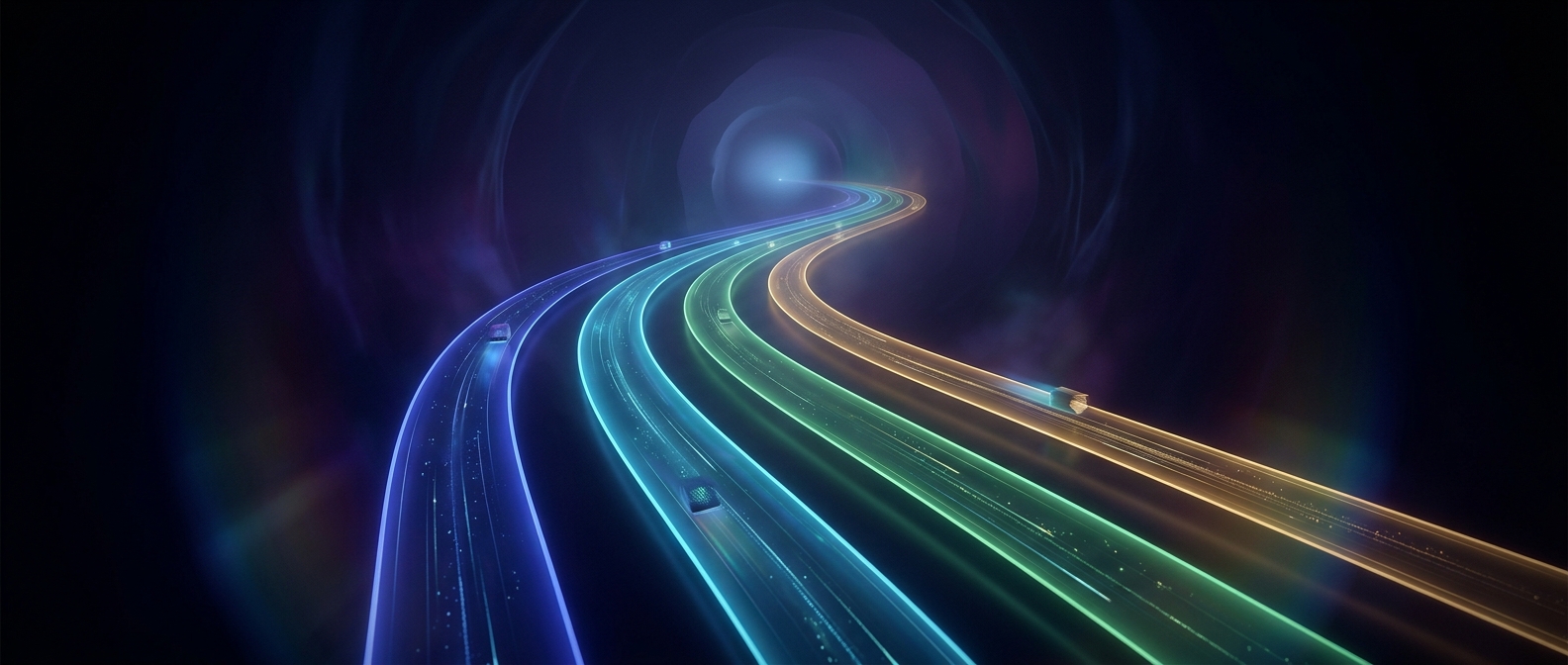
How Frequency Bands Keep Signals Apart
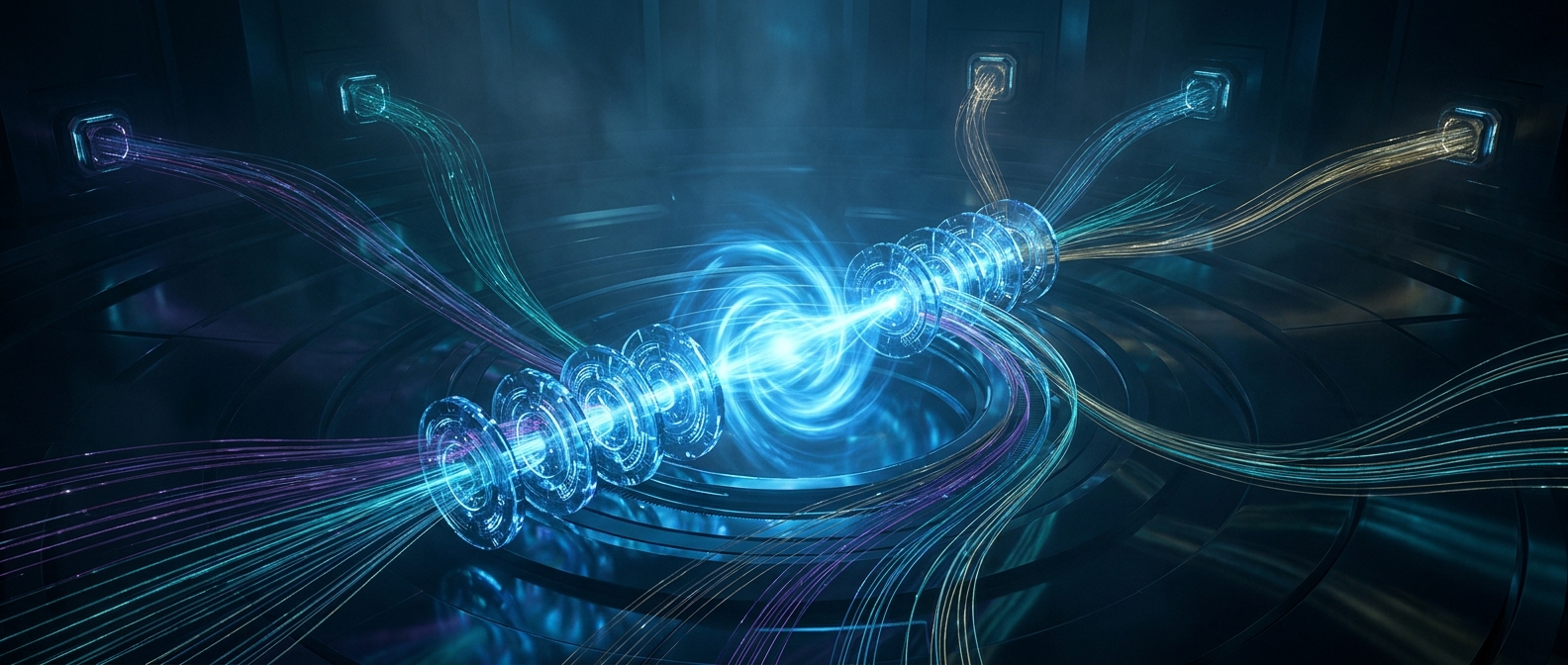
A shared communication channel does not have to carry just one signal at a time. In frequency-division multiplexing, a transmitter assigns each stream a different slice of the available frequency range. A combiner brings those streams together for transmission over one medium; at the receiving end, tuned filters separate the slices again.
The principle is like giving each conversation a different lane, but the lanes are ranges of wave frequencies rather than physical paths. A radio receiver, for example, can select a station’s assigned range while rejecting signals outside it.
The Tradeoff: More Lanes, Less Room per Lane
The available spectrum is limited, so dividing it among more streams leaves less frequency space for each one. Engineers also leave small gaps, called guard bands, between neighboring signals. These gaps help prevent imperfect transmitters and filters from letting one stream spill into another, but they use capacity that could otherwise carry information.
How tightly the bands can be packed depends on the equipment and the conditions of the channel. If neighboring signals overlap too much, interference can make reception harder; if the gaps are too wide, the system wastes usable spectrum.
That balance makes frequency division useful when multiple streams need to travel at once over the same cable or radio link. It turns one shared medium into several simultaneously usable channels—at the cost of carefully budgeting the frequency space.