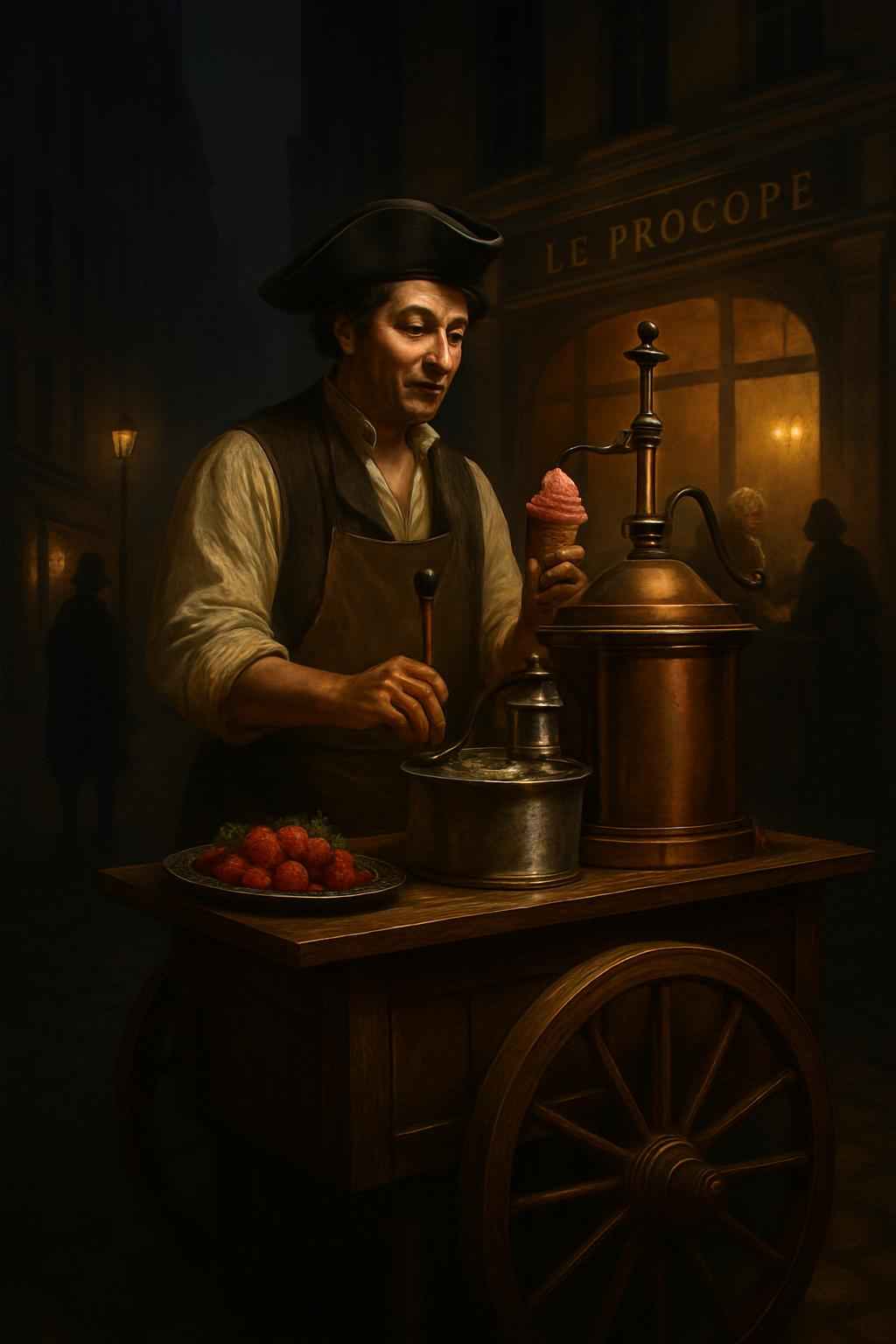
How a Copper Churn Changed Parisian Ice Cream
In 17th- and 18th-century Europe, making ice cream took more than a recipe. Cooks needed ice, insulated storage, and repeated attention to freeze a sweet mixture evenly. Those demands made the dessert costly and difficult to serve at scale, helping keep it among the luxuries of wealthy households and elite tables.
The Churn Made Freezing More Practical
Procopio’s copper churn helped by turning the mixture while it cooled in a bath of ice and salt. Salt lowers water’s freezing point, making the ice mixture colder than ice alone. As the churn moved, it kept the fruit syrup from freezing into a solid block and helped produce a smoother, scoopable dessert.
The important change was practical: a maker could produce batches more reliably without relying on constant hand-stirring. Copper also conducts heat efficiently, allowing warmth to leave the mixture quickly. The churn did not eliminate the need for ice or skilled work, but it made the process easier to repeat.
From Elite Tables to Café Counters
That reliability mattered in a city where cafés offered people a place to gather and sample new foods. A dessert that could be prepared in batches was better suited to public service than one made laboriously for a single household. Procopio’s equipment and enterprise helped ice cream move into Parisian cafés, widening access beyond aristocratic dining rooms.
The shift was gradual, not an overnight invention of mass production. Ice remained a seasonal and logistical constraint, and café ice cream was still a treat. But the churn changed the scale at which it could be made: a tool for controlling texture also helped change who could encounter the dessert—and where.