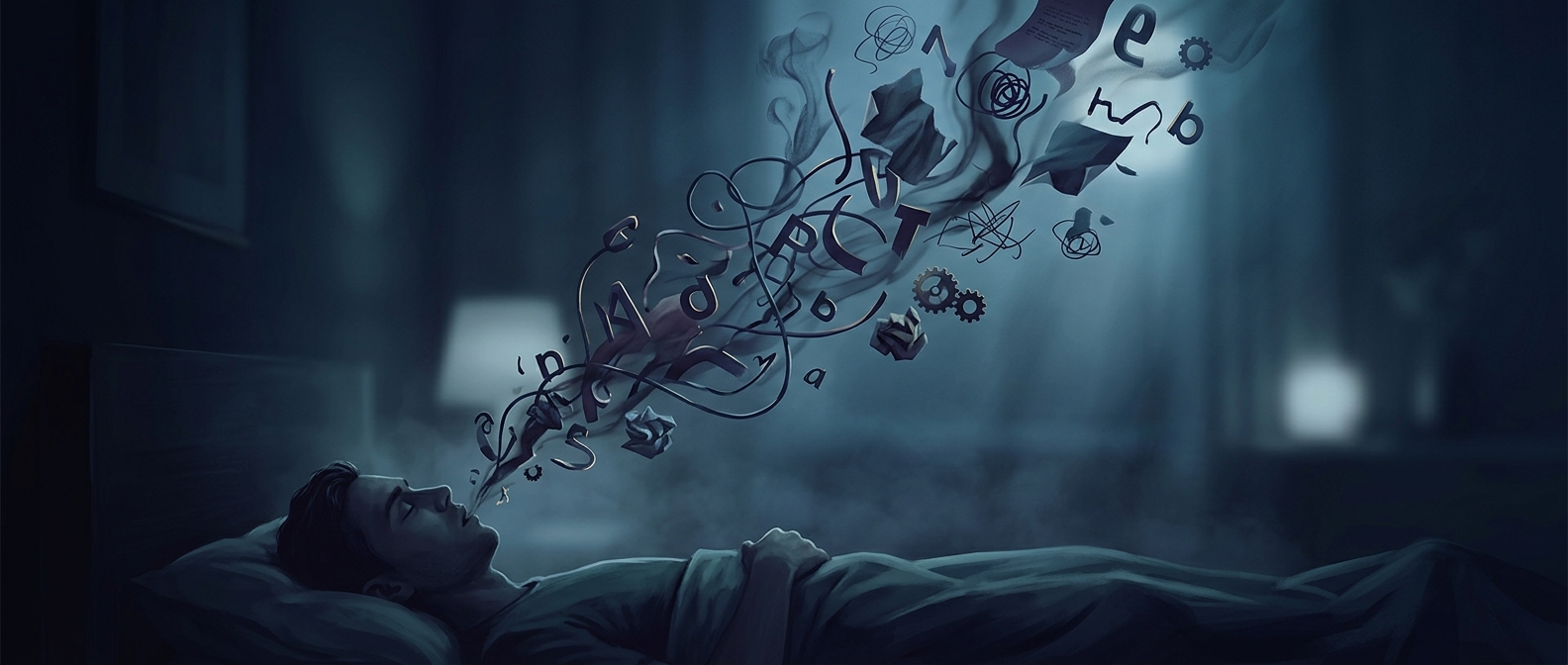
How a thought becomes a sleep utterance
Waking conversation is a coordinated task: the brain selects an idea, turns it into words, checks whether those words fit the moment, and adjusts when someone responds. During sleep, that coordination is loosened. A person may produce speech-like sounds or a short phrase without the same deliberate planning and monitoring that shape an ordinary conversation.
Sleep itself is not one uniform state. The brain moves through stages, and sleep talking can occur at different points in that cycle. The words may echo a dream, but they may also be disconnected from any remembered dream. A vocalization can surface without a complete, coherent scene behind it—rather like a small fragment of mental activity reaching the speech system on its own.
Why a vivid phrase can mislead
Listeners naturally treat speech as intentional: a name sounds like a clue, and a sentence invites a story. But sleep speech does not reliably carry the structure or purpose of waking speech. The speaker may not know they said anything, and the phrase alone cannot establish what they were thinking, feeling, or intending.
That mismatch is what makes sleep talking memorable. Someone awake hears a clear sentence and supplies the missing context; the sleeper may have produced only an isolated scrap. The words can be real while the apparent message is not. A strange overnight remark is therefore better understood as a brief, imperfect leak of sleep activity than as a dependable confession or explanation.