Why a pig race could never run like a horse race
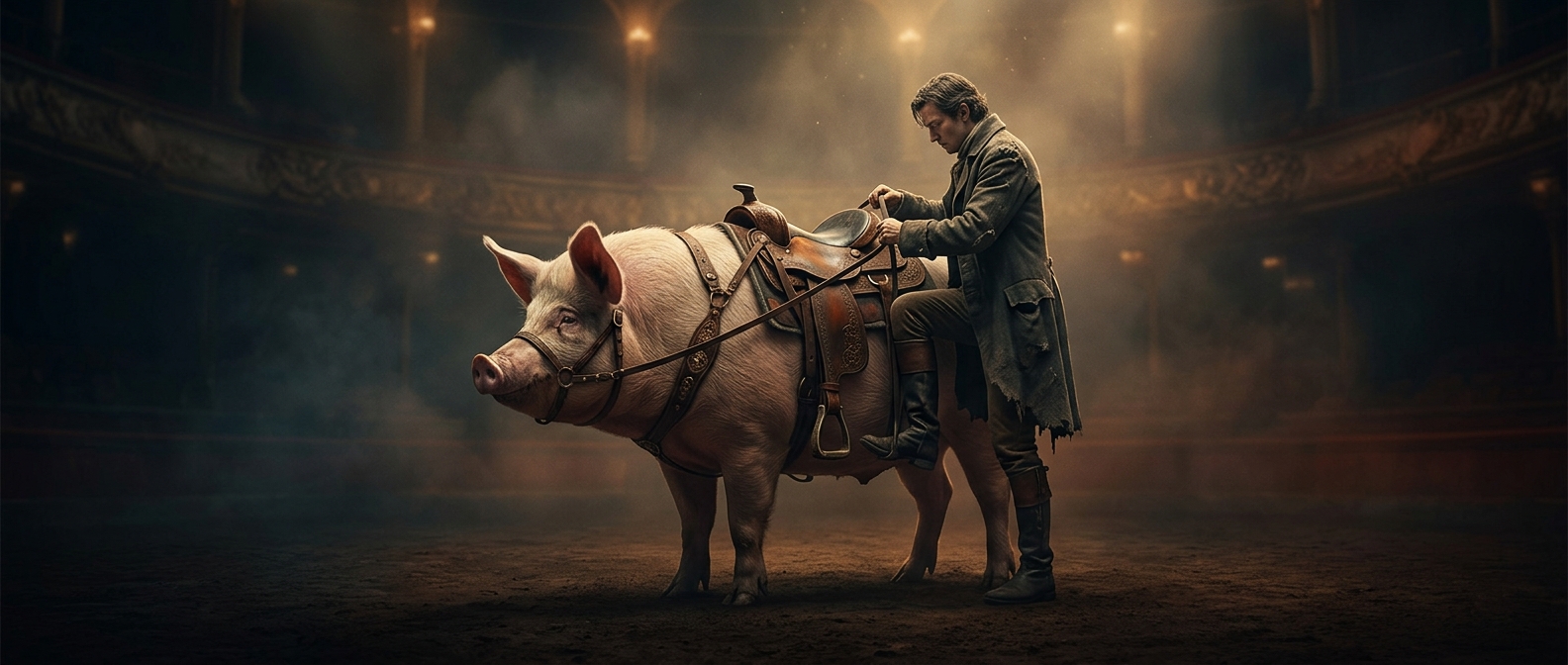
A horse race is built around control: riders guide trained animals along a course, and small differences in pace and judgment can decide the result. Pigs can move quickly, but they do not reliably take direction from a rider. Their speed therefore mattered less than whether they kept moving toward the finish at all.
That changed what spectators were watching. Instead of a polished contest of riding and strategy, a pig race made uncertainty part of the show. A pig might bolt ahead, stop, or veer away, turning the course into a comic scramble rather than a predictable test of skill.
The prize made the spectacle possible
For nobles sponsoring such an event, the appeal was novelty, not a practical alternative to horse racing. They could provide prizes without expecting the animals to perform with a jockey’s precision. The pigs’ unruliness was not a flaw that organizers could simply train away; it was the source of the entertainment.
The result was a race in which the finish mattered, but the unpredictable route to it supplied the story.