How a cell quiets one X chromosome
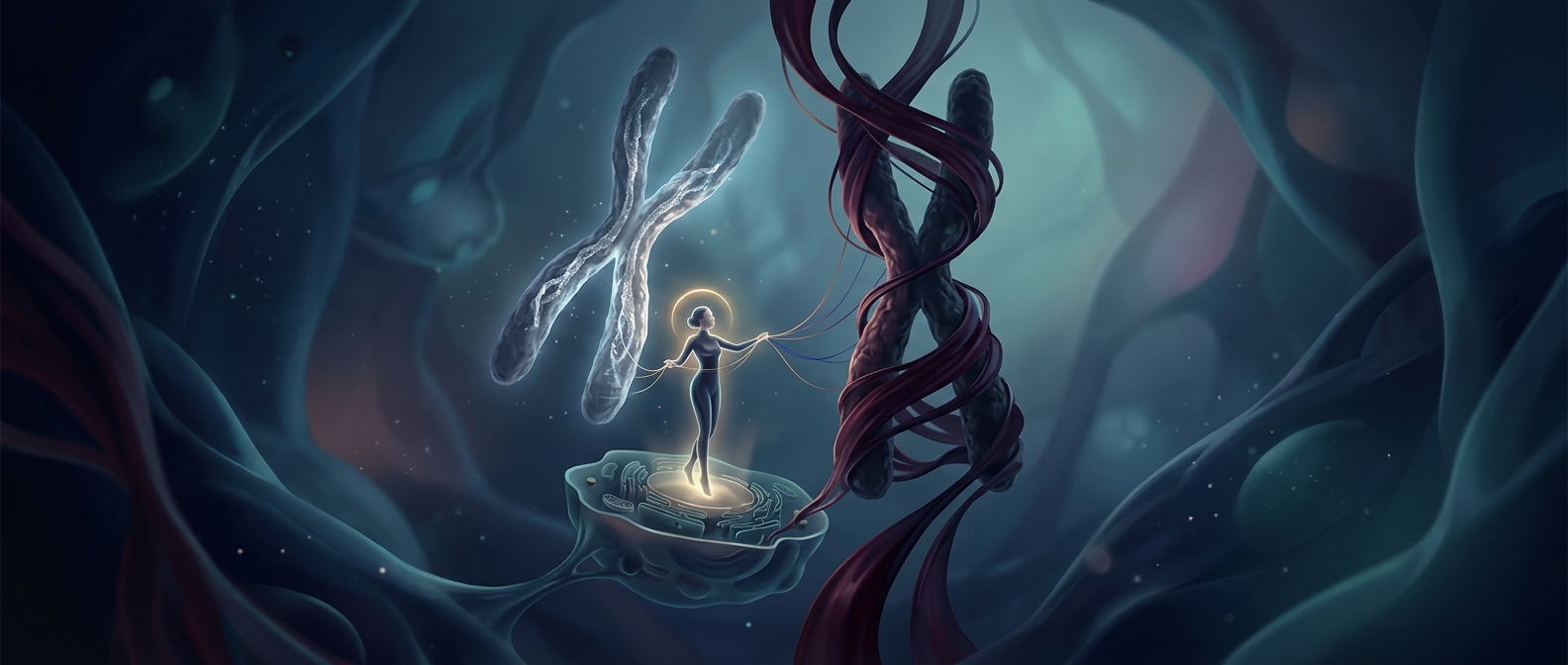
In cells with two X chromosomes, keeping both fully active would give many genes on the X a higher output than the body needs. Early in development, each cell largely silences one X. The chromosome is still present; most of its genes are simply made difficult for the cell to read.
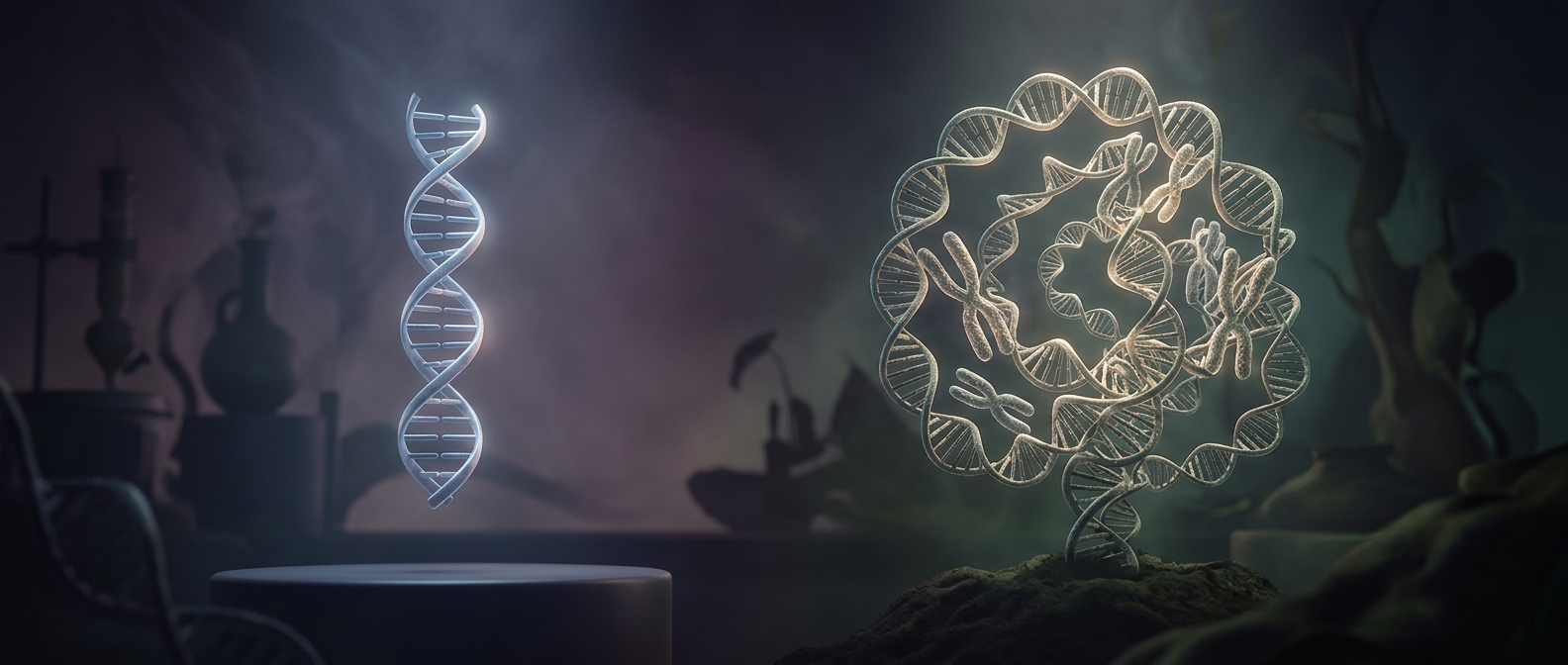
A molecule called XIST RNA helps start the process. It spreads along the X chromosome it is made from and recruits machinery that packs the chromosome’s DNA into a compact, mostly inactive form. This dense structure is sometimes called a Barr body. The change is copied as the cell divides, so its descendants generally keep the same X switched off.
A mosaic built from early choices
The choice is usually made independently in different cells, rather than being determined by which X came from which parent. As a result, one group of cells may use the X inherited from the mother, while another group uses the X inherited from the father. The pattern can differ from tissue to tissue, depending on which early cells contributed to each part of the body.
Silencing is broad, not absolute: some X-linked genes remain active on both chromosomes. And if the early choices are unevenly represented later, a person can have more cells using one X than the other—a pattern called skewed X-inactivation.
This mosaic can matter for X-linked conditions. If one X carries a disease-related variant, the proportion and location of cells using that X can influence how strongly a condition appears. The body’s tissues are therefore not always genetically uniform in their gene activity, even though their cells carry the same two X chromosomes.