A bitter drink built for an emperor
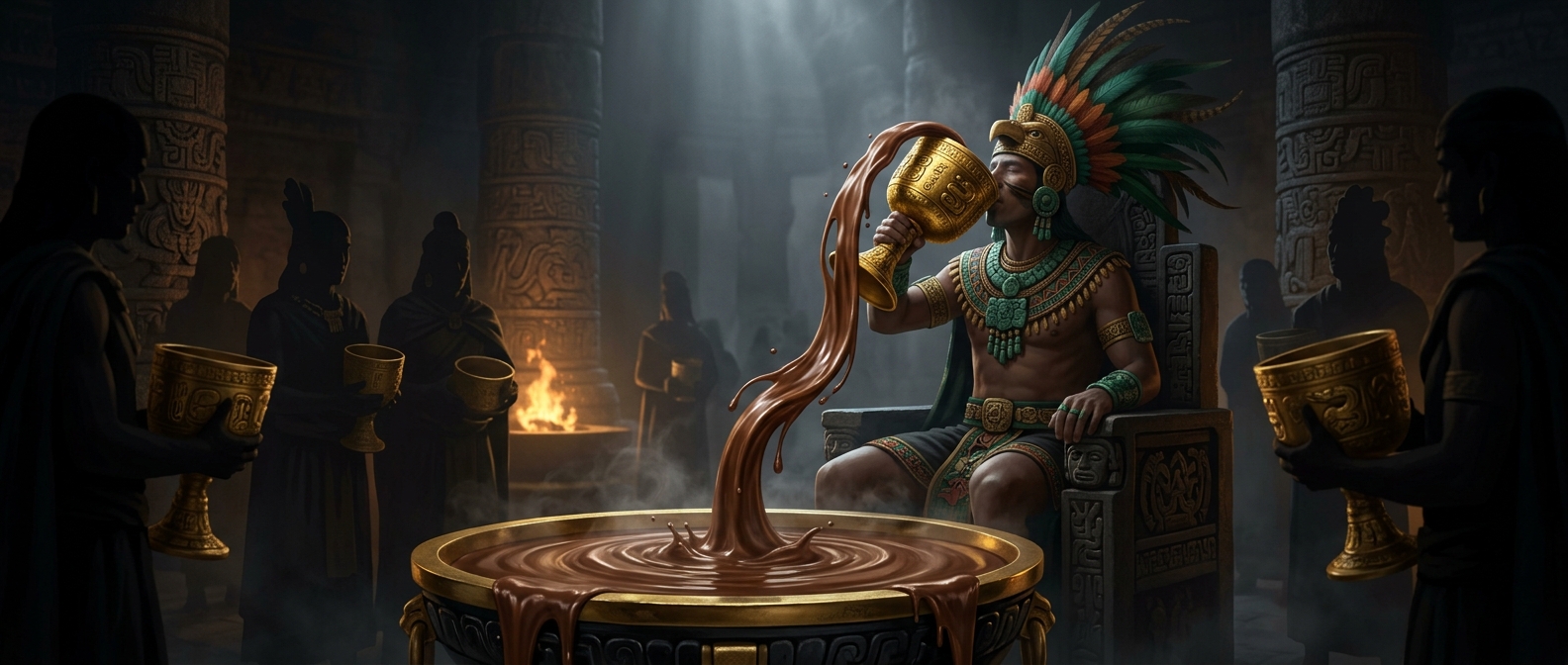
The chocolate Montezuma II drank was not a version of the sweet, milky drink familiar today. In Mesoamerica, cacao was commonly prepared as a foamy, unsweetened beverage, often seasoned with chili or other spices. Its bitterness came from the cacao itself; its froth, prized in its own right, could be made by pouring the liquid back and forth between vessels.
That preparation made the drink more than a quick source of nourishment. It required ingredients and careful handling, and its unfamiliar, forceful taste set it apart from an everyday refreshment. For an emperor, drinking it could display access to a prized substance as well as provide a pleasurable ritual.
Why cacao carried power
Cacao beans were valuable partly because they could be counted, stored, and exchanged—qualities that made them useful as money. Their importance also connected distant regions: cacao grew in tropical areas, so beans reaching the Aztec capital reflected trade and the empire’s reach. A ruler’s supply was therefore not simply a pantry item; it rested on the movement of goods and the authority that helped command them.
Cacao also contains mildly stimulating compounds, including theobromine. That does not establish how much energy Montezuma felt, but it helps explain why a rich cacao drink might have seemed invigorating. The belief that it gave him stamina and power belonged to the drink’s cultural meaning, not just its physical effects.
A drink that made rank visible
Serving elaborate cacao to the ruler turned a scarce, widely valued commodity into a daily sign of privilege. Its bitter, spiced character would have made the experience unlike dessert: this was a drink whose value came as much from what it represented as from how it tasted.