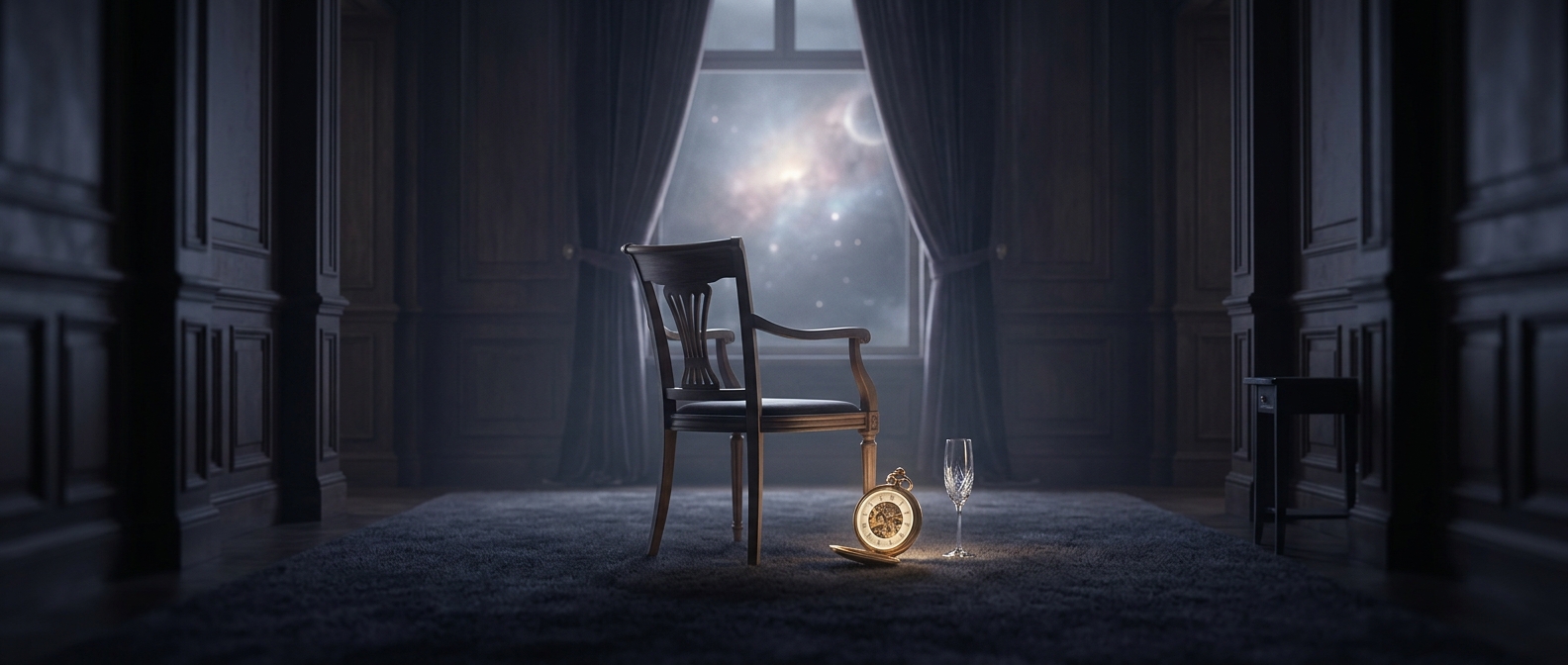
A Party Set Up for Time Travelers
Stephen Hawking’s empty party was a playful test of a difficult question: if someone could travel back in time, could they visit us? He arranged the gathering with champagne and balloons, but kept it secret until afterward. Only then did he announce that it had happened and invite any time travelers to come.
The timing was the trick. A person arriving from the future could, in principle, learn about the party after Hawking made it public and travel back to its date. Someone living in the present could not respond to an invitation that had not yet been sent.
What the Empty Room Could—and Could Not—Show
No one appeared. Hawking treated the result as evidence against the possibility of traveling into the past, but the experiment could not rule it out: a traveler might never hear of the invitation, might be unable to reach that moment, or might have other reasons not to attend. The party was an entertaining demonstration, not a controlled scientific test.
It also hinged on a specific kind of time travel. Moving forward in time faster than people elsewhere—something allowed by known physics under certain conditions—is not the same as returning to an earlier date. Hawking’s invitation targeted that second, far more speculative possibility. Its cleverness lay in turning an abstract question into a simple scene: the party was over before anyone could know it had happened.