Why an iron core made electricity more useful
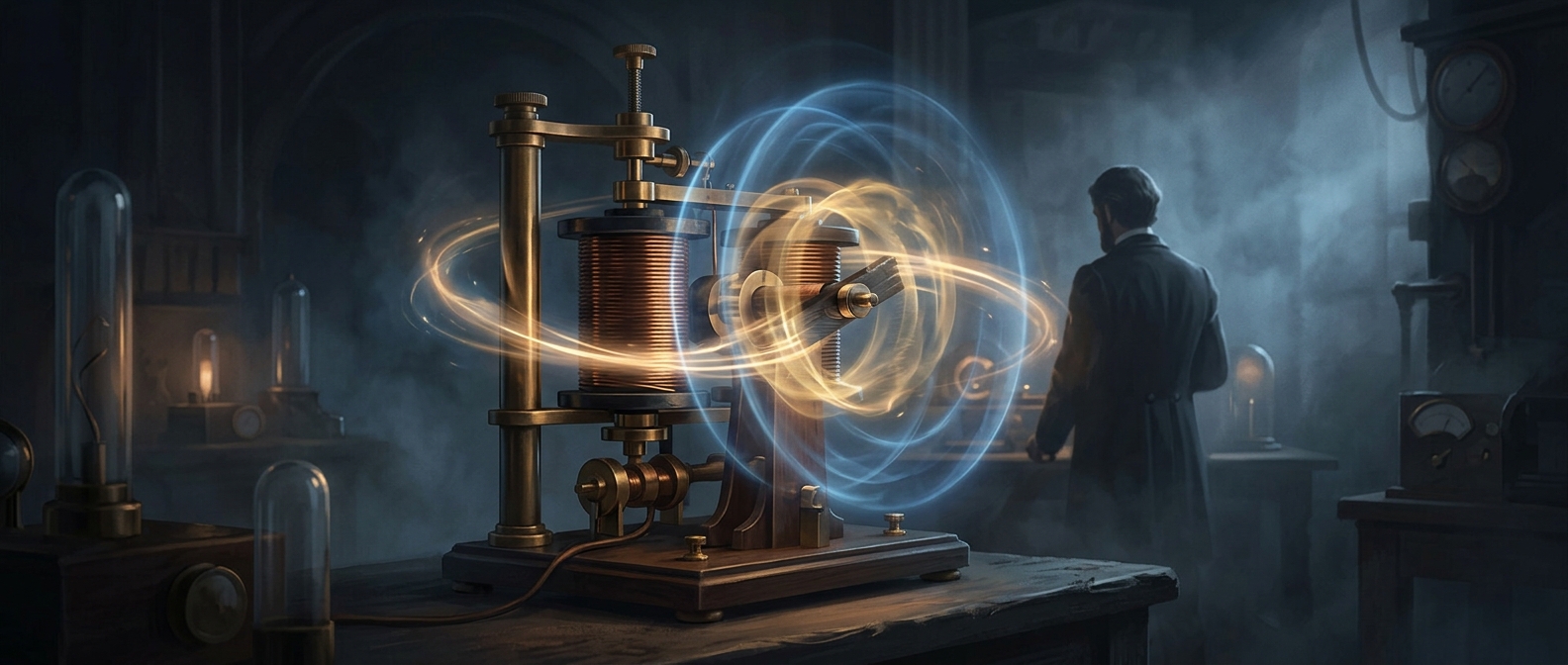
An electric current flowing through a wire creates a magnetic field, but a bare coil produces a relatively weak one. Put soft iron inside the coil and the iron’s tiny magnetic regions line up with the field, concentrating it. The result is an electromagnet: a magnet whose strength comes from an electric current rather than from permanently magnetized material.
The key practical step was wrapping insulated wire around the iron. Insulation kept neighboring turns from touching and short-circuiting, so current could travel through many loops. Each loop added to the magnetic field. More turns and stronger current could produce a stronger pull, though the wire also heated up and limited how much current a design could safely carry.
A magnet that could be switched off
That controllability changed the job a magnet could do. A permanent magnet keeps attracting metal; an electromagnet can be energized to grab a load and de-energized to let it go. This made magnetic force useful not just as a laboratory demonstration but as a tool that could be operated on demand.
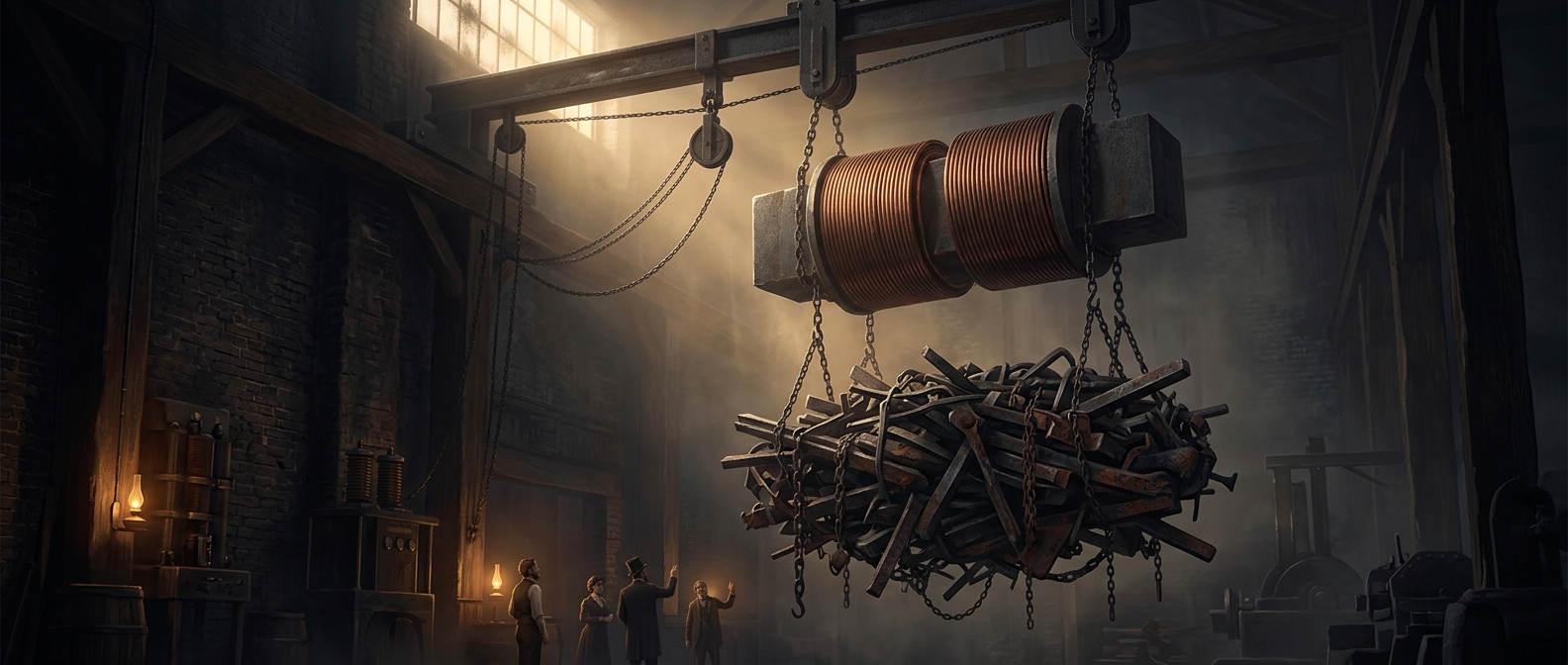
As electrical power and engineering improved, builders could make larger coils and supply them with more current. Industrial lifting magnets used the same principle to move heavy iron and steel, then release it by cutting the power. The important advance was therefore not simply a stronger magnet: it was a magnet whose grip could be commanded by a switch, turning electrical energy into controllable industrial muscle.