Why crews trigger avalanches on purpose
Rogers Pass cuts through steep, snowy terrain in British Columbia, where snow can build into unstable layers above the highway. A slab avalanche happens when a cohesive layer of snow breaks loose from a weaker layer beneath it and slides downhill. If that happens over an open road, the moving snow can bury vehicles and block the route.
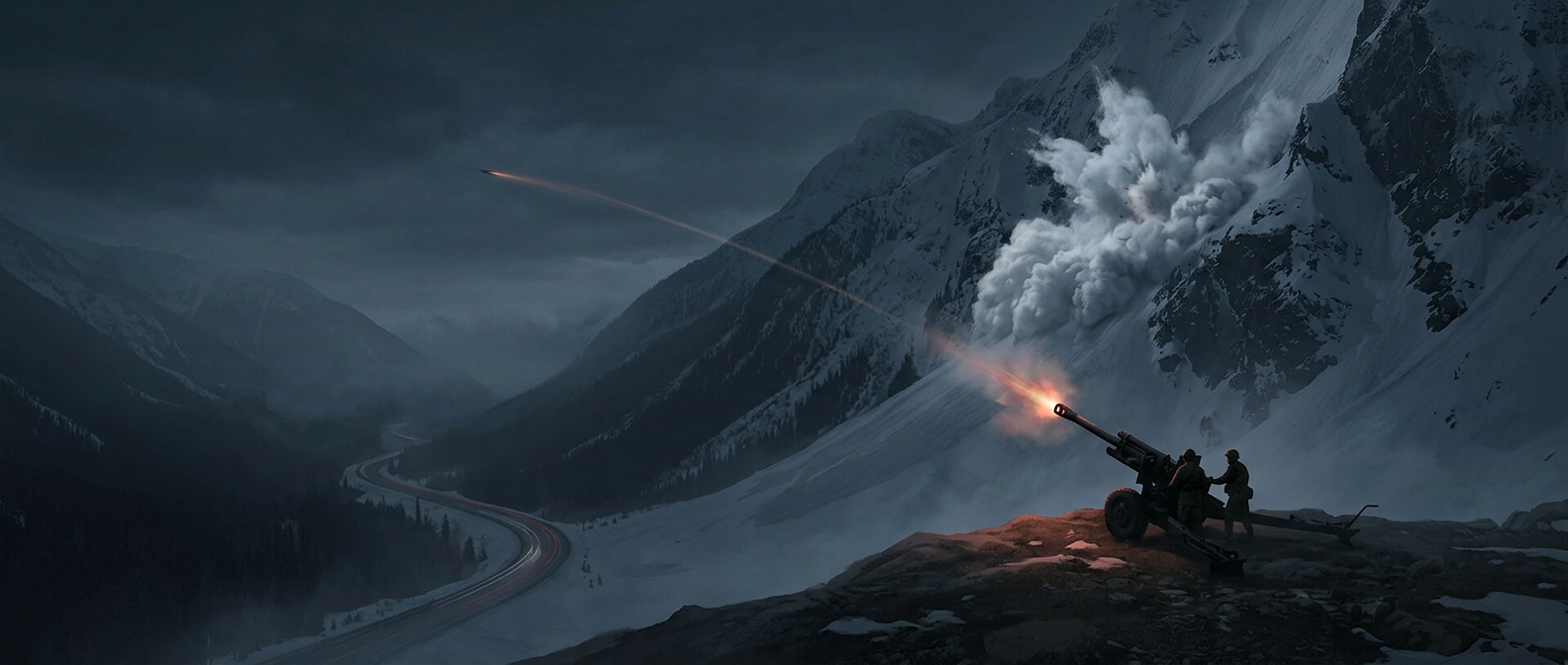
Avalanche-control crews use 105 mm howitzer shells to set off slides while traffic is kept out of danger. The blast sends a sudden disturbance into a slope; where the snowpack is ready to fail, that jolt can break its weak layer and release the snow above it. The goal is not to make every slope move, but to trigger hazardous snow in places crews have identified as unstable.
A smaller release is easier to manage
Waiting for a natural avalanche means waiting without control over when it happens or how much snow may gather first. Releasing unstable snow earlier can reduce the amount left on a slope to threaten the highway. It does not make the pass permanently safe: new snowfall, wind, or changing temperatures can create fresh instability, so the risk has to be assessed again.
The highway is empty during firing because the blast and the avalanche it may produce are dangerous in their own right. Crews also need to account for snow moving across or down toward the road. Once the operation is over, the route still has to be checked before traffic returns.
The striking tradeoff is that a brief closure and a controlled explosion can prevent a less predictable event from reaching drivers. At Rogers Pass, the road’s safety sometimes depends on making the mountain release its snow before the highway fills with cars.