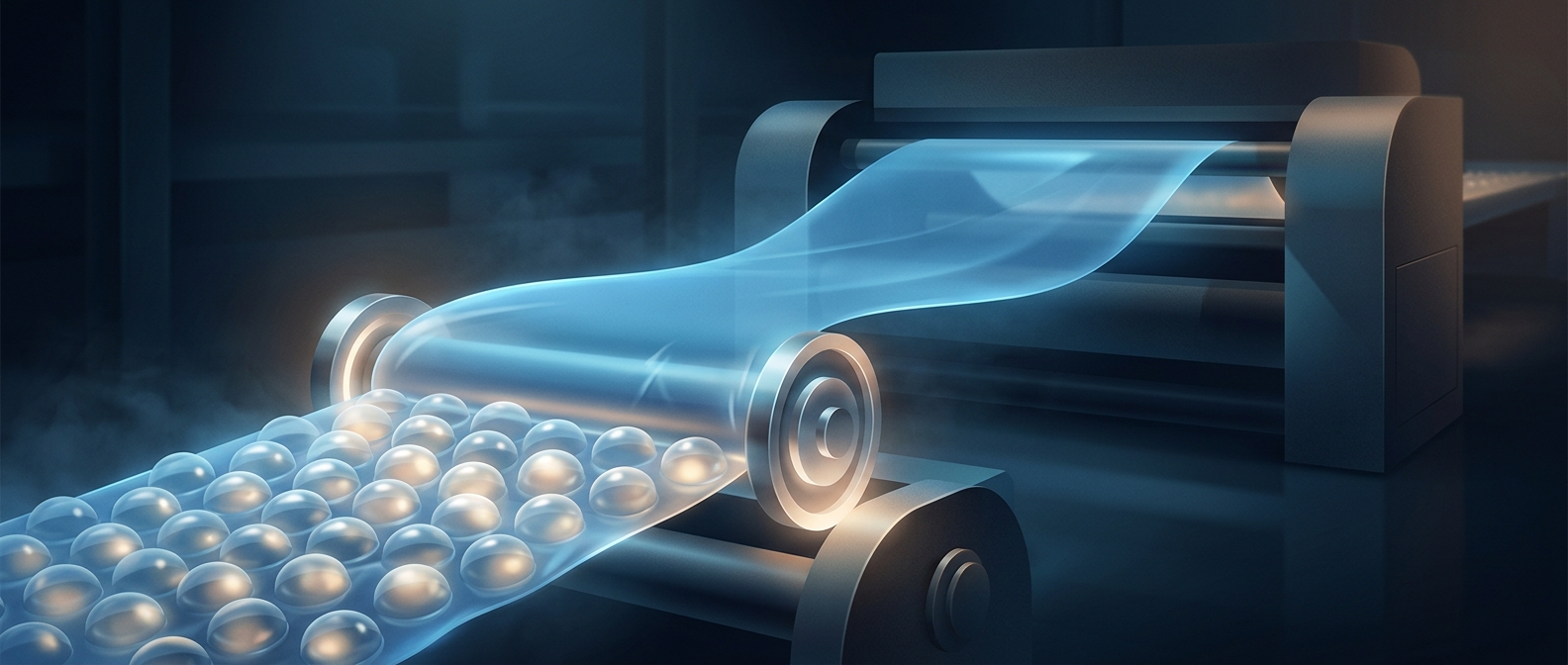
How a flat film becomes a field of cushions
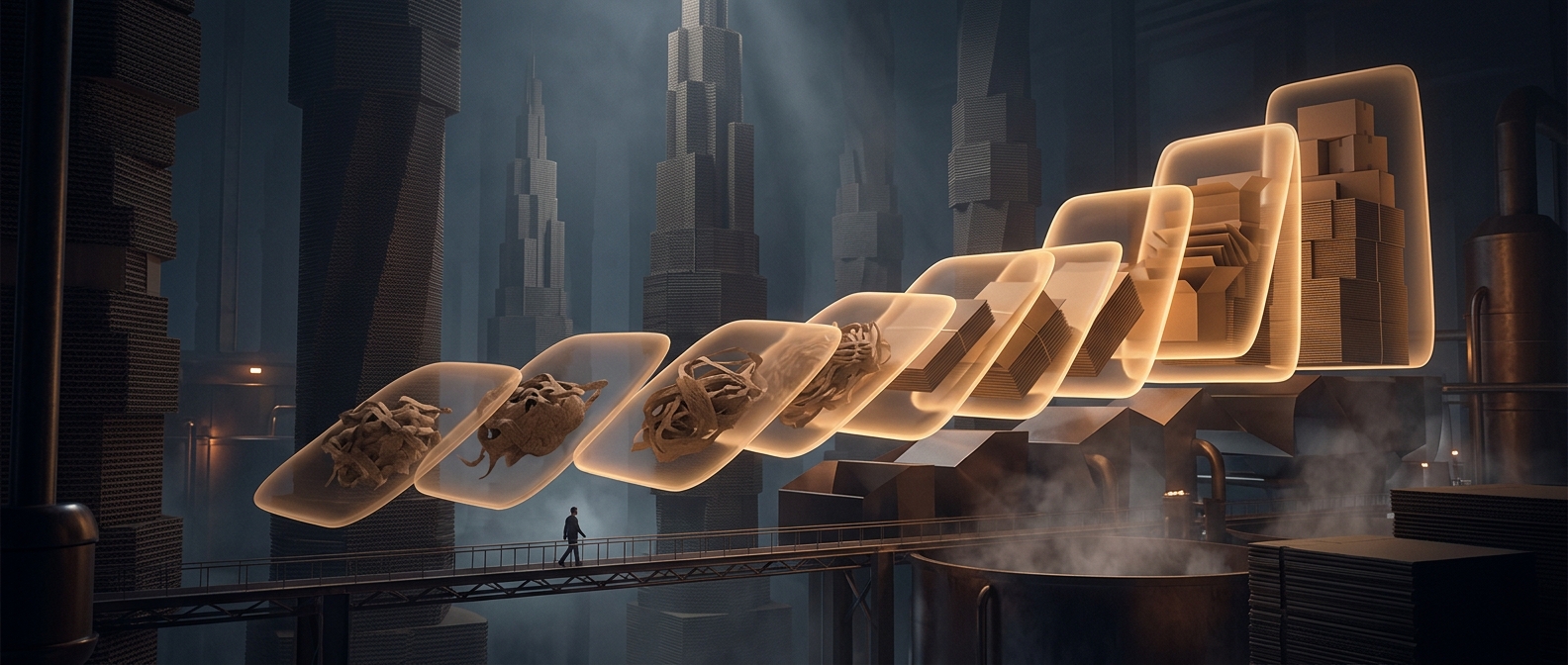
Bubble wrap starts as polyethylene film, not as a sheet of trapped air. In a common production method, heat softens one layer while a patterned roller and suction draw it into rows of small cups. A second layer is laid over those cups and sealed around them, trapping air inside each pocket.
The seal is what makes the bubbles useful: if the layers separate, air escapes and the pocket can no longer spring back against a bump. The machinery has to keep the films aligned and the seals consistent as the material moves through the line.
The cost is built in before the first box
Air adds cushioning without much weight, but producing the sheet still requires plastic resin, heat, power, and equipment. The manufacturer also has to make a continuous roll whose pockets hold air reliably. Those costs arise before the wrap is cut, shipped, or used to protect anything.
That creates a packaging tradeoff. A business pays upfront for material and production in exchange for a lightweight cushion that can reduce damage to goods in transit. If the pockets leak or the wrap is poorly made, the packaging may take up space without delivering dependable protection.
Why the pockets matter
When a package is jolted, the air-filled pockets compress and spread some of the force across the wrap rather than letting it strike one small point on the item. The cushioning comes from the sealed structure, not simply from putting air around an object. Each pocket is a tiny manufactured chamber—and the roll’s protective value depends on thousands of those chambers surviving the trip.