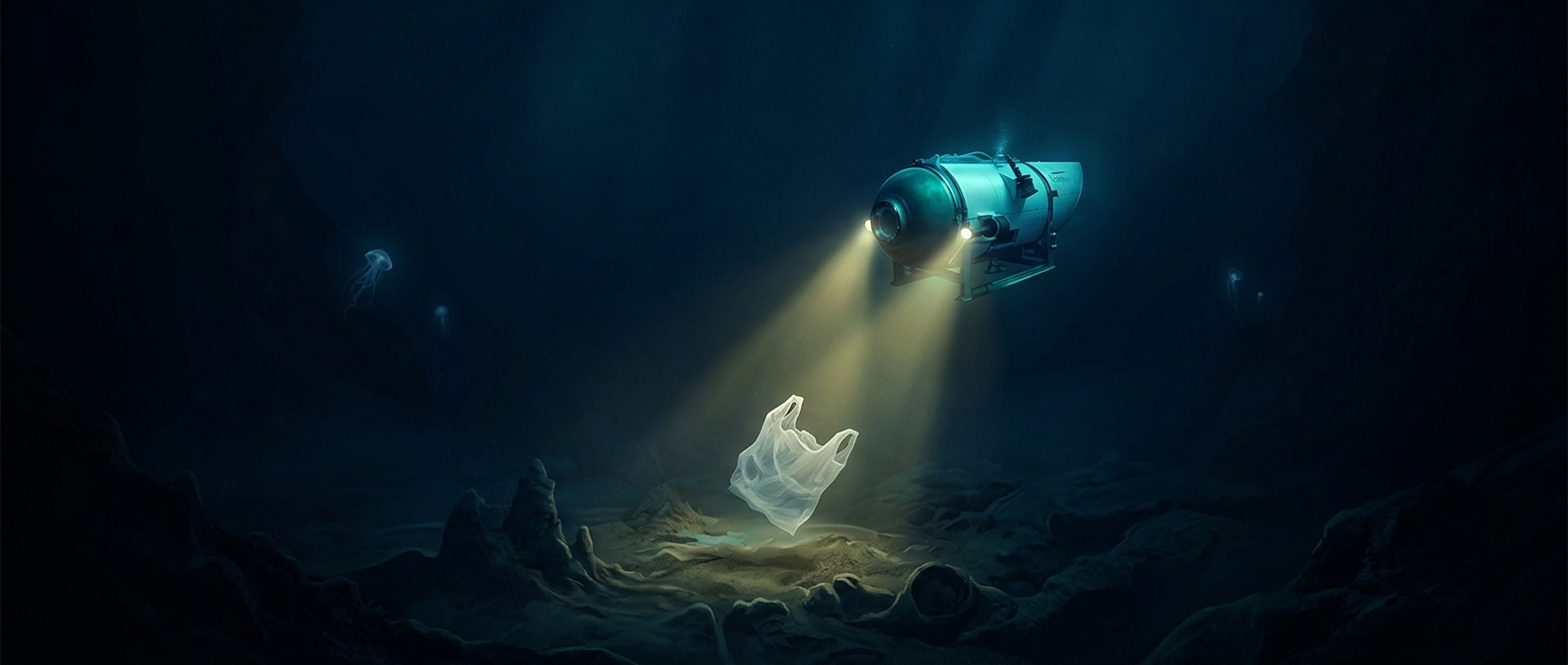
A bag at the bottom of the ocean
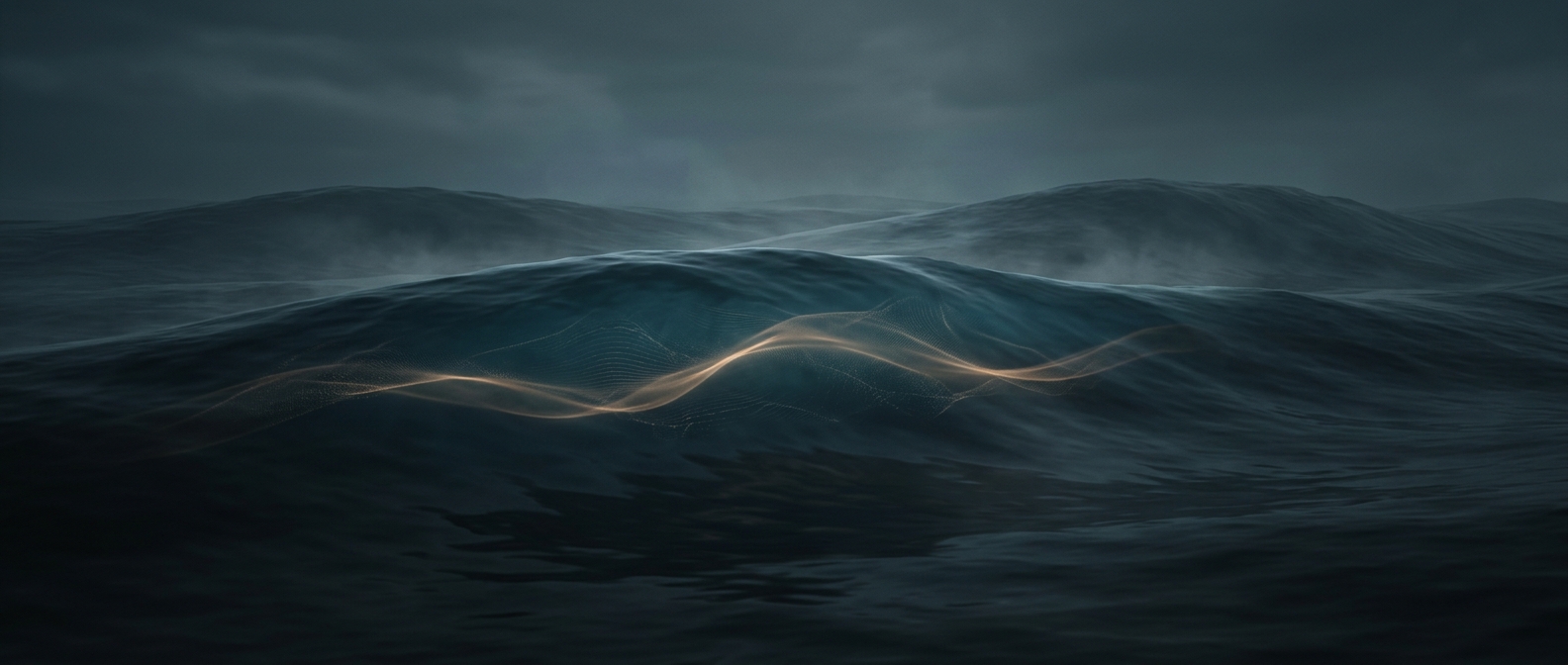
A plastic shopping bag is light enough to flutter in a breeze, yet one was found in the Mariana Trench, thousands of meters below the surface. Getting there does not require the bag to sink like a stone. Ocean currents can carry floating litter far from shore; once plastic becomes waterlogged, gathers organisms, or gets caught with heavier debris, it can descend. Deep-sea currents can then move material along the seafloor.
The pressure changes; the plastic remains
At trench depths, the water presses with enormous force. A crewed submersible must have a strong pressure-resistant hull and carefully controlled buoyancy to descend and return. The bag, unlike the vehicle, has no protection or destination: it can be carried down and left on the seabed, where little sunlight reaches and ordinary surface conditions do not apply.
That does not mean plastic disappears in the deep. It can break into smaller pieces, but fragmentation is not the same as biodegrading into harmless material. A bag observed beside deep-sea life is a reminder that debris can reach habitats far removed from the places where it was discarded—and remain part of the environment there.
A long route with no clear trail
A sighting at the trench bottom cannot, by itself, reveal where or when that particular bag entered the sea. Its significance is more basic: the ocean’s depth is not a barrier that keeps human waste out. A lightweight object can travel through currents and settle beside animals in one of the planet’s most remote environments.