How an elephant turns undergrowth into a route
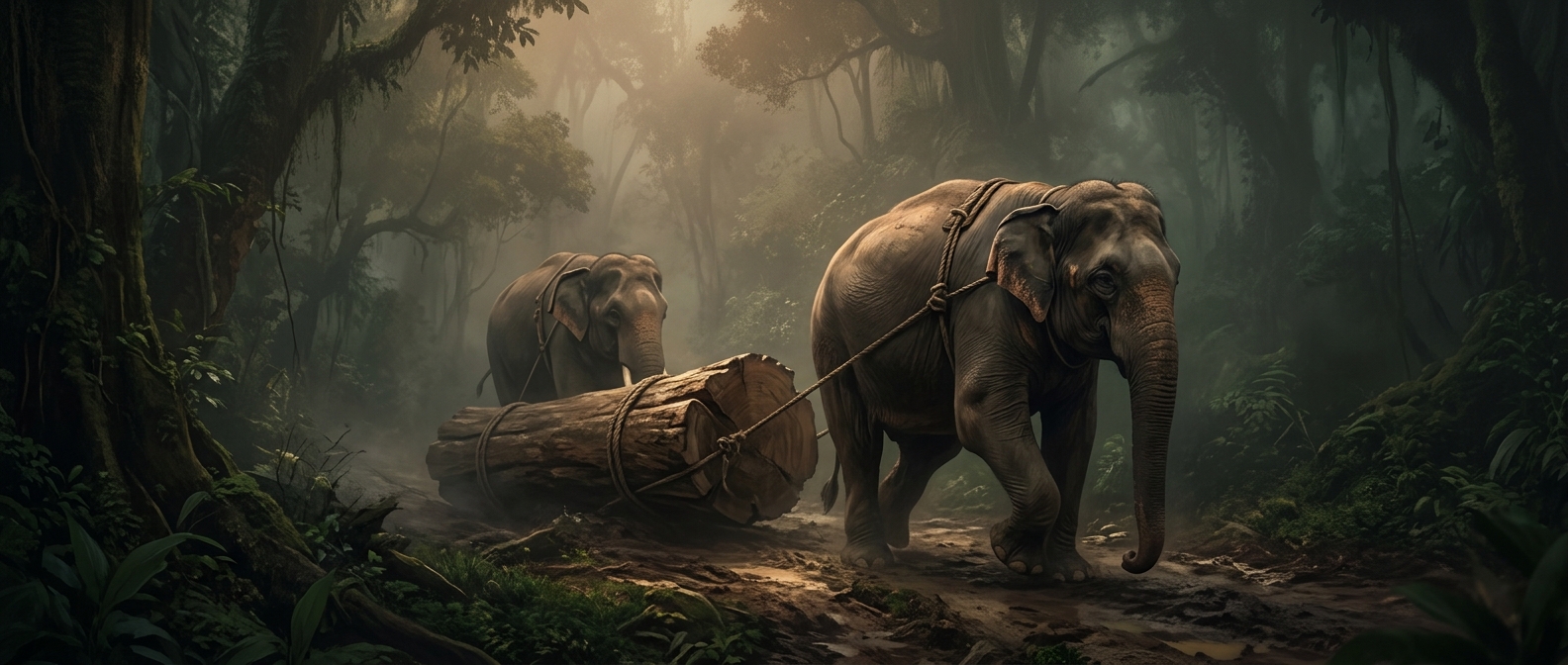
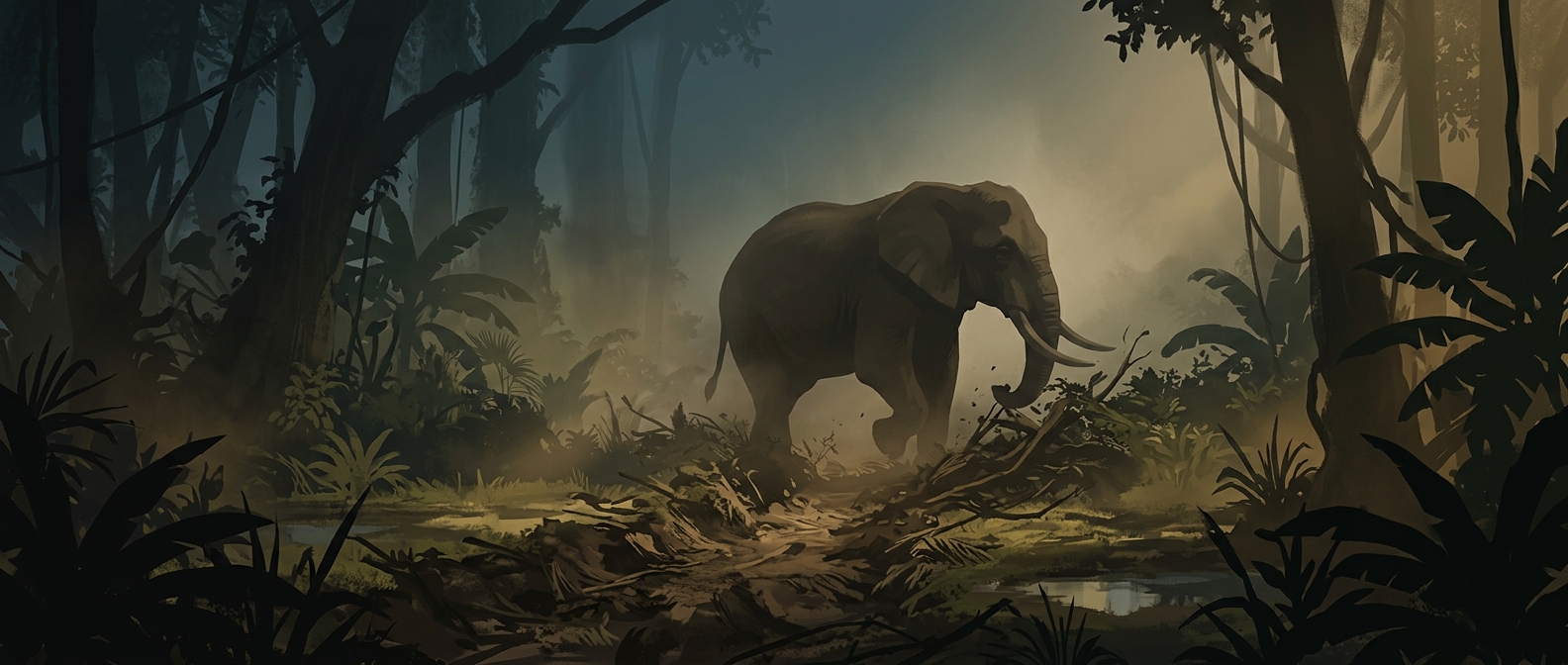
In dense forest, the obstacle is often not a solid tree but a tangle of flexible stems, vines, and low branches. An elephant can press into that tangle with its head and shoulders, use its trunk to pull or shift vegetation, and step on plants too low or weak to bend out of the way. Its size makes the difference: smaller animals may have to weave around each stem, while an elephant can open a passage through the cluster.
A path takes shape through repetition
One passage does not automatically become a lasting trail. When elephants repeatedly travel along a similar line, their weight compresses the ground and breaks or bends plants in the way. The resulting opening takes less effort to cross than untouched vegetation, encouraging continued use and making the route easier for other animals to follow.
That is a practical transport advantage in a forest where visibility can be limited and detours costly. A trail links places elephants already need to reach, while also creating a usable corridor through dense growth. The same passage can be helpful to smaller animals, though it is still a route shaped by the elephants’ movement—not a deliberately planned road.
The tradeoff at ground level
Opening a path changes the vegetation along it: plants are crushed, bent, or removed, and the ground is repeatedly compacted. The effect is concentrated where elephants travel, rather than spread evenly through the forest. A single trail is therefore both a shortcut and a narrow disturbance—an animal-made corridor whose shape reflects the force and habits of its largest users.