Practicing Radha’s Devotion from the Inside
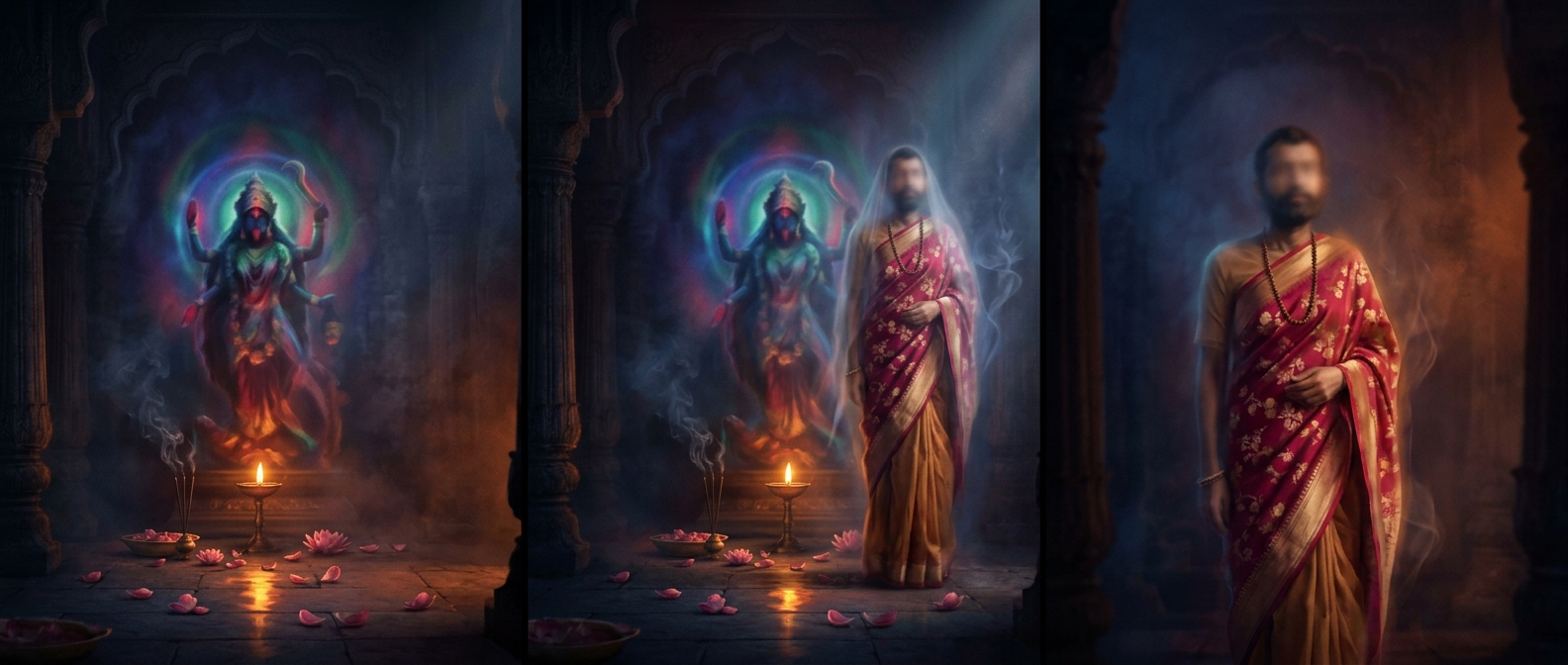
Ramakrishna’s months in women’s clothing were a form of embodied devotion: rather than only praying or thinking about Radha, he tried to enter the emotional role of Krishna’s beloved. In Hindu devotional traditions, Radha represents a lover’s intense longing for Krishna. That longing is treated not merely as romance, but as a model for the soul’s yearning for the divine.
By adopting women’s clothing and speech and living in the women’s quarters, Ramakrishna made the practice part of ordinary life. The point was not simply to portray a character in a ritual. It was to shape his habits and feelings around Radha’s relationship with Krishna, so that devotion became something he inhabited rather than observed from a distance.
A Devotional Method, Not a Theatrical Performance
Some Hindu devotional practices use a chosen emotional relationship—such as servant, friend, parent, or beloved—to draw the worshipper closer to God. Radha’s role offered Ramakrishna a way to approach Krishna through love and longing. His account belongs to that religious framework; it should not be reduced to a modern performance or treated as a simple statement about personal identity.
The striking consequence is how literally he pursued the practice: for six months, devotion shaped not only his prayers but also his clothing, speech, and daily surroundings. For Ramakrishna, the route to a spiritual perspective ran through the details of lived experience.