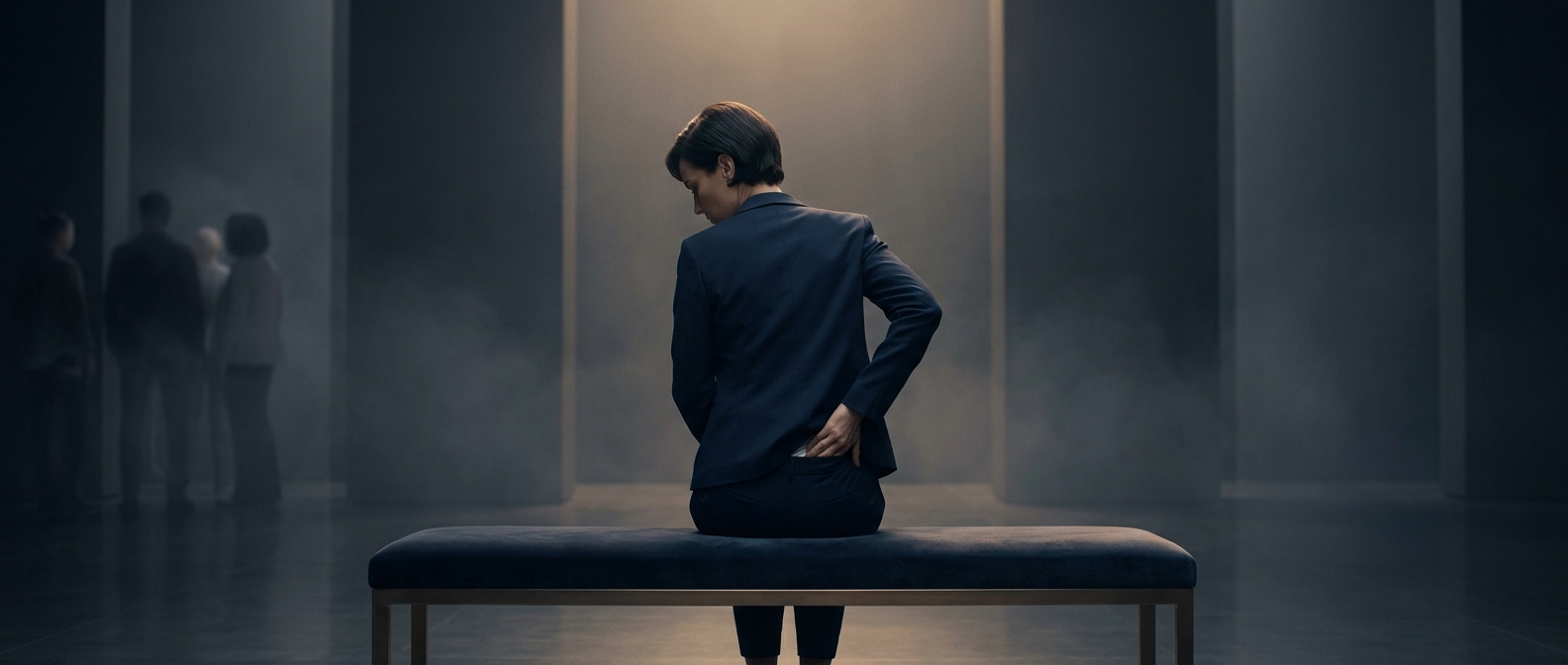
Why a tiny clothing adjustment can draw a crowd’s eye
A hand moving toward the back of your clothes is not automatically noticeable. It becomes noticeable when it breaks the pattern of what everyone else is doing. In a quiet meeting, a sudden reach may stand out; while people are shifting in their seats or settling their coats, the same movement has more competition.
This is a basic feature of attention: people are more likely to register changes that seem unexpected in the immediate scene. The brain does not inspect every gesture equally. It gives extra weight to movements that depart from the surrounding rhythm, then uses context to guess what they mean.
Make the movement fit the moment
That is why a small adjustment can be less conspicuous when it is part of a larger, ordinary action. If you are already standing, turning, or straightening your clothes, a brief hand movement may read as part of that shift rather than as a separate event. The goal is not to make the gesture invisible; it is to make it unsurprising.
This is social camouflage: an action borrows the meaning of the movements around it. A hand that appears to be smoothing a shirt or adjusting a waistband is easier to overlook when the rest of your posture supports that interpretation. A sharp, isolated tug does the opposite: it gives observers a clear moment to notice and wonder about.
Why “unnoticed” is never guaranteed
People differ in what they attend to, and the setting matters. A crowded room offers more competing activity than a silent one, while a person already looking your way may catch even a subtle gesture. Still, the practical lesson is simple: movements attract attention less when they belong to the scene. The most discreet adjustment is often the one that looks like an ordinary change of posture, not a furtive maneuver.