How a wick bends into the flame’s edge
A candle wick does more than hold a flame upright. Its cotton fibers draw melted wax upward, much like a tiny bundle of straws. Near the flame, the wax vaporizes and burns; the wick itself gradually chars as it is exposed to heat.
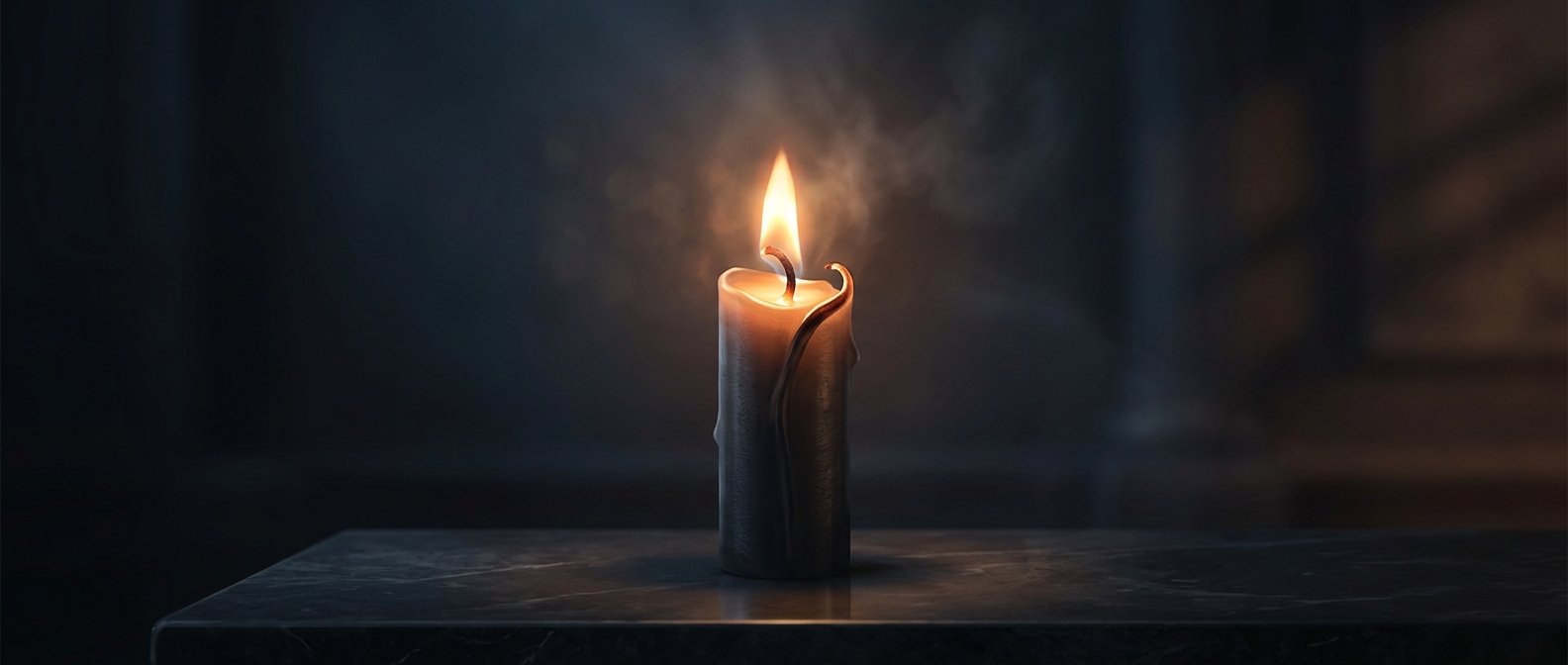
In a self-trimming wick, the braid is made to bend as it burns. The curling is a design feature, not a random kink: it carries the charred tip away from the flame’s cooler center and toward the hotter, oxygen-rich edge. There, the exposed tip burns down to ash instead of growing into a long carbon-coated stub.
Why the curl matters
If a wick stays upright and its charred tip keeps growing, it can produce a larger, less steady flame and more soot. A curling wick helps limit that buildup by continually bringing the tip into a region where it can be consumed. The remaining wick keeps drawing up wax, sustaining the flame.
The design is a small balance of materials and geometry. A wick must curl enough to burn off its tip, but not so aggressively that it disrupts the flame or wax flow. When the braid works as intended, the candle quietly manages a task that otherwise might require someone to trim the wick by hand.