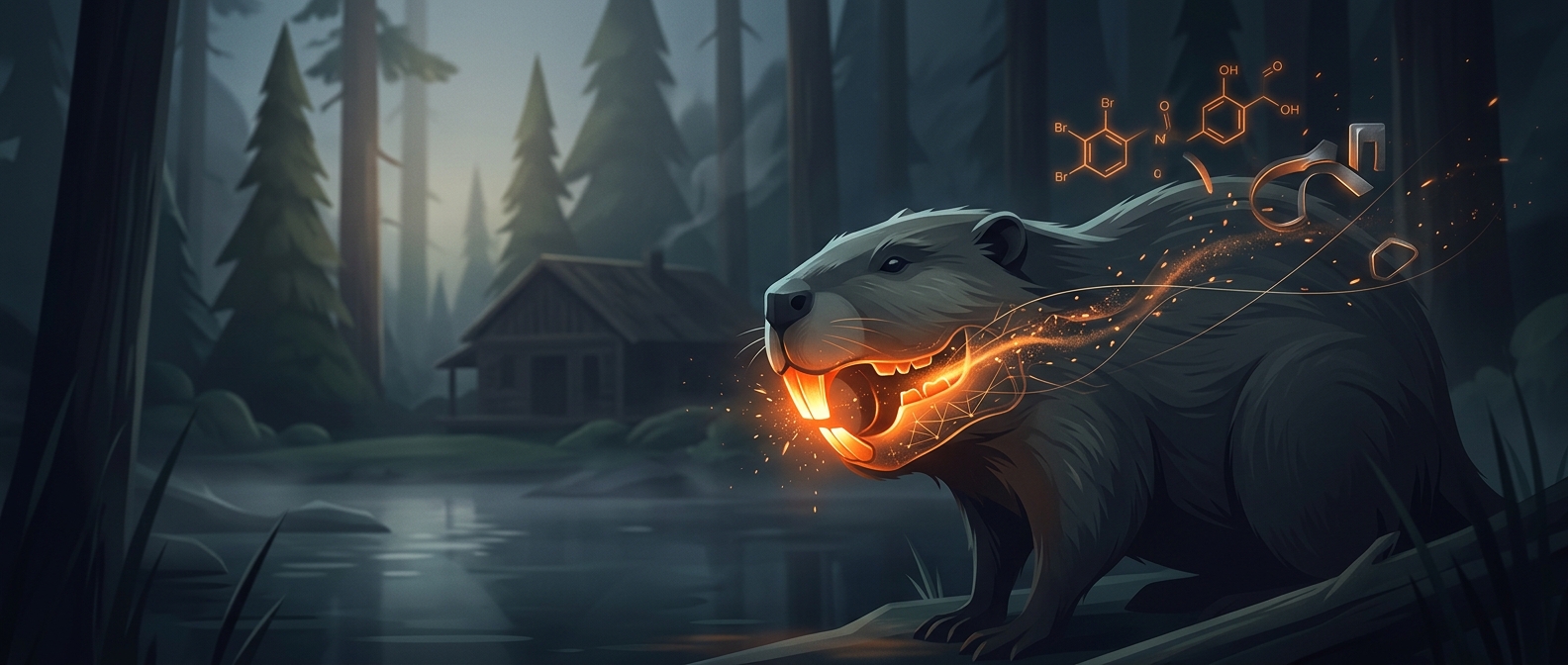
The color marks the tooth’s working surface
A beaver’s incisors are built less like ordinary teeth than like durable chisels. The orange enamel coats the front, exposed face of each tooth; behind it lies softer dentin, the tissue that forms much of a tooth’s core. Iron in the enamel gives it its rusty color and helps make that outer layer resistant to wear and acid.
That matters because gnawing puts repeated pressure and abrasion on the teeth. The enamel protects the cutting edge as it scrapes against bark and wood, while the less-resistant material behind it wears away more quickly.
Uneven wear keeps the edge sharp
Beaver incisors grow continuously, replacing material lost during use. Because the enamel-covered front wears more slowly than the dentin behind it, the tooth develops a beveled edge rather than becoming blunt. The arrangement helps keep the incisors ready for cutting without requiring the animal to stop gnawing for its teeth to recover.
So the orange is not grime or staining from a meal. It is a visible sign of a specialized tooth surface: a hard, iron-bearing layer that helps a fast-growing incisor stay useful through a lifetime of chewing.