Why put flowers into a passport?
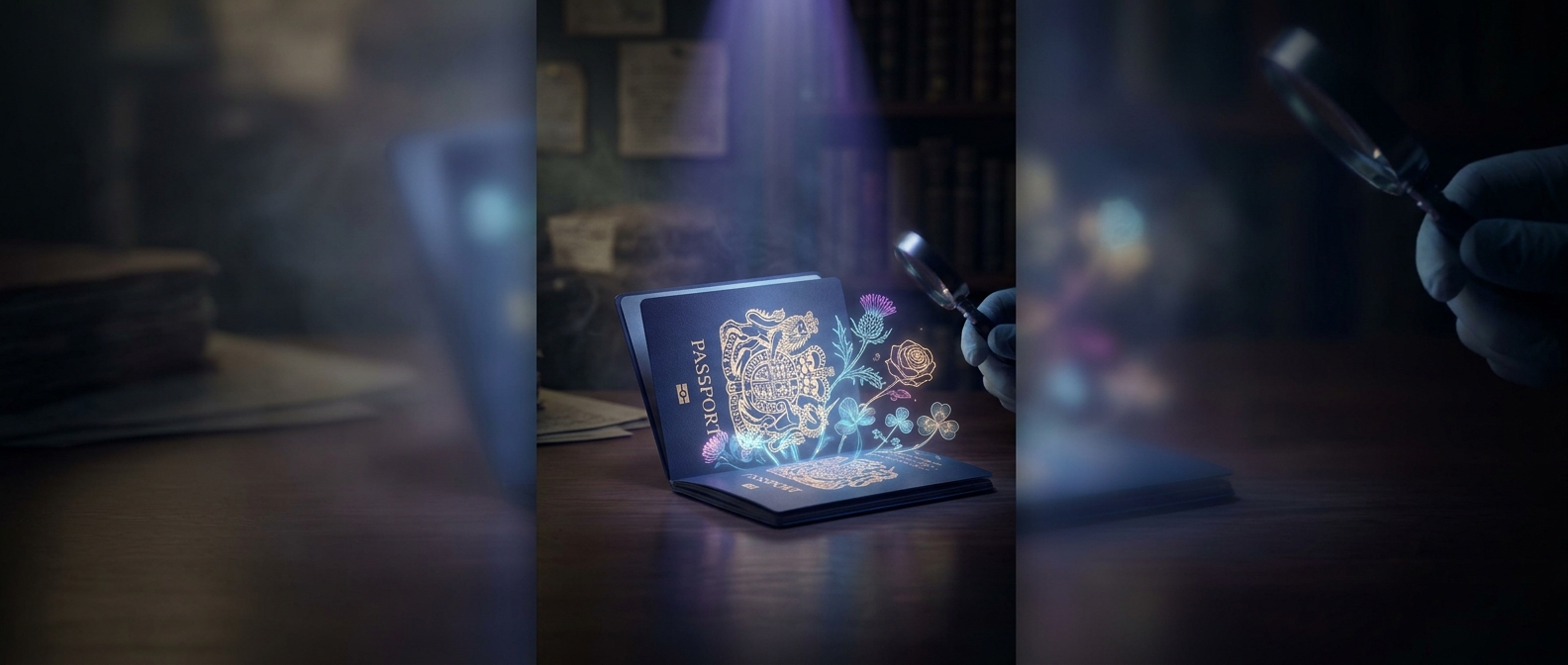
At ordinary reading distance, a passport page has to look calm and legible. Under magnification, its fine floral artwork can reveal a much denser design: delicate curves and repeated details woven into the printed background. That contrast is useful. A genuine page can carry elaborate patterns without making names, dates, and other important information harder to read.
The decoration also gives security printers a demanding image to reproduce. Tiny lines may curve, cross, and change direction in ways that are easy to overlook on the page but difficult to copy consistently. A forgery made with ordinary scanning and printing can lose fine detail, blur neighboring lines, or turn a clean pattern into a muddy patch. The closer the copy gets, the more carefully it must match the original printing.
One layer in a larger check
A floral pattern is not a magic test of authenticity. It is one feature among several, and its value comes partly from making a convincing counterfeit harder to produce. Passport checks can combine inspection of the document’s printed details with other security features and verification methods; no single decorative element has to carry the whole burden.
That is the quiet purpose of the hidden artwork: it can look like ornament to a traveler while acting as a fine-grained test of printing quality. A page that seems simply pretty from across a counter becomes much less forgiving when examined up close.