The pressure-balancing passage behind the pop
Your eardrum separates the air-filled middle ear from the ear canal. The middle ear is meant to stay near the same air pressure as the environment around you; when the pressures differ, the eardrum can feel stretched, muffling sound or creating a sense of fullness.
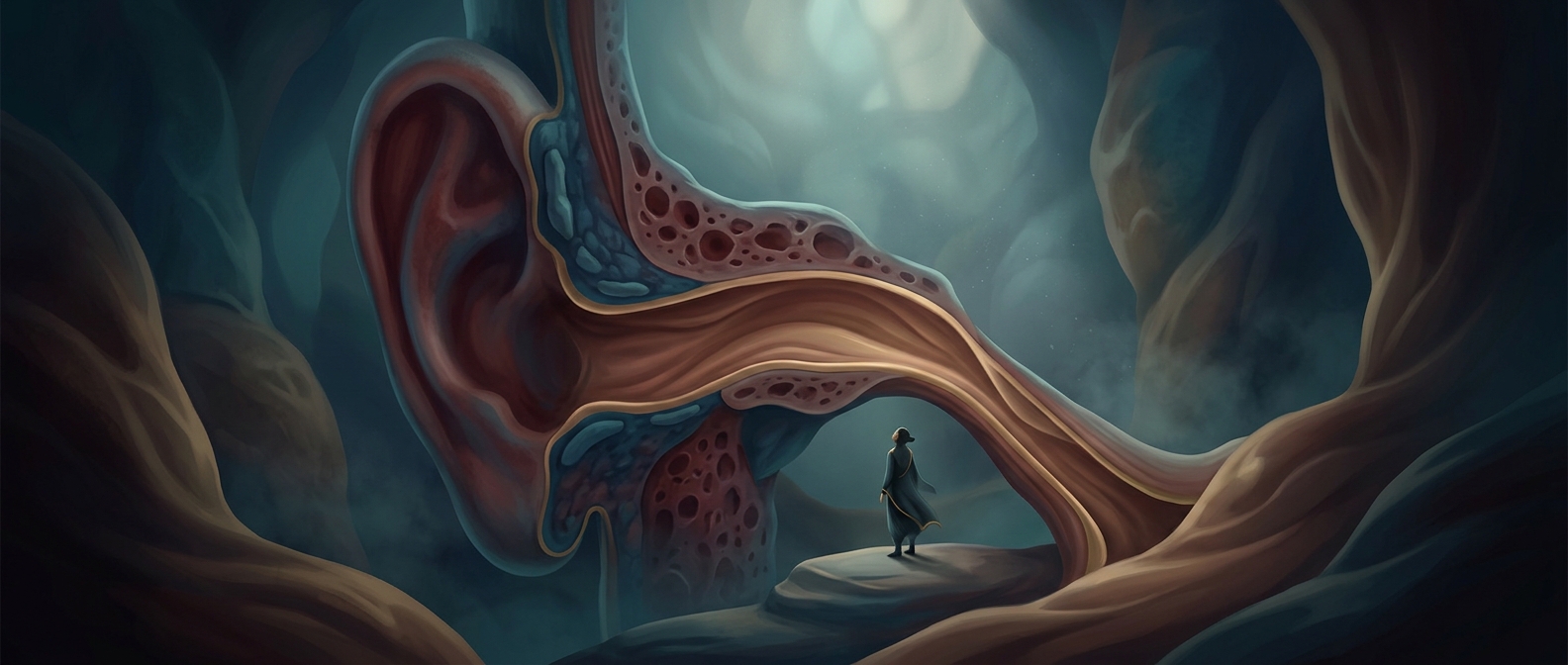
A narrow passage called the Eustachian tube connects the middle ear to the back of the throat. It is usually closed, which helps keep throat fluid and sound from readily entering the ear. Swallowing or yawning briefly activates small muscles that pull the tube open.
Why a yawn can help
When the tube opens, a small amount of air can move between the middle ear and the throat. If the middle-ear pressure is lower or higher than the surrounding pressure, that exchange brings the two closer to balance. The eardrum can then vibrate more freely, easing the plugged sensation.
The pop is the moment the tube opens and pressure shifts—not air escaping through the outer ear. The passage is so small and opens so briefly that the sensation may be more noticeable than the actual movement of air.
Why it happens during travel
Changes in altitude can make the air pressure outside the eardrum change faster than pressure in the middle ear. That temporary mismatch is why ears may feel blocked during a flight’s climb or descent. Swallowing, chewing, or yawning can prompt the tube to open and help the middle ear catch up; the same basic mechanism works when a yawn produces a pop in everyday settings.