Earwax is part of the ear’s defense system
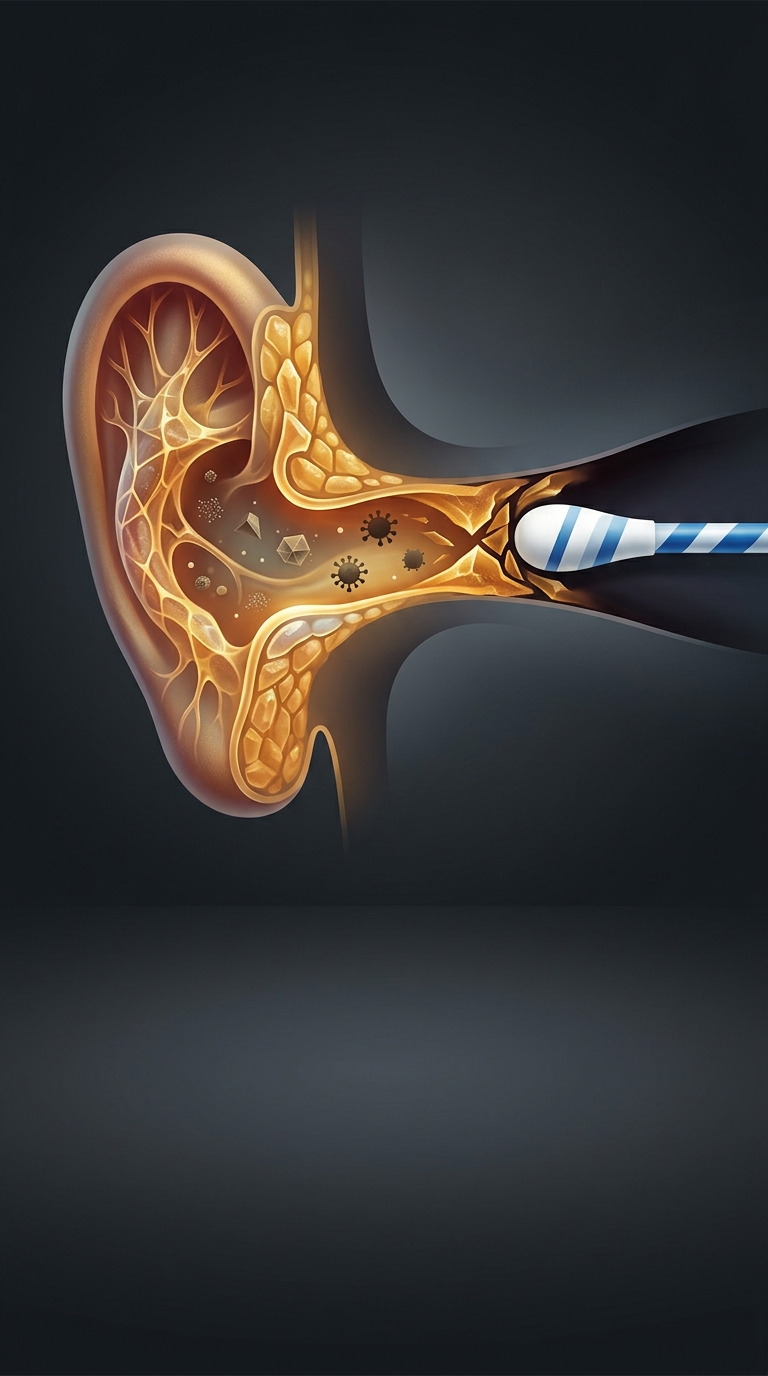
Earwax, or cerumen, is not simply dirt waiting to be removed. It traps dust and tiny particles, helps keep the ear canal’s skin from drying out, and creates an environment that discourages some microbes. In a healthy ear, wax usually moves outward on its own as the skin of the canal renews and the jaw moves during talking and chewing.
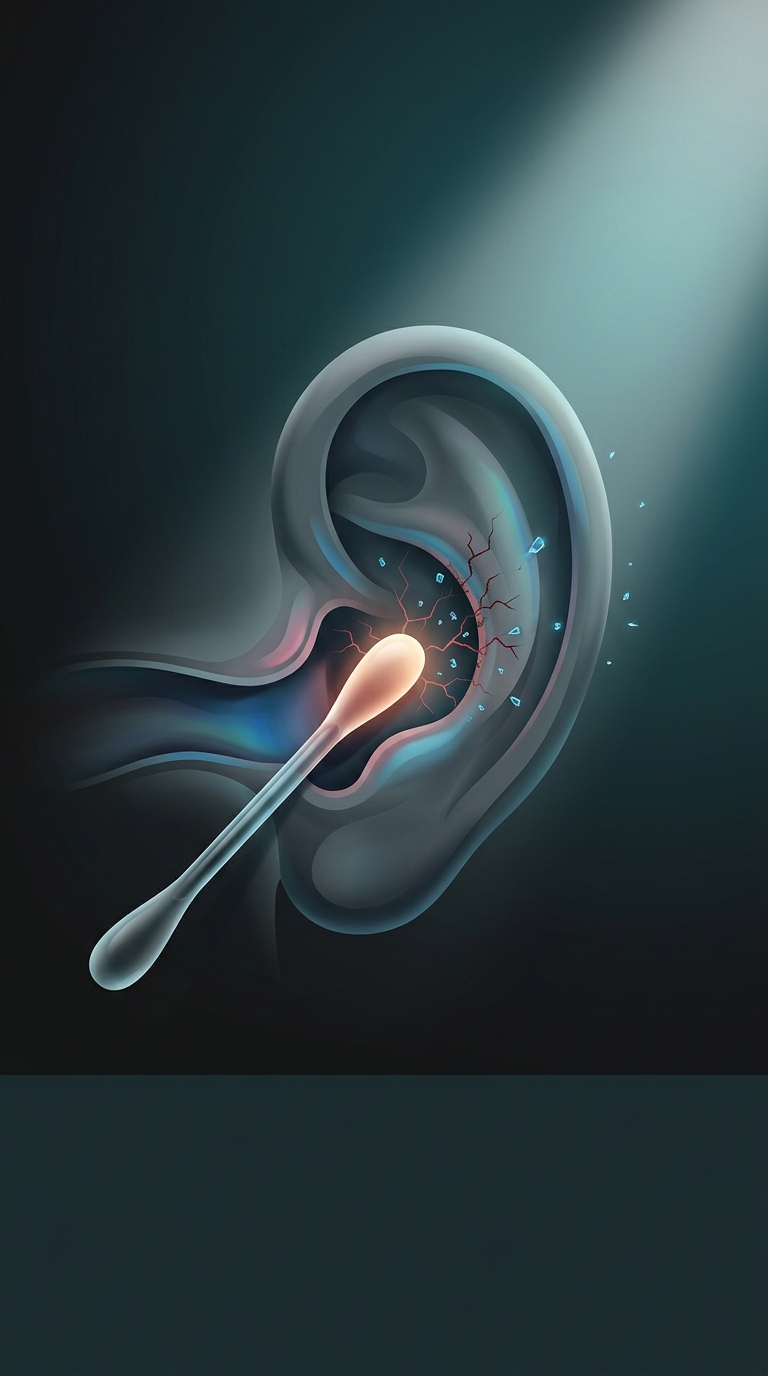
That outward journey is why cleaning deep inside the canal can backfire: a cotton swab may push wax in the opposite direction, compacting it near the eardrum instead of removing it.
A narrow passage makes small injuries matter
The ear canal is a short, curved passage lined with delicate skin. Swabbing can scrape that skin, causing irritation or bleeding; repeated irritation may also contribute to infection. If the swab goes too far, it can injure the eardrum. The problem is partly one of visibility: fingers and swabs cannot reliably judge where wax ends and the more vulnerable inner structures begin.
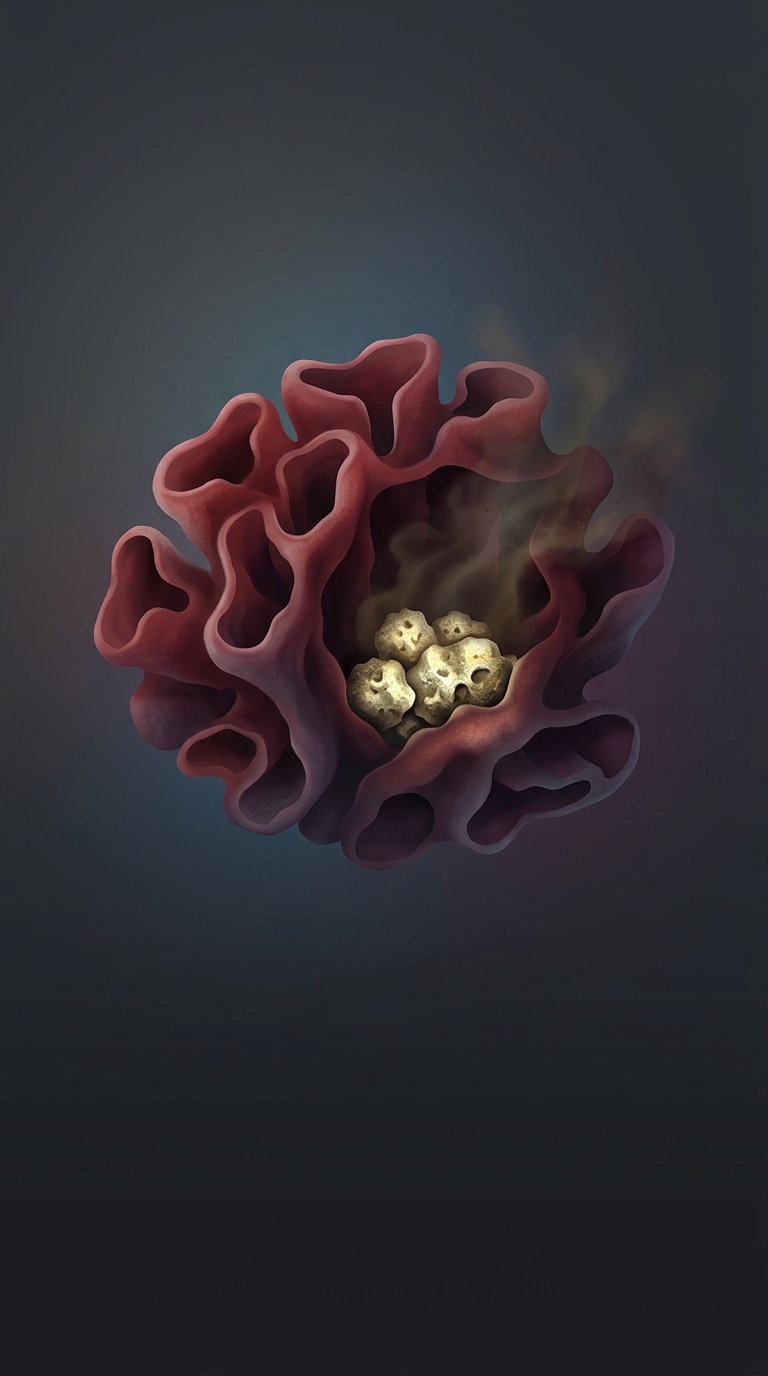
Wax packed into the canal can cause a blocked feeling, reduced hearing, ringing, or discomfort. Those symptoms do not always mean wax is the cause, so trying to dig it out can make the situation worse without addressing the real problem.
Clean the outside, not the passage
For routine hygiene, wash the outer ear and dry it gently. If wax is causing symptoms or seems to be blocking the canal, a clinician can check what is happening and remove it with an appropriate method. Wax-softening drops may help some people, but they are not suitable for everyone—for example, people with a hole in the eardrum or ear tubes should get medical advice first.
The useful distinction is simple: the ear canal generally handles ordinary wax on its own; inserting a swab can turn that routine process into a blockage or an injury.