What a Sleep Lab Can—and Cannot—Synchronize
A sleep lab can track when people enter different stages of sleep by recording electrical activity at the scalp. This recording, called an electroencephalogram, reveals broad patterns such as the slower activity associated with deep sleep. It does not provide a readout of a dream’s images, characters, or storyline.
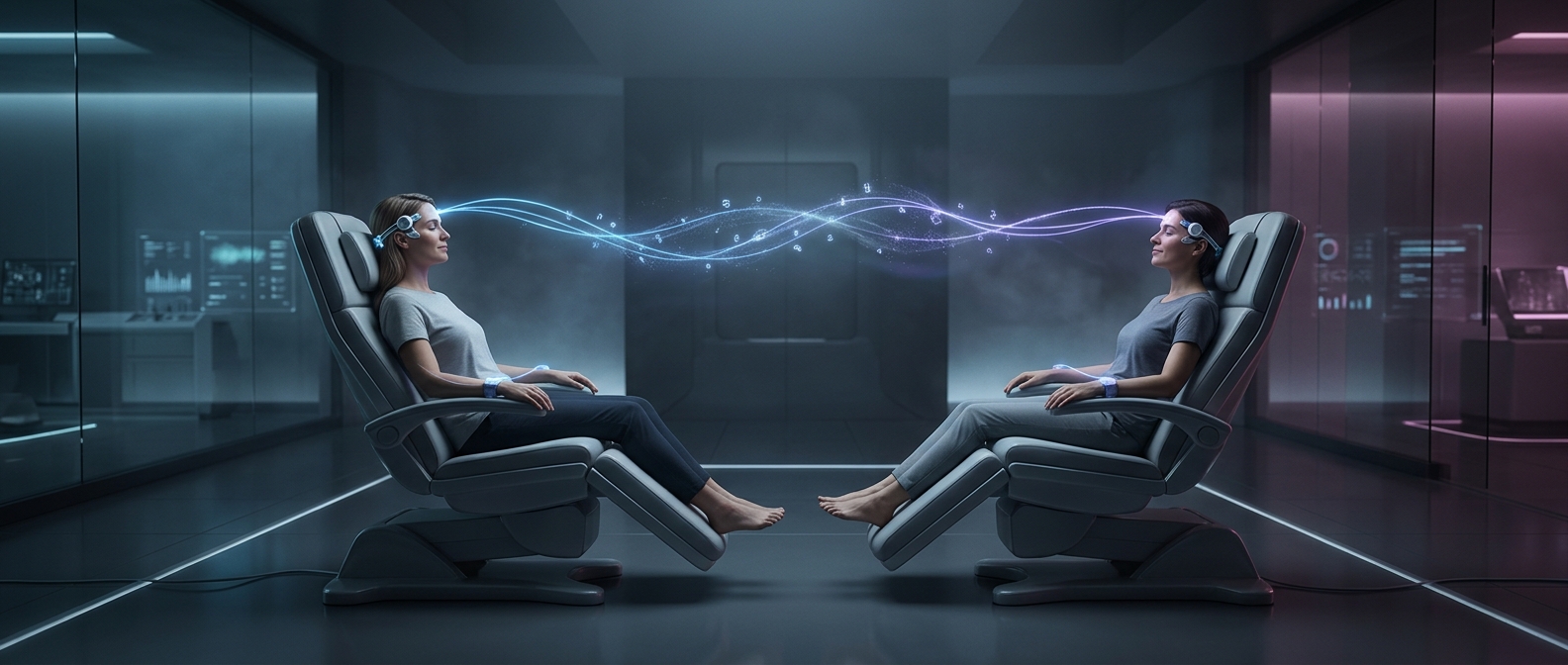
That distinction matters when researchers try to synchronize sleepers. Matching the timing or rhythm of brain activity is not the same as making two people experience the same dream. Sleep cycles shift over the night, and even similar-looking recordings cannot show that the sleepers’ private experiences match.
The Hard Part Is Testing the Experience
Dreams are usually reported after someone wakes, so the evidence depends on memory and description. Two people might recall similar themes without having shared an experience; conversely, a close match could be difficult to establish if one person remembers little. Researchers can compare reports, but they cannot directly observe dream content in the way they can observe sleep-stage patterns.
This makes attempts to coordinate sleepers difficult to interpret. Even if brain-wave timing lines up briefly, the result does not by itself demonstrate a shared dream. And when the timing fails to line up consistently, it is hard to tell whether the obstacle was the synchronization method, the changing stages of sleep, or the unpredictability of dreaming.
The key gap is between a measurable signal and a subjective experience: a lab can monitor sleep, but matching brain rhythms is not yet a way to verify that two people dreamed the same thing.