A dream given a ritual setting
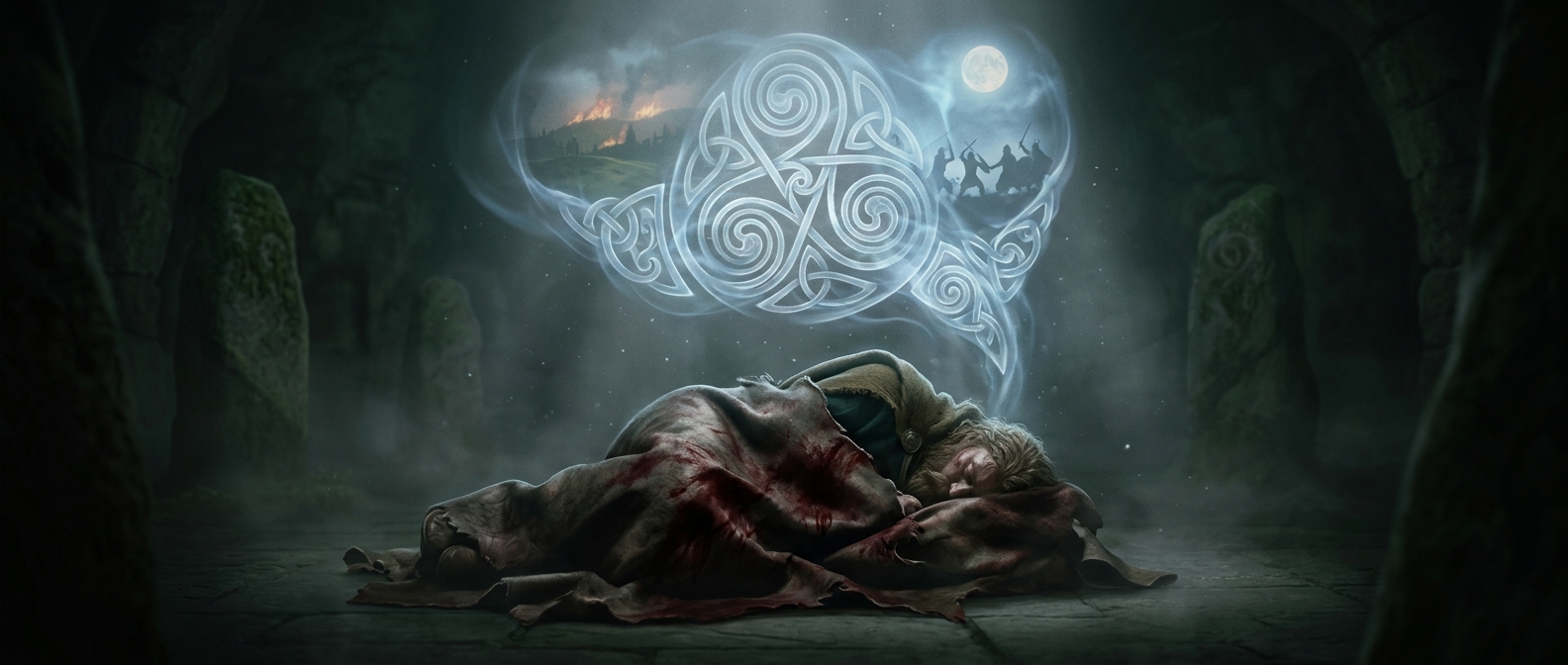
In accounts of ancient Irish divination, a seer’s dream was not treated as an ordinary night’s fantasy. The ritual placed the sleeper inside a ceremony centered on a sacrificed bull, making the dream a formal part of seeking guidance about a ruler or an approaching conflict. The hide mattered not only as bedding: it connected the person asking for insight to the animal at the heart of the rite.
The seer still had to interpret
The ritual did not produce a plain forecast that could be read like a message. Its meaning depended on how the dream was understood and applied to the question at hand. A threatening image, for instance, might be taken as a warning, but turning it into advice about a coming battle required judgment. The ceremony offered a culturally recognized way to seek an answer; interpretation supplied the answer’s meaning.
That distinction is what made the practice useful to those who believed in it. A dream could help shape a decision, but it did not remove the need to decide what the dream meant—or what to do next.