A shortcut around the concrete wall
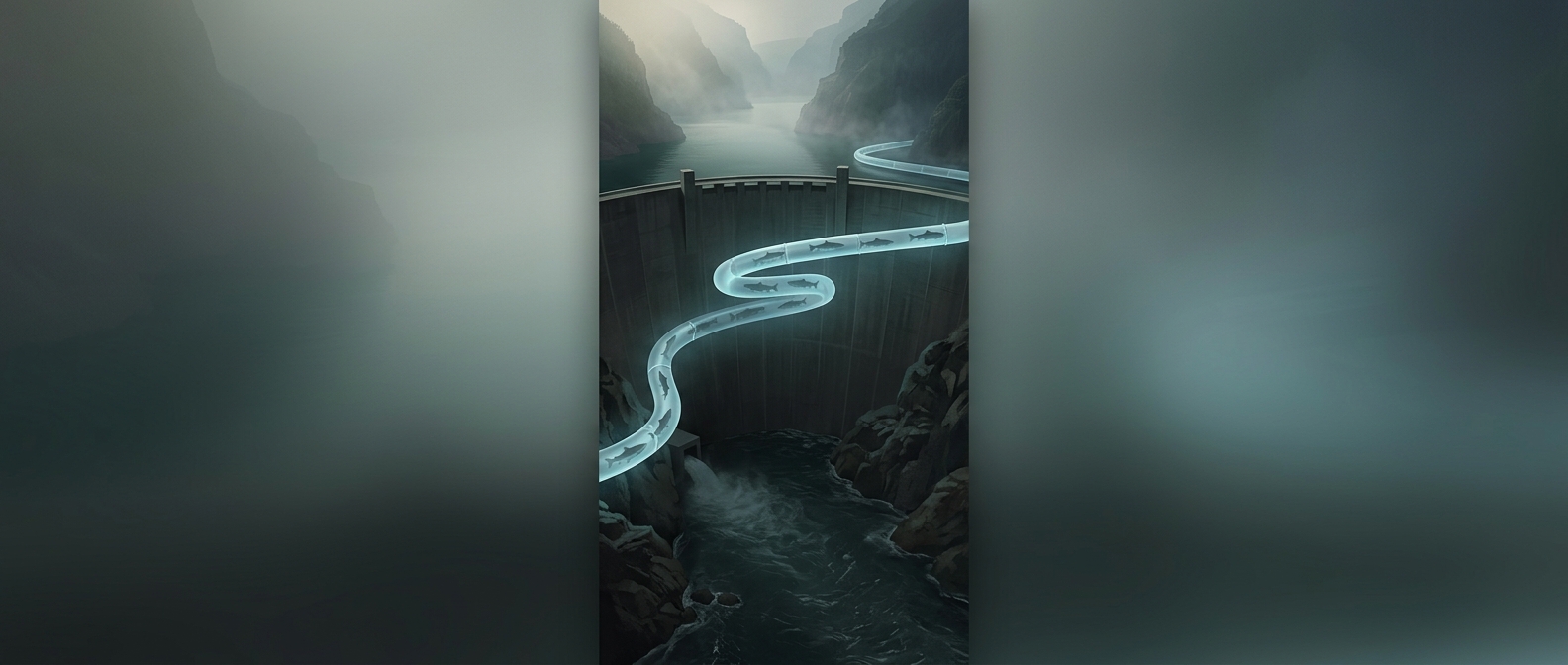
A migrating salmon can be headed for spawning habitat that lies upstream, but a dam interrupts the river’s route. Fish ladders offer a series of pools or steps to climb; where those passages are impractical or ineffective, a transport tube can carry fish past the obstruction instead.
The system uses a flexible tube and controlled air pressure. A salmon enters at a collection point below the dam, travels through the tube, and emerges in water above it. The pressure difference moves the fish along without requiring it to swim up a steep, fast-flowing channel. The technology grew out of pneumatic systems used to move produce, adapting the basic idea of transporting an object through a tube to a living animal.
Moving fish is not the same as restoring a river
The tube solves a specific engineering problem: getting selected fish past a barrier. It does not recreate the river habitat, remove the dam, or ensure that every fish will find the entrance. Operators still need to collect fish and release them at a suitable point, and the approach is useful only where the surrounding river and dam operations make that process workable.
That tradeoff matters because salmon often migrate upstream to reproduce, then their young must later travel downstream. A tube can help adults continue an upstream journey, but it is one part of a larger effort to make migration possible in both directions. Its striking feature is also its practical one: instead of building a passage through or around a dam, the fish can be routed through a system derived from moving fruit.