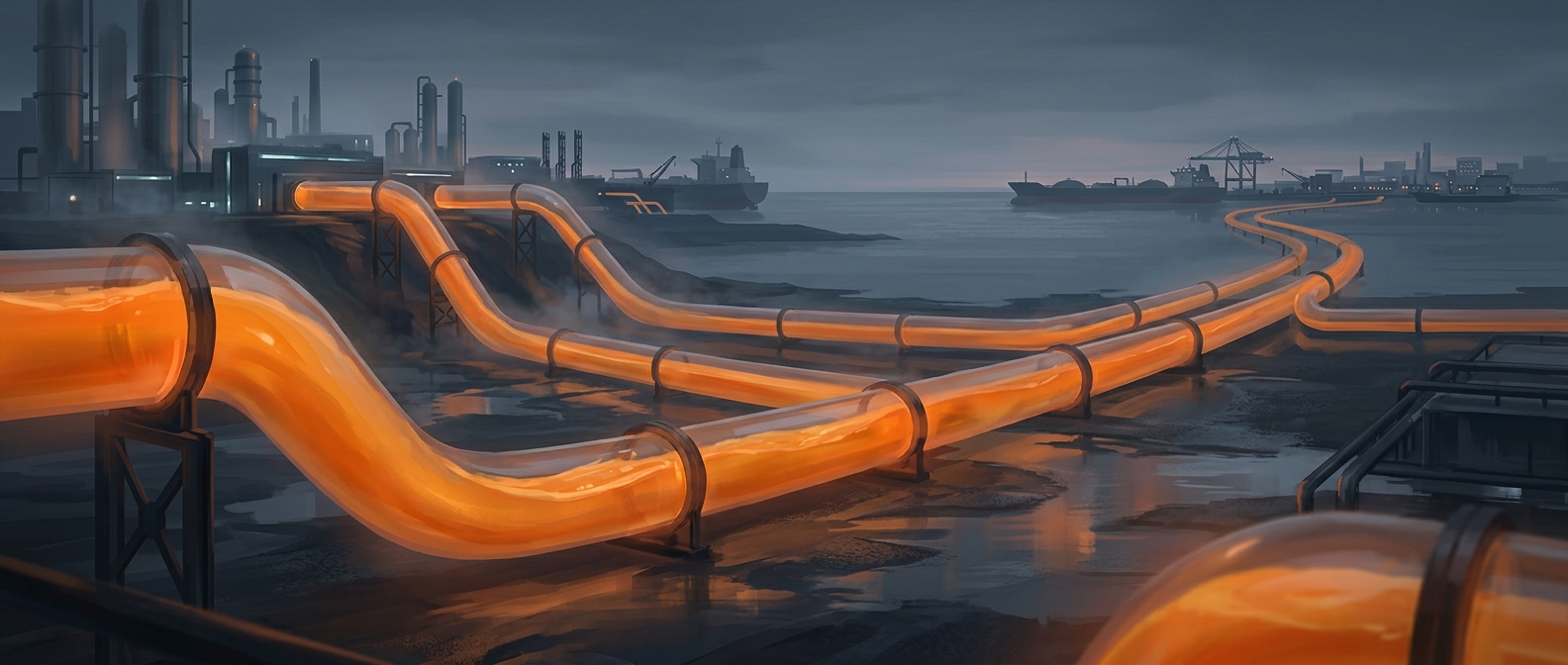
Why orange juice is concentrated before its long trip
After extraction, some orange juice is sent through an evaporator, equipment that removes water as vapor. Many evaporators lower the pressure so water can boil at a lower temperature, helping limit the heat needed for the process. The result is a thicker juice concentrate: less water means less product volume to move for the same amount of juice.
That change matters at the factory scale. Instead of paying to transport water that could be added later, processors can move a denser load from the processing plant toward facilities that package or distribute the finished juice. Concentrate is often kept cold during storage and transport to protect its quality; the precise handling depends on the product and supply chain.
The journey does not end at the evaporator
Before concentrate becomes ready-to-drink juice, processors add water back to bring it to the intended strength. They may also adjust the blend so the finished product is consistent. The concentrate therefore acts like a compact intermediate form—not the final drink, but a way to separate the work of extracting juice from the work of preparing it for sale.
There is a tradeoff: removing water saves shipping space, but it adds processing steps at both ends of the journey. The transport advantage comes from moving less volume, not from eliminating the need to handle or preserve the juice.