How Bruges moved beer without moving its brewery
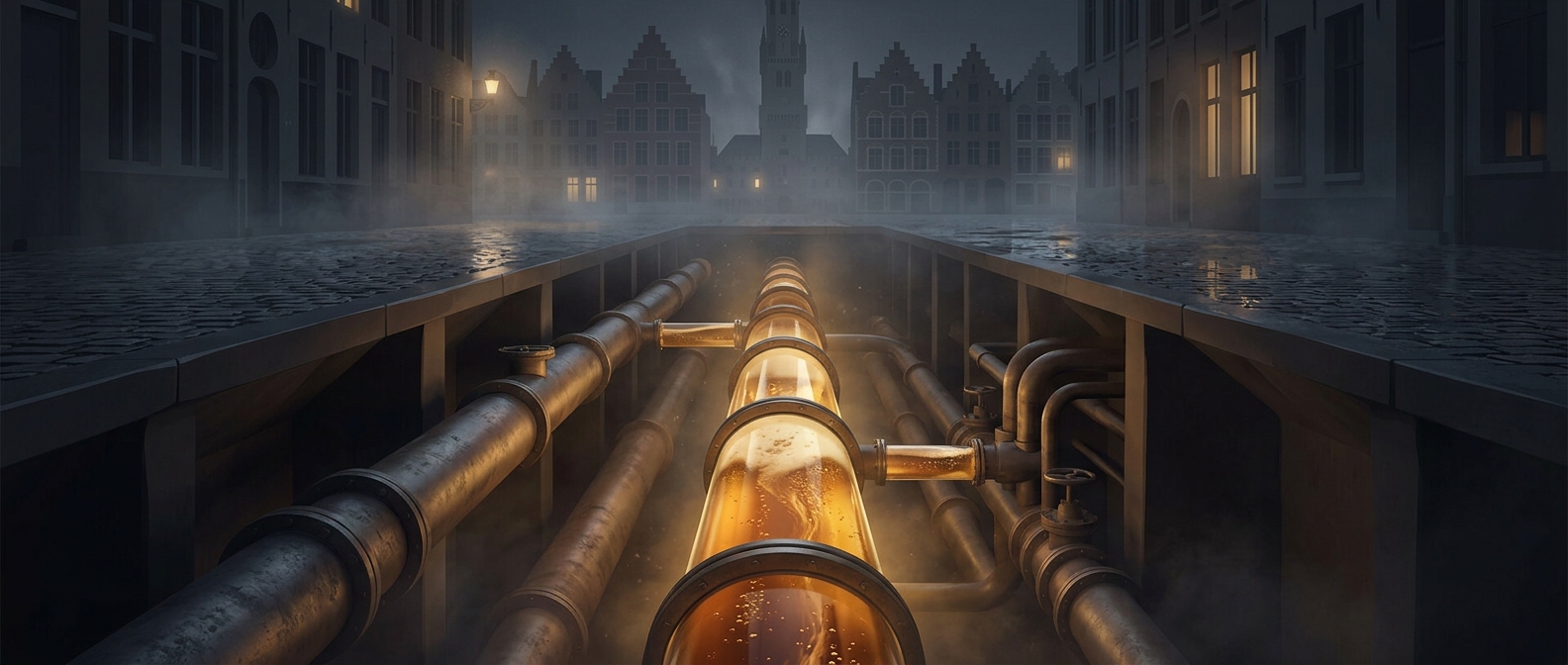
A brewery and a bottling plant have different needs. Brewing depends on equipment, skilled routines, and a site that may have served the business for generations; bottling needs room for packaging lines, supplies, and finished cases. In Bruges, De Halve Maan linked those two stages with a buried pipeline, so beer could leave the historic brewery without sending a parade of heavy vehicles through the old center.
The journey between brewing and bottling
The pipeline changes what travels through the city. Instead of moving beer in trucks or other containers, the brewery pumps it underground to the plant where it is packaged. That is a practical use of a fixed route: once installed, it can carry product repeatedly while keeping delivery traffic off narrow streets.
A beer line also has to serve the product, not merely connect two points. Its interior must be kept clean, and the movement of beer has to be controlled so the transfer does not compromise what will later be bottled. Those requirements make the pipeline part of the production system, rather than simply an underground shortcut.
A tradeoff built into the route
The arrangement lets De Halve Maan retain its central brewing site while placing bottling operations elsewhere. The tradeoff is that a fixed pipeline only works between those connected locations; it cannot adapt like a truck to a new destination. But for a brewery moving its own product along the same route again and again, the dedicated connection turns a crowded street journey into a quiet stretch beneath the city.