How a Concrete Dish Listened for Aircraft
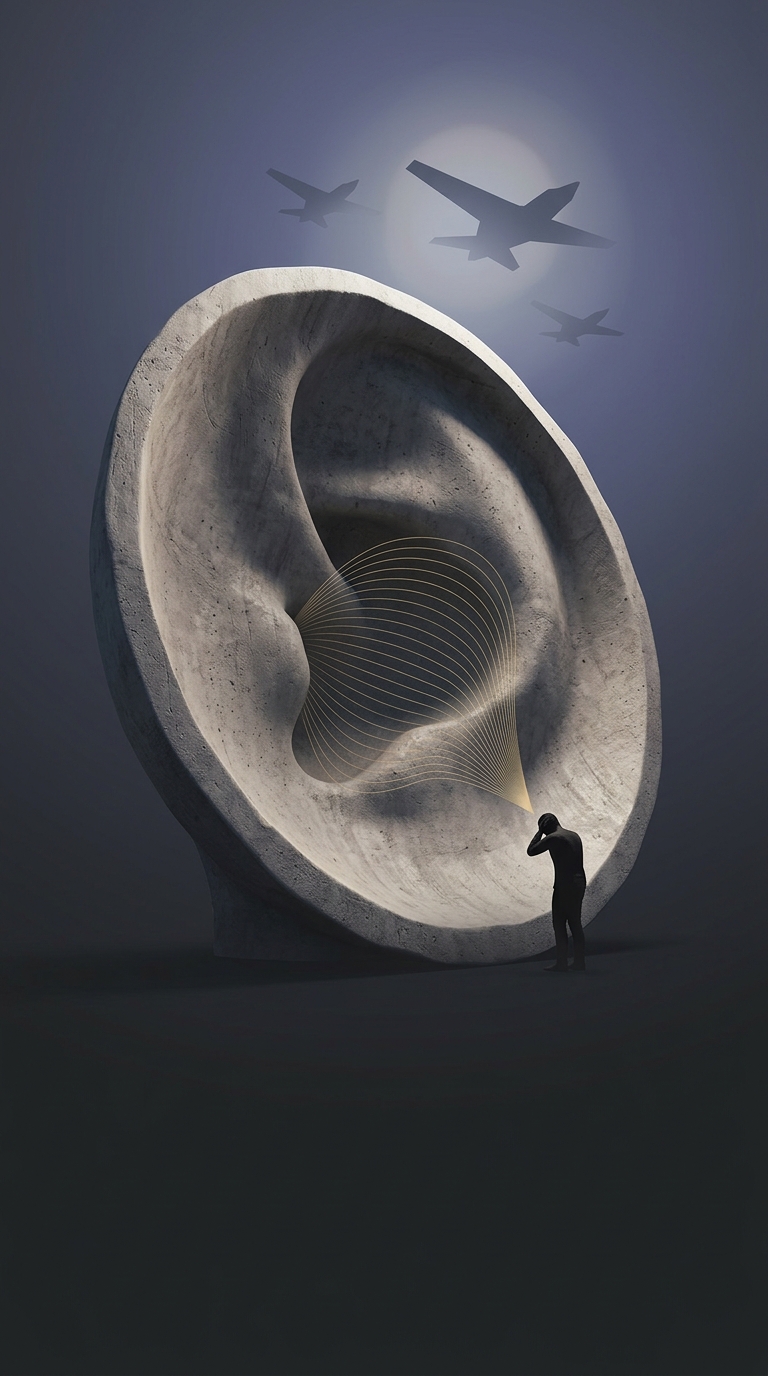
Before radar became available, Britain experimented with acoustic mirrors: fixed concrete reflectors built along parts of the coast to detect aircraft by sound. Their curved faces gathered sound waves arriving across a broad area and concentrated them at a listening point. An operator there used a stethoscope-like listening device to pick out the faint engine noise of an approaching plane.
The mirror did not amplify sound in the way an electronic system would. Its shape redirected and focused sound that would otherwise spread out, making the engine easier to hear and helping the listener estimate the direction from which it came. Some installations used movable listening equipment, but the concrete reflector itself could not swivel quickly to follow a changing target.
The Limit Was the Speed of Sound
Acoustic detection offered warning only while an aircraft’s sound arrived well before the aircraft itself. Sound travels far more slowly than radio waves, so at long distances an operator might hear a plane with time to report its approach. But the warning window shrank as aircraft grew faster or approached closer: the engine’s noise could reach the coast only shortly before the aircraft did.
That delay was the system’s basic constraint, not simply a flaw in the listener’s skill. Mirrors also worked best under suitable conditions, and wind, weather, and other noises could make a faint engine harder to distinguish. The system could help reveal that aircraft were coming, but it could not provide the speed or flexibility required for reliable, rapid tracking.
A Bridge to Radar
The mirrors were part of the search for coastal warning methods before radar could do the job. Radar sends out radio waves and detects their return from an aircraft, so it does not wait for the plane’s engine noise to travel across the landscape. That made it much better suited to finding aircraft at a distance and updating their positions.
The concrete dishes were therefore not just odd landmarks; they were experiments in turning landscape and listening into an early-warning network. Their central tradeoff was stark: a huge reflector could make distant sound easier to hear, but it could never make sound arrive sooner.