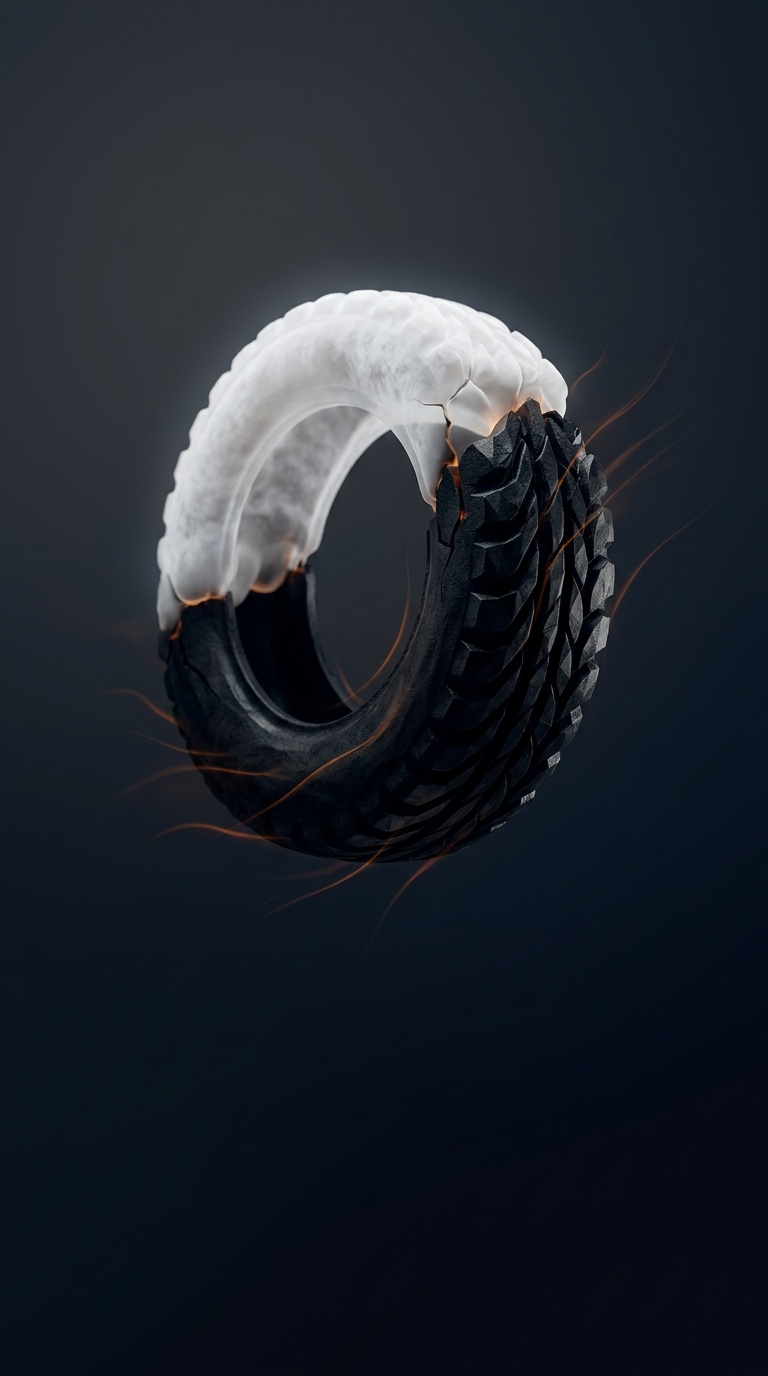
The Spare Is Designed Around a Storage Space
A full-size tire is bulky even when it is deflated, so many cars place a compact spare in a shallow well beneath the trunk floor. Making the spare narrower lets it fit that space while leaving room for luggage and other cargo. Its smaller, lighter construction also reduces the weight the car carries every day—a useful tradeoff for a part that may spend years unused.
Why Its Tread Is Shallow
A temporary spare is built for limited use, not the repeated heat, wear, and varied road conditions a regular tire must endure. It can therefore use a simpler tread pattern and less tread depth. The design saves material and space, but provides less grip and durability than a standard tire, especially on wet or rough roads.
That difference matters because a tire helps determine how quickly a wheel turns and how much grip it can deliver. A compact spare may not match the regular tires’ size or behavior exactly. On some vehicles—particularly those with all-wheel drive—a mismatch can also complicate how the drivetrain manages the wheels. The vehicle’s manual specifies where the spare can be fitted and how it should be used.
A Bridge to a Repair, Not a Replacement
Compact spares are commonly marked with limits on speed and distance. Those restrictions give the tire a manageable job: get the car to a place where the damaged tire can be repaired or replaced. Driving gently and checking the spare’s pressure are important, since a small tire loses pressure over time and has less margin for demanding conditions.
The practical consequence is easy to overlook: a spare can look ready while still needing attention. It is worth checking its pressure and condition before an emergency, and treating its limited tread as a warning that the next stop should be a tire shop—not the rest of the trip.