Making Computing Accessible to More Than Specialists
In the 1960s, using a computer often meant working through specialized instructions on equipment that was expensive, scarce, and difficult for beginners to approach. Sister Mary Kenneth Keller saw a different possibility: computers could become tools for learning, not just machines reserved for technical experts.
That idea was closely tied to BASIC, a programming language developed at Dartmouth to make computer use easier for students. Keller worked with Dartmouth’s computing community during BASIC’s early development and became an influential advocate for teaching people to program. BASIC’s plain, readable commands helped lower the barrier: instead of needing to master a machine’s underlying circuitry, a learner could express a task in a more approachable form.
A Doctorate—and an Educational Mission
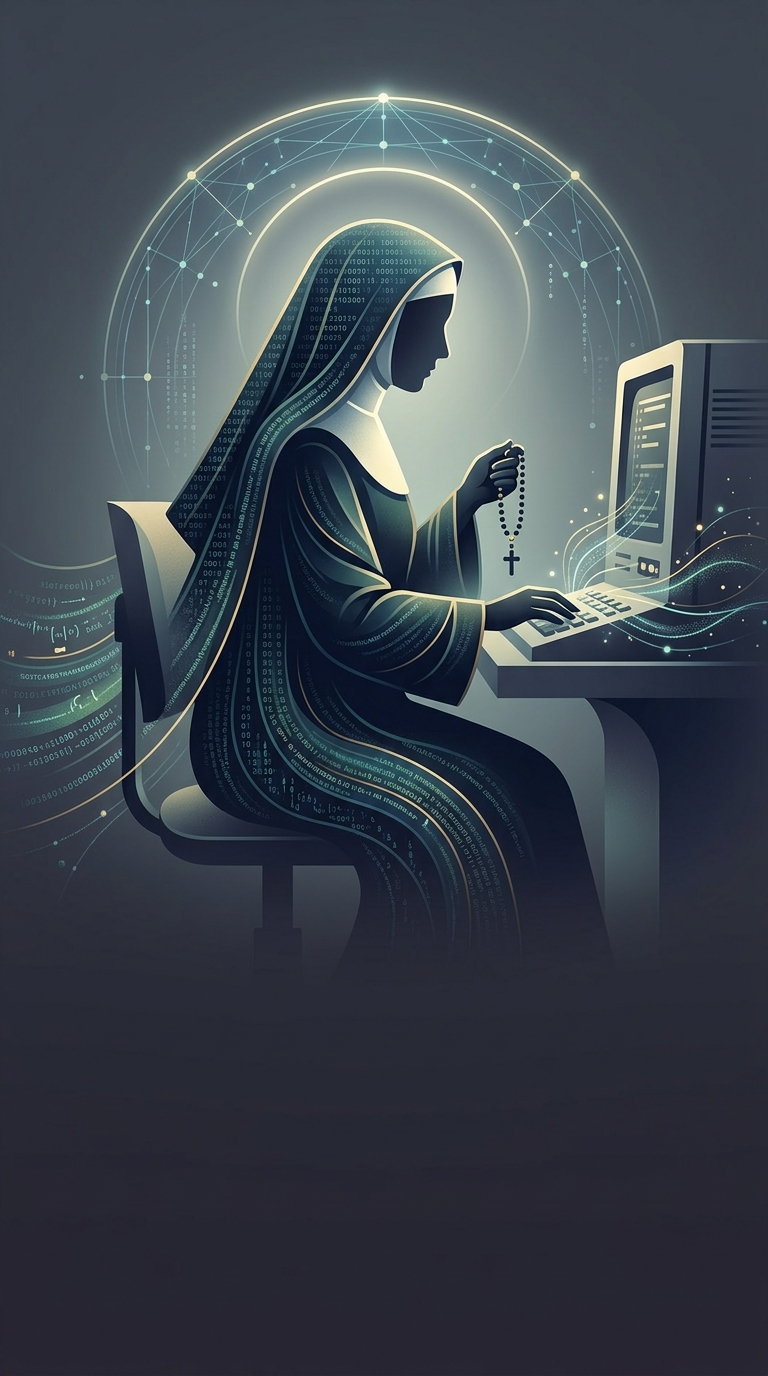
Keller earned her doctorate in computer science in 1965, at a time when the field was still taking shape and women were uncommon in computing. She was a Catholic sister as well as a mathematician and computer scientist; her religious life and academic work were parts of the same career, not competing explanations for it.
Her argument for computers in education was practical. A computer could respond to a learner’s instructions, making it possible to test an idea, see what happened, and revise the approach. That kind of interaction could support problem-solving across subjects, rather than limiting computers to calculation or research laboratories.
Keller later founded a computer science department at Clarke College in Iowa and worked to bring computing into education. The lasting significance of her work is not that a single person made computers accessible on her own. It is that she helped push an early, crucial question into classrooms: Who should be able to use a computer—and what should they be able to learn by doing so?