How plankton becomes a soft rock
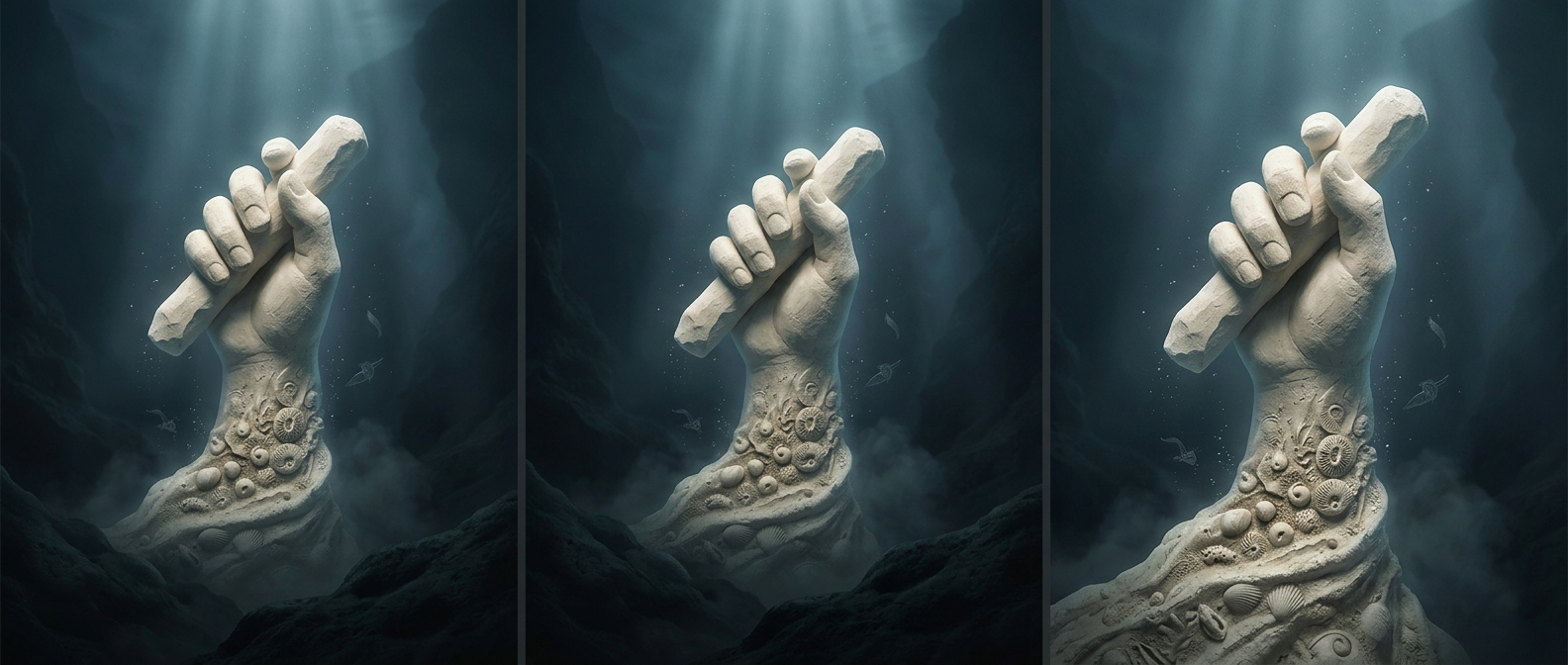
Some geological chalk begins with coccolithophores: tiny marine algae that build protective plates from calcium carbonate, the same mineral found in seashells. When the algae die, their plates sink through the water and collect on the seafloor. Over long spans of time, layer upon layer of this fine debris can accumulate, then become rock as burial squeezes the sediment together and minerals bind it.
The result is a pale, relatively soft limestone. Its texture reflects its origin: instead of forming from large shells or coarse fragments, it is made largely of particles too small to see individually. The famous white chalk cliffs of southern England, for example, are deposits of this kind.
Why chalk leaves a mark
Chalk is soft enough to shed tiny grains when rubbed against a rough surface. A stick dragged across a board breaks at its tip; the loose particles lodge in the board’s texture, making a visible line. Wiping the board lifts or scatters those particles again, which is why the mark comes away as dust rather than behaving like ink.
Not every stick sold as blackboard chalk is quarried chalk. Many are made from gypsum, a different, softer mineral. Both materials can leave a pale, powdery mark, but the ancient-plankton story applies specifically to natural chalk—and to products actually made from it. A familiar classroom gesture can therefore involve either a tiny piece of ancient seafloor or a manufactured mineral substitute.