When the Road Became Part of the Trick
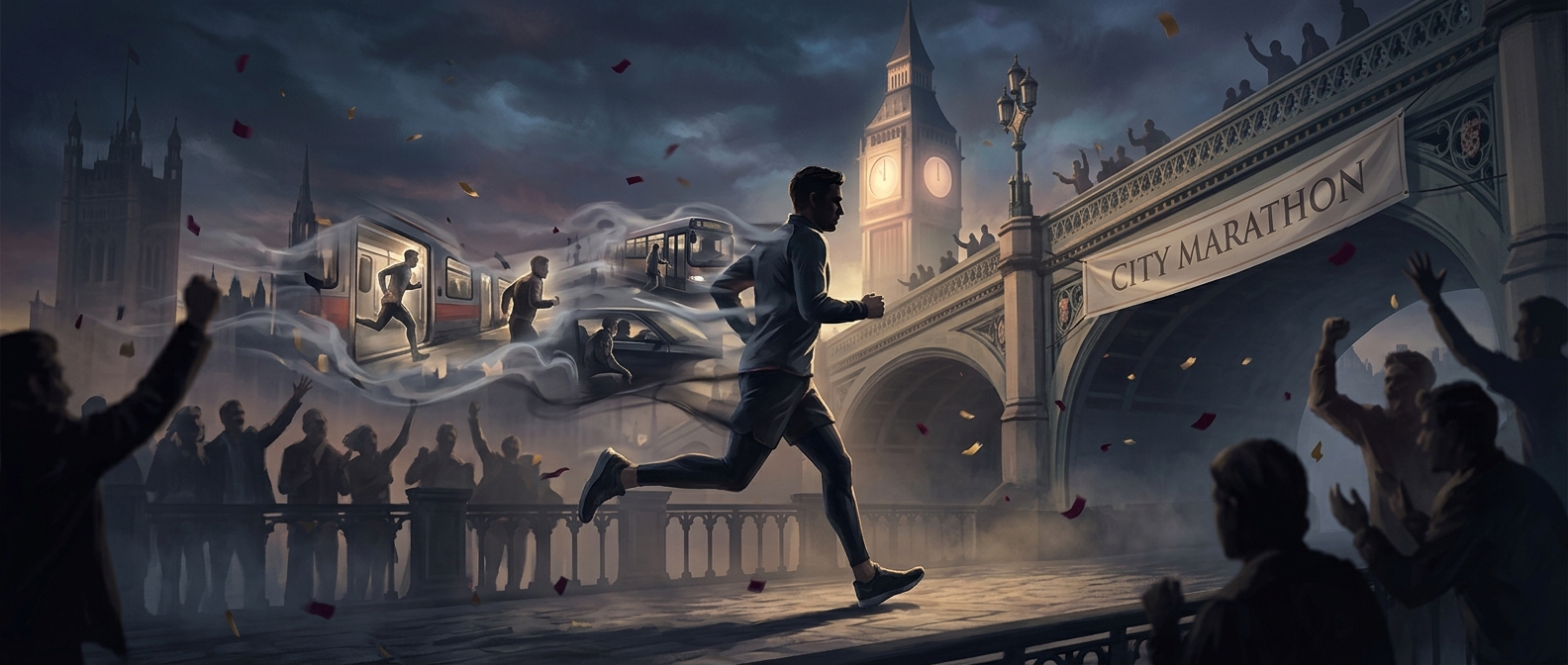
In an early long-distance race, officials could not assume that a runner had covered every mile simply because the runner appeared near the finish. If someone left the course, climbed into a car, and returned close to the end, the finish-line scene could look convincing—especially before organizers had reliable ways to track each competitor along the route.
The deception depended on a gap between being seen finish and being verified over the whole course. A car could replace the hardest part of the race, while a late return and conspicuous panting helped sell the impression of exhaustion.
Why the Finish Wasn’t Proof
A race result is only as trustworthy as the checks along the way. Without officials or other records confirming a runner’s passage at intermediate points, spectators at the finish had little basis for knowing whether the athlete had actually run the distance. The course itself became a vulnerability: a place where a competitor could disappear from view and rejoin the event later.
That is why the panting mattered. It was not evidence of miles covered, but a performance meant to make the arrival seem plausible. The episode shows how endurance contests rely on more than athletic effort: they also require a way to establish that every finisher completed the route. A runner could imitate the visible signs of a hard race; only course checks could establish that the miles were real.