Why a Scooter Changes the Shape of a Suit
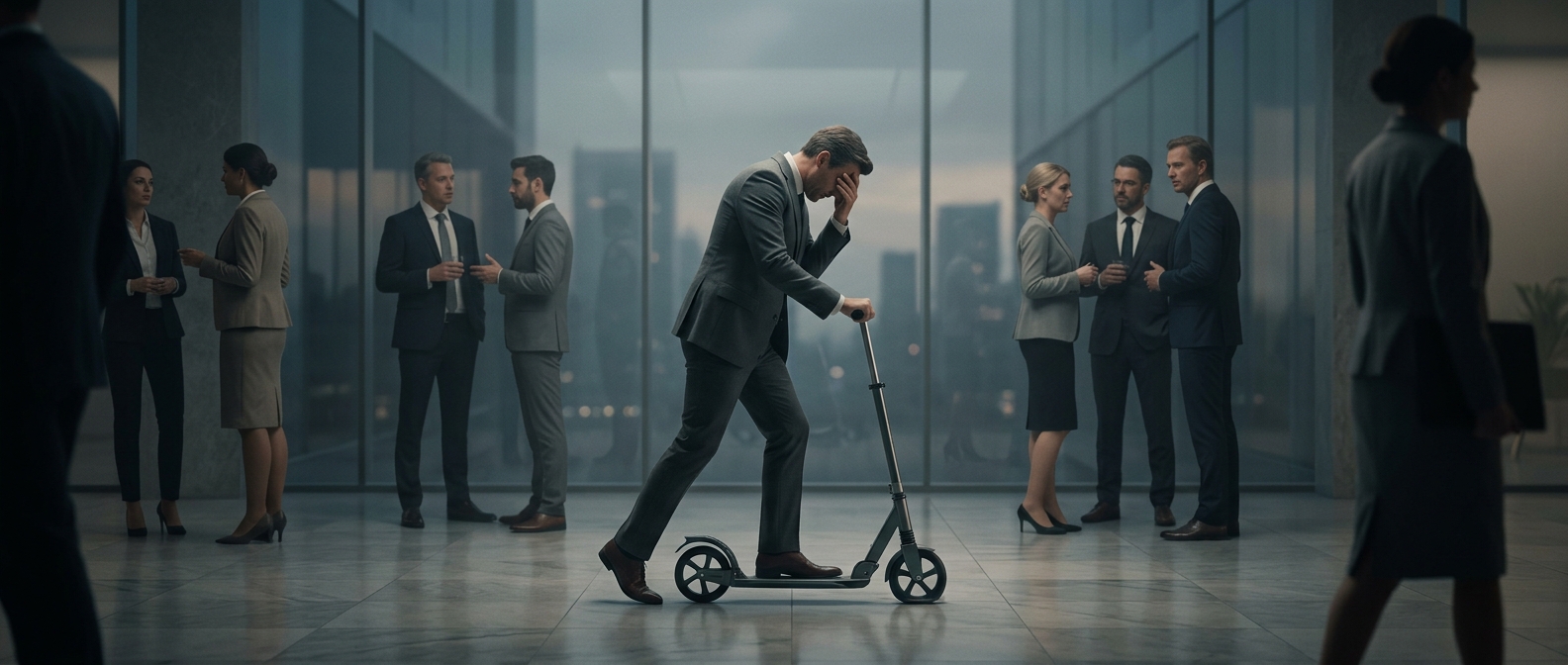
A suit is cut to hold a deliberate silhouette: shoulders squared, jacket hanging cleanly, trousers falling in a straight line. Riding a kick scooter interrupts that shape. The rider has to lean toward the handlebars, bend slightly at the knees, and shift weight from side to side to stay balanced and keep moving. Each push also changes the position of the hips and jacket, so the outfit is seen in motion rather than in the still, upright stance associated with formal wear.
The Vehicle Sets the Posture
Unlike a bicycle, a kick scooter offers no seat to support the rider. One foot remains on the narrow deck while the other repeatedly reaches the ground; the hands stay on a handlebar in front of the body. That arrangement is efficient for a short trip, but it leaves little room for the composed, symmetrical posture a suit is designed to frame.
The contrast is especially visible because business clothing depends on clean lines. A forward lean can pull the jacket across the back, while repeated leg movement shifts the trouser crease and makes the rider’s stance look temporary. The scooter has not changed what the clothes mean in a meeting; it has changed the body language surrounding them.
That is why the same person can look formal on arrival and conspicuously informal on the ride there. The scooter’s practical advantage—quick movement without a seat or much equipment—comes with a small visual tradeoff: the commute turns a carefully held silhouette into a working posture.