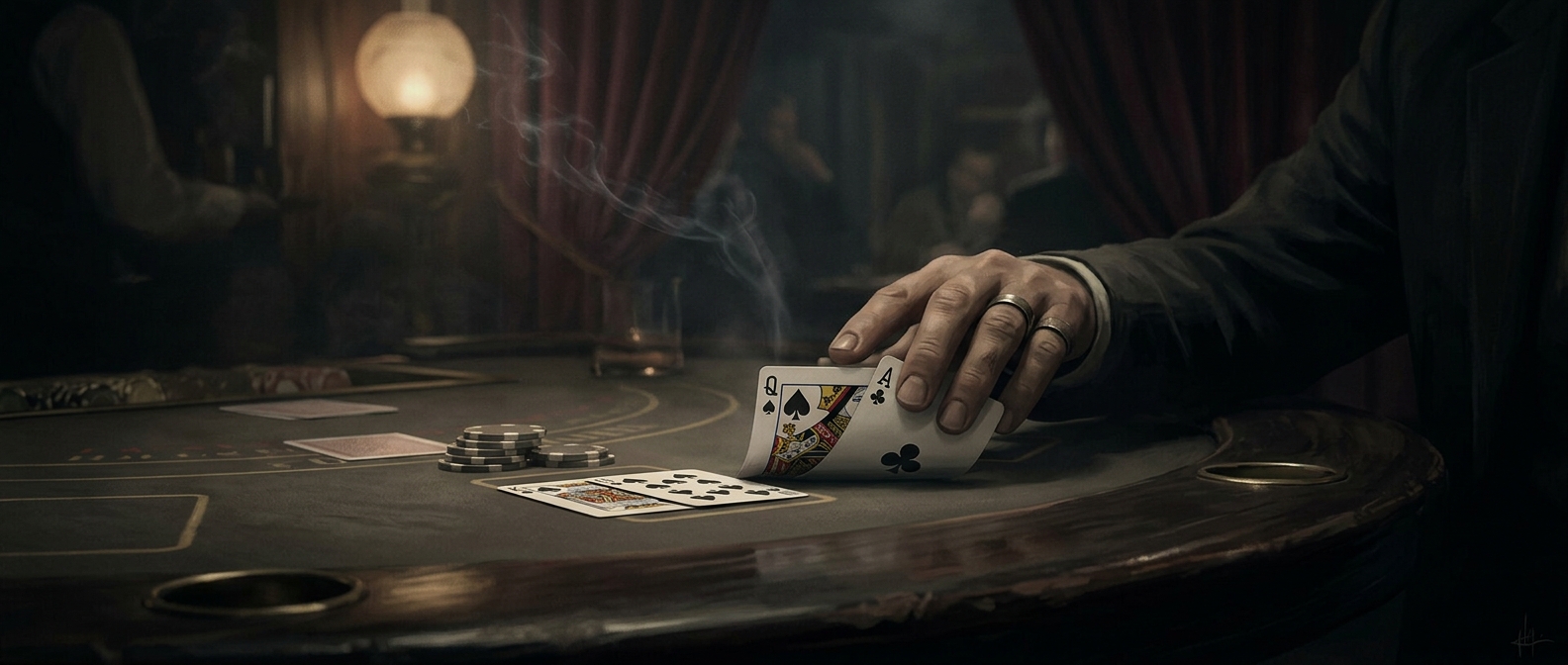
When the Totals Match, the Wager Stays Put
A blackjack hand is settled by comparing the player’s final hand with the dealer’s. If neither has busted—gone over 21—and their totals are equal, the result is a push. The dealer doesn’t take the wager, and the player doesn’t receive a payout: the bet is returned unchanged.
That makes a push different from a win that pays even money. A winning $10 bet typically returns the original $10 plus $10 in winnings; on a push, the player gets only the original $10 back. The hand is over, but that money can be wagered again on the next one.
Why a Tie Still Matters
Blackjack is played hand by hand, so a push changes the outcome without changing the player’s bankroll. A player who pushes has avoided a loss, but has made no profit. Over a run of hands, pushes can therefore feel like reprieves: they interrupt losses as well as wins, leaving the player’s money where it was for that round.
The comparison is usually based on the final totals, with special situations such as a natural blackjack handled according to the table’s rules. The practical question is simple: did the hand beat the dealer, lose to the dealer, or match the dealer? Only the first two move the wager; a match sends it back.