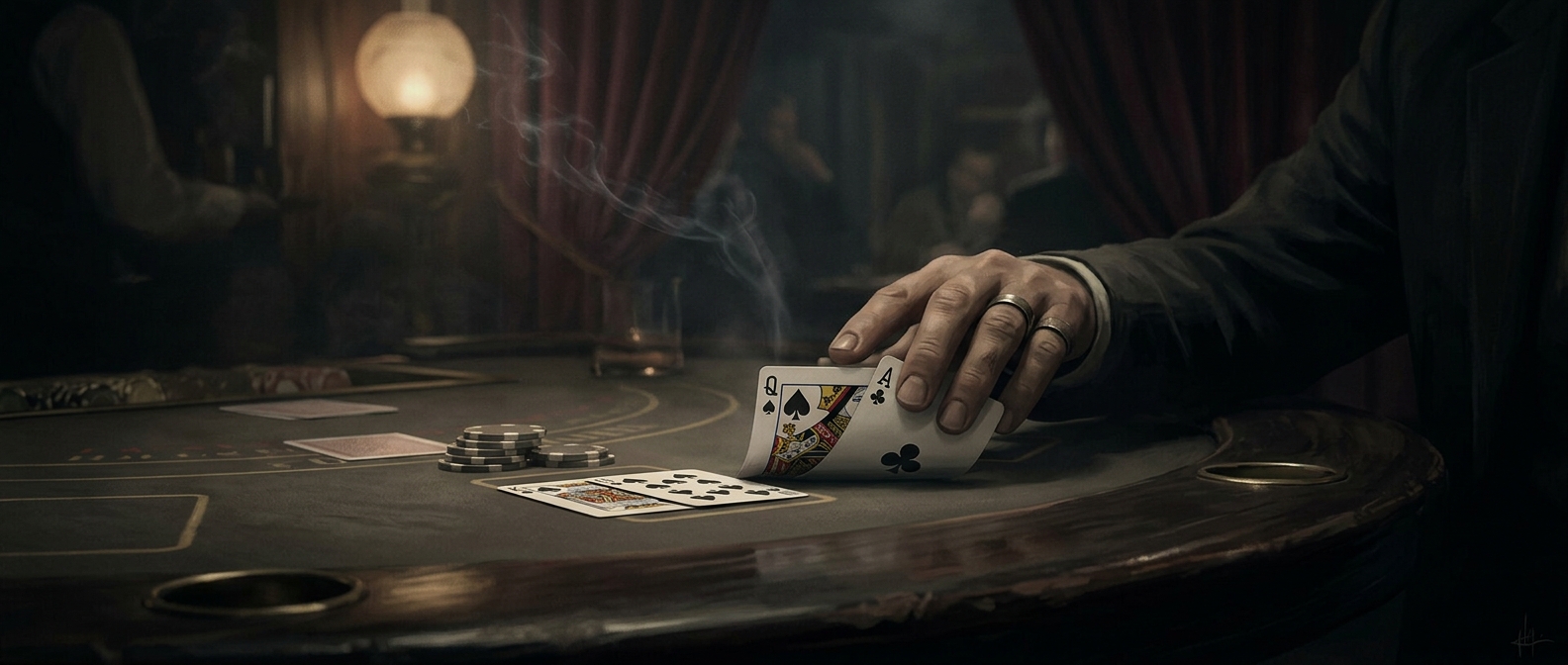
Why Blackjack’s Rules Put the Dealer on Rails
The dealer’s fixed drawing rule is part of a larger asymmetry: the player chooses how to manage a hand, while the dealer follows a preset procedure. A player can stop, take another card, double a wager, or split a pair. The dealer generally cannot react to the player’s choices or adjust play when a hand looks risky.
That constraint matters because a dealer’s turn is not just another hand in a sequence. If the player goes over 21 first, the hand is already lost; the dealer does not need to draw at all. If the player stays in, the dealer then completes the hand under the table’s rules. The order of play makes the player’s bust especially costly.
The House Advantage Comes From the Whole Setup
A dealer’s forced draws can lead to a bust, which may let surviving players win. But that possibility does not make the game unfair to the casino. The house advantage is the small long-run edge built into the rules and payouts—not a claim that the dealer wins every hand or that the dealer’s individual hand is stronger.
The player’s decisions can reduce avoidable losses, but they cannot erase the built-in disadvantage. Rules such as whether the dealer hits a soft 17—a 17 containing an ace counted as 11—also affect the balance. The dealer may look like the opponent, but the real opponent is the rule set: it limits the dealer’s choices while making players act first and absorb the consequence of busting.