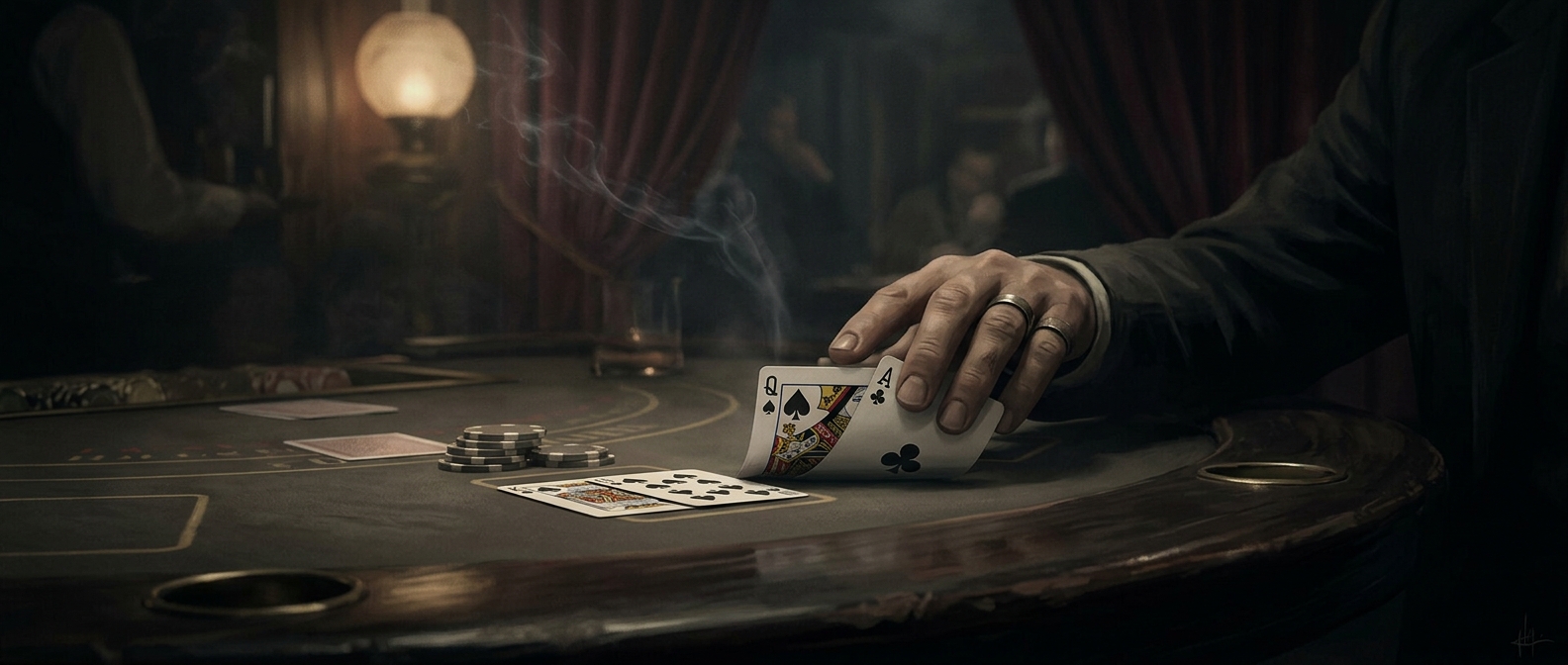
Why a pair of 10s is hard to improve by splitting
In blackjack, two 10-value cards make 20—a hand that usually wins unless the dealer also reaches 20 or 21. Splitting turns that single hand into two separate ones, each starting with just one 10. The next card gives each hand a chance to become strong, but it also creates a chance of landing on a much weaker total.
The key is not simply that two hands offer two chances to win. Each hand is a separate wager, and both must be played against the dealer. You may end up risking more money while replacing a hand that was already difficult to beat with two hands whose results are less certain.
The dealer’s hand still determines the outcome
A 20 feels nearly unbeatable, but it is not a guaranteed win: the dealer can also make 20, or reach 21. That possibility can tempt a player to split in search of two 20s. But the dealer’s chance of tying or beating a 20 does not make weaker starting hands more valuable. Splitting changes what you hold; it does not improve the dealer’s hand or remove the risk of losing either new wager.
That is why standard blackjack strategy usually treats a pair of 10s differently from pairs that start with low totals. The decision can depend on the table’s rules and, in unusual situations, information about the cards remaining. For ordinary play, though, the important comparison is between preserving a powerful 20 and taking on the uncertainty—and extra exposure—of two new hands. The pair looks like an invitation to double your chances, but often the better move is to leave a strong hand alone.