Why Pinochle Starts at Nine
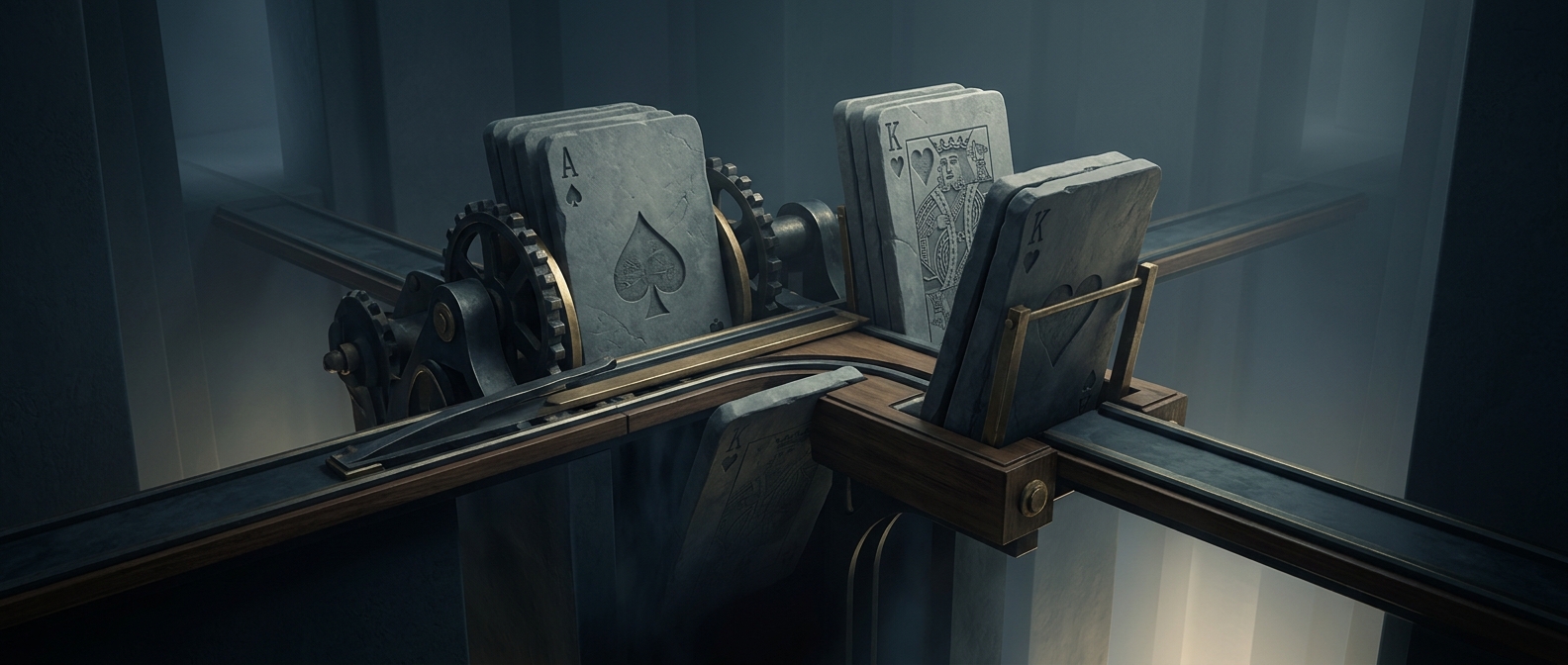
In standard Pinochle, the deck is made from two copies of each card from nine through ace in all four suits: 48 cards in total. The lower ranks are left out, but the duplicate cards remain. That changes the texture of play: there are fewer ranks to track, yet two identical cards can appear in the same hand or trick.
The compact deck is built for a game where players compete both to collect valuable combinations and to win tricks. A trick is a round in which each player contributes one card; the highest card of the suit led usually takes it, unless a trump card wins instead. With no small cards to fill out the ranks, even a nine can matter when it is the only card of its rank still available—or when a player is trying to follow suit without giving away a stronger card.
Cards Matter Before the Tricks Begin
Pinochle also scores meld: points for particular combinations held in a player’s hand, such as a king and queen of the same suit. Players declare these combinations before the trick-taking phase, then try to turn their hands into points by capturing scoring cards. The repeated ranks make memory useful: if one ace has been played, another ace may still be out there.
The deck’s omissions therefore do more than shorten the game. They concentrate attention on a small set of consequential cards, making the question not simply which card is highest, but which copy of it has already been seen.