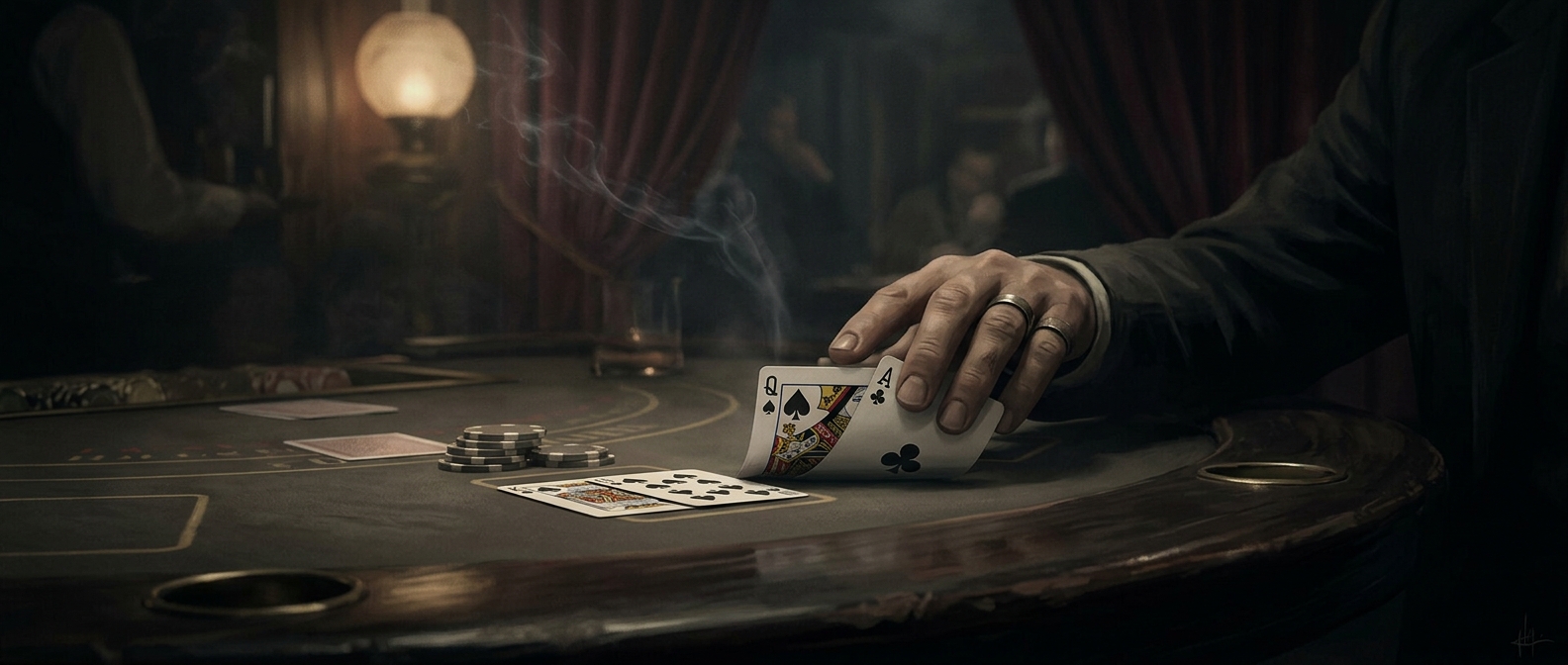
A promotional hand gave blackjack its name
The name “blackjack” began as the label for a special bonus, not simply as another name for the game’s goal of reaching 21. In some early American gambling rooms, a player who opened with an ace and the Jack of Clubs or Spades could receive a 10-to-1 payout. The two black-suited jacks were the key: a jack of Hearts or Diamonds did not qualify.
That unusually generous reward made the hand easy to remember—and gave the game a memorable name. The promotion was temporary, but the label outlasted it.
The bonus disappeared; the name stayed
In modern blackjack, an opening ace paired with any 10-value card—a ten, jack, queen, or king—is generally called a “blackjack” or “natural.” It earns a special payout under many rules, but the old bonus condition involving the Jack of Clubs or Spades is no longer part of the standard game.
The name is therefore a small fossil of casino marketing: a short-lived attempt to make one particular hand more enticing became the enduring name for the entire game. Today, a player can make a blackjack with a red-suited queen, even though the game’s name still points back to a black jack.