A Monastic Rule Written Into the Peninsula’s Life
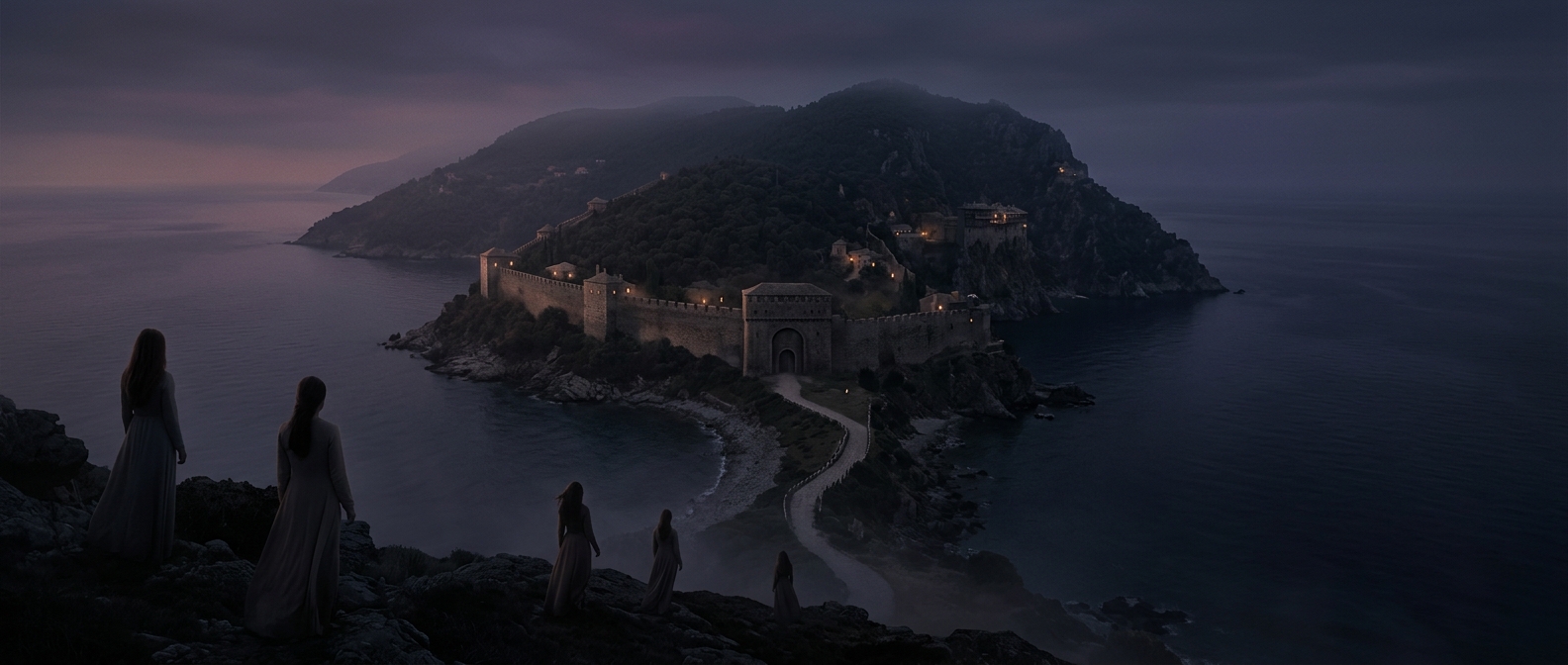
Mount Athos is a self-governing monastic territory in northern Greece, where monasteries have maintained a secluded communal life for centuries. Its ban on women is known as the avaton, a Greek term for a place that may not be entered. The restriction applies not only to visitors: it has also shaped which domestic animals can be kept on the peninsula.
The rule is tied to the monks’ practice of celibacy and to the ideal of separating monastic life from ordinary social and family life. In Orthodox tradition, the Virgin Mary is honored as the peninsula’s spiritual patron and is regarded as its sole woman. That belief gives the exclusion a religious meaning beyond managing who may visit.
A Boundary With Practical Consequences
Because the rule reaches beyond human visitors, it affects everyday choices about livestock and farming. Monasteries cannot simply keep the same mix of animals as a typical rural community; animals brought onto the peninsula must fit the restrictions. The rule therefore operates not just at the entrance gates but in the practical organization of life inside the territory.
Mount Athos’s special status within Greece has helped preserve this separation. The result is a striking case in which a religious boundary is also a territorial one: it shapes access to a landscape, the community that lives there, and even the animals that can be part of its working life.