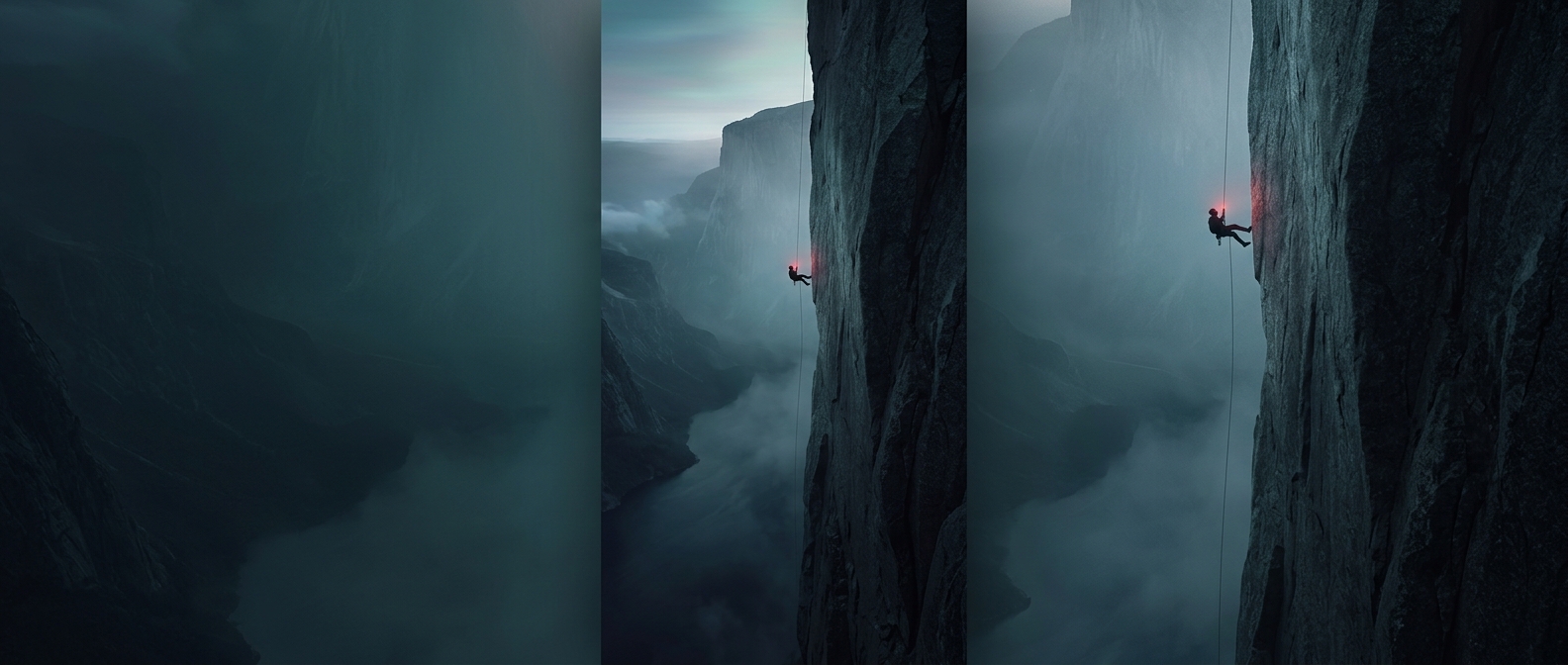
How Mount Thor’s cliff became so sheer
Mount Thor rises in Auyuittuq National Park on Baffin Island, where glaciers have repeatedly scoured the landscape. Moving ice can grind rock away and deepen valleys; when it cuts into a mountain range, it can leave abrupt rock faces beside broad, glacier-carved troughs. Thor’s famous face is an especially dramatic expression of that rugged terrain.
The wall is not a smooth ramp. Its rock drops more than a kilometer while leaning so little that parts of it actually overhang the base. That geometry makes the face unusually difficult to climb: a climber must contend not just with height, but with a long, exposed stretch of steep rock where retreat and protection are challenging.
A vertical drop measured from the valley floor
A mountain’s elevation and a cliff’s vertical drop are different measurements. Elevation tells how high a point stands above sea level; vertical drop describes how far a face falls between its top and bottom. Thor’s distinction is the latter: the scale of the uninterrupted wall, rather than simply the height of the summit.
The result is a striking contrast between a mountain and what feels almost like a building-sized wall. From below, the face makes the surrounding landscape seem to stop abruptly—an immense change in height compressed into a single stretch of rock.