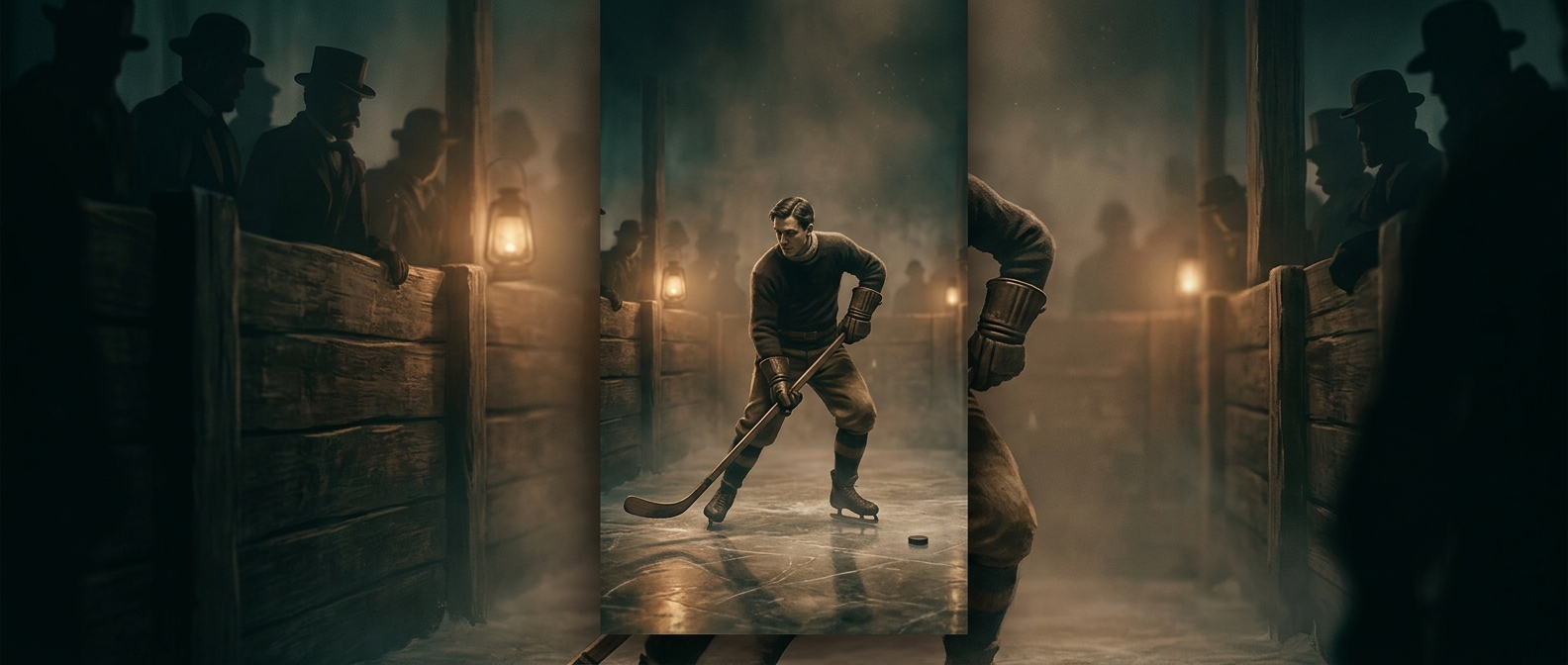
Why an Indoor Game Needed a Different Object
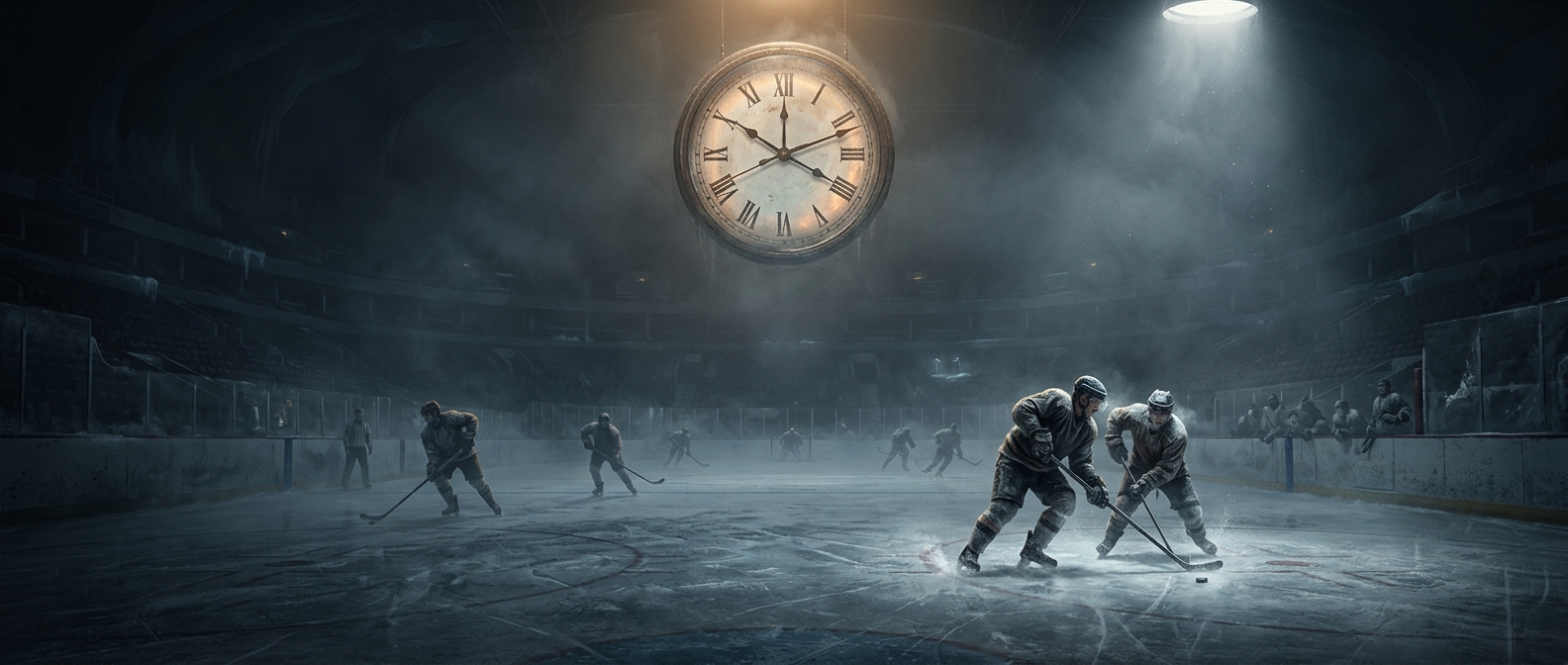
An indoor rink put spectators close to the action, with no open field or long buffer to separate them from the players. A ball could bounce off the ice or a stick and shoot unpredictably toward the crowd. A flat wooden block was less likely to take a high, erratic bounce, making play easier to contain within the rink.
The change also altered how the game worked. A block sliding along the ice stays low, so players must move it with their sticks rather than chase it through the air. It can still travel quickly, but its path is easier to anticipate than a bouncing ball’s. The puck was a practical answer to the geometry of indoor play: keep the action on the ice and away from the spectators.
Equipment Shaped the Game’s Boundaries
That choice did more than reduce the chance of a ball flying into the stands. It encouraged a style of play built around passing and controlling an object on the surface, helping make the rink’s edges part of the game’s structure. In a crowded indoor venue, the equipment had to serve both the players and the people watching just beyond the boards.
The wooden block was not merely a substitute for a ball. It helped make organized hockey workable in a confined space—and turned crowd safety into one of the sport’s earliest design constraints.