When an Astrological Aspect Fails to Become Exact
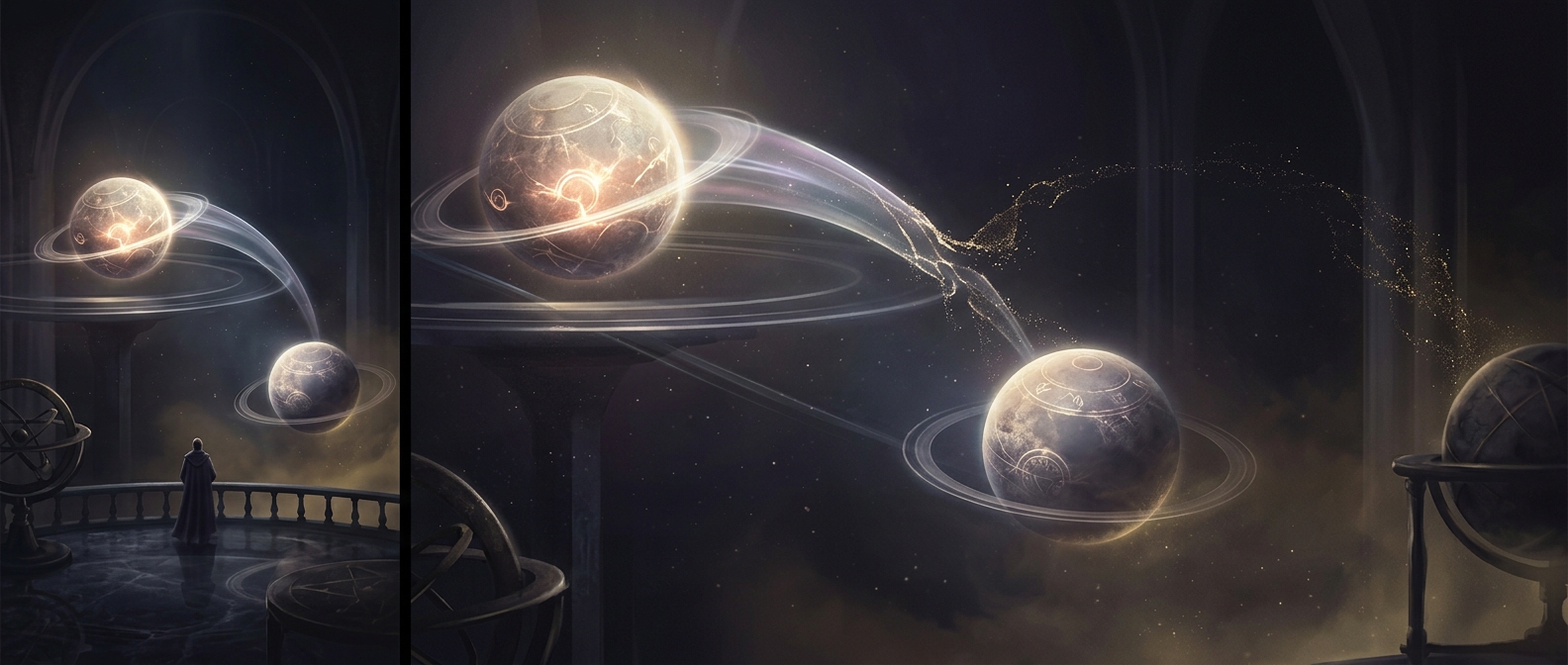
Astrologers use aspect for the angle between two planets as seen from Earth. When that angle is moving toward an exact match, the planets are said to be applying: astrologically, the interaction is still developing. If one planet changes apparent direction before the angle becomes exact, the aspect does not “perfect.” That interruption is called refranation.
The reversal is apparent, not a planet physically turning around. From Earth, planets move against the background stars at different rates; changes in their relative positions can make one seem to slow, stop, and move backward. In astrology, that shift can alter the forecast of a chart or a question being examined: a development that looked likely may fail to reach completion in the expected way.
Why the Change of Direction Matters
The key is not simply that a planet is retrograde. Refranation concerns a specific sequence: an aspect is approaching exactness, then the motion changes before it arrives. An astrologer may read that as a plan losing momentum, a meeting not taking place, or an agreement remaining unfinished—depending on the planets and the question involved.
This is an interpretive rule within astrology, not evidence that planetary motion causes events. Its practical value for astrologers is structural: it distinguishes an aspect that completes from one that is interrupted. The turning point gives the chart a clear boundary between an anticipated connection and one that never quite forms.